Showing posts with label posted by Haley B. Show all posts

Tuesday, December 11, 2018

ESA: Species Savior

by Haley Brown

The stakes are high when it comes to conserving the earth's biodiversity; is the Endangered Species Act up to the task?


bird wing looking wildlife beak eagle fauna bird of prey bald eagle vertebrate alaska falcon buzzard inflight bif kachemakbay andymorffew morffew naturethroughthelens baldeagle accipitriformes
The bald eagle is one of the ESA's success stories.
The Endangered Species Act (ESA) is generally considered to be a positive program. A poll from 2015 showed that 90% of Americans support it. Since Richard Nixon passed it in 1973, the act has aimed to prevent animal and plant species from going extinct due to human interference.

Ecologists agree that legislation to conserve biodiversity is necessary—each species plays a unique role in its ecosystem, so the loss of any can be detrimental. However, ecologists disagree on the ESA's efficacy. Currently over 2000 species are on the list of endangered and threatened species covered by the act. 99% of species on the list are still around, which some see as a success. However, critics are more focused on the mere 1% of those that have been recovered and removed from the list. So how should we measure the ESA's success? With the condition the earth is in now and all the destruction humans have inflicted upon our natural neighbors, the ESA's success can really only be judged justly by the species it has kept from extinction.

Wednesday, December 5, 2018

ESA: Hopeless, or our last hope?


The passenger pigeon was once the most abundant bird in North America, at about 3 to 5 billion individuals. Accounts from settlers to the continent note that when the pigeons would pass overhead in their huge flocks, the sky would go completely dark. Yet, in 1914, the bird went extinct. People hunted them until the population was so small they couldn't reproduce. There were no kill limits (or those that were finally enacted were not well enforced), and no conservation efforts until it was too late.

We may never see a cloud of passenger pigeons again, but their extinction did lead to something beneficial: an awareness of the importance of conservation and a boom in environmentalism. After that point, countries began to pass acts that would help to conserve species from the same fate. In 1973, the United States passed the Endangered Species Act (ESA), which increased the level and scope of protection given to animals and plants considered endangered or threatened.
File:Ectopistes migratorius (passenger pigeon).jpg
The passenger pigeon serves as a testament to humans' effects
 on nature and the need for conservation efforts

Since 1973, the ESA has seen multiple successes, some of the most famous being the recoveries of the bald eagle and the peregrine falcon. However, increasingly more species need attention as human population, pollution, and habitat destruction increase. The ESA does not have the funding to save every organism in danger of extinction.

The US Fish and Wildlife Service and NOAA Fisheries recently proposed changes to the ESA. Those changes include reducing spaces reserved for endangered species recovery and reducing the protection for threatened species. Some big businesses in this capitalist society would welcome fewer regulations on land use. It could also open up room for the ESA to even out their species focus.

The open platforms of the internet have allowed for myriad opinions to be shared on the proposition. Some think these changes will allow funding to be better distributed and focus on species with high potential for recovery. Others think these changes would leave regulations too open and, at best, slow the ESA's progress.

What most Americans seem to agree on (about 90%, actually, across both parties) is that we need an act like the ESA to keep our environment safe from ourselves. But is the current ESA, flawed as it may be, our best option? Will changing it further endanger our endangered species, repeating the tragedy of the passenger pigeon? Or do we need to alter our strategy to better prioritize conservation funds?

Image source

Monday, December 3, 2018

Hot Spots in Ecology

  • Biodiversity
    Some ecologists claim that biodiversity has decreased in most of the Earth's land area past "safe limits." This "safe limit" supposedly marks the point at which ecosystems could no longer support human civilization. Critics say the limit—set by the Planetary Boundaries framework—is based on many assumptions, does not take into account the influence of invasive species, and could not easily take into account the complex interactions between species. (See "Earth's Biodiversity Has Fallen Below 'Safe' Levels? Ecologists Disagree.")
  • Saving Endangered Species
    The earth goes through cycles of heating and cooling, and species evolve and go extinct along with it. Most ecologists agree that we are currently going through an extreme, human-caused version of those historical extinction periods and should do what we can to save species from extinction. A few, even if they believe this mass extinction is human-caused, claim that it's pointless to go out our way to save endangered species; we should only worry about the extinction of our own species, and only save other species if it's convenient. (See "What is the point of saving endangered species?" and "We don't need to save endangered species. Extinction is part of evolution.")
  • Journal Impact Factor
    Researchers often choose which scientific journal to submit their work to based on Journal Impact Factor (JIF), a value given to a journal based on its perceived quality. Libraries have also used it to choose which journals to subscribe to. JIF is probably the most prevalent rating system for journals, but many ecologists and other scientists criticize it for misrepresenting the quality of journals and articles. (See "The Journal Impact Factor and alternatives.")
Of these three controversies, I am most intrigued and emotionally affected by the second. I am a proponent for saving animal species; I love animals, and for as long as I can remember I've been taught that we need to save endangered species. All species contribute in some way to their ecosystem, and the loss of one can cause a drastic change. Additionally, myriad species are endangered because of habitat loss inflicted by humans. However, it is interesting to read anti-conservationist arguments from biologists. I can see where some of their claims make sense, which is surprising for me. Maybe what it comes down to is focusing on efforts that will best conserve the human species?

Monday, November 26, 2018

A Malleable Audience

To see what an impactful orator was Winston Churchill, one need only look at the fact there is an award-winning film, The Darkest Hour, that centers around his ability as a speaker. Phrases from his iconic speeches remain in the minds of even the least historically attuned. One speech that stands out is the "Sinews of Peace" speech he gave at the start of the Cold War. For better or worse, it was powerful, and its message spread worldwide.

Winston Churchill delivering his "Sinews of Peace,"
aka "Iron Curtain," speech at Westminster College
in front of an attentive audience.
An essential part of Churchill's speech is kairos. The former prime minister delivered it at Westminster College in Fulton, Missouri, to as large an audience as would fit in the gymnasium, with President Harry Truman beside him. He knew he had an intelligent, attentive audience that included US officials with power to influence change.

Almost the first half of the speech is written to connect the orator to his audience. He starts off with some rather effective humor, and by linking himself to the president, he cements his authority as a speaker to an American congregation. In the first half of the speech, Churchill makes increasingly bold claims followed by statements recognizing that he and the audience are in agreement (also made apparent by the audience's applause). By the halfway point, there is an evident connection between Churchill and his listeners.

Once Churchill builds a rapport with his audience, he gradually uses that trust to ask them to consider an idea of his: unifying the United States and the British Commonwealth. He leans heavily on both logos and pathos for this. He calls the people to action against fears that most were all too familiar with ("the two great dangers which menace the home of the people, War and Tyranny"), and lists specific ways in which unifying would be logical and beneficial ("This would perhaps double the mobility of the American Navy and Air Force."). I can imagine those calls would be particularly powerful to citizens of a country that had just been through a heart-wrenching war and continued to live in fear of looming catastrophic bombs.

Churchill frequently uses repetition, congeries, and alliteration to drive home his points, and his delivery makes them even more stirring ("For them is all distorted, all is broken, all is even ground to pulp."). It's difficult not to connect with language that is crafted in such a way as Churchill sculpted his.

Image

Wednesday, November 14, 2018

Beauty, Truth, and Love

File:Alfons Mucha - F. Champenois Imprimeur-Éditeur.jpg
One of Mucha's famed posters.
My most long-standing friend is my cousin Adam. One of the first things I remember of him is his amazing artistic ability. Growing up, I was always in awe of his drawings, which largely consisted of lanky ladies in lavish outfits. My second summer of high school, at our local Barnes and Noble, Adam introduced me to one of his favorite artists—Alphonse Mucha.

Looking through Mucha's works, I realized why my cousin admired him. His pieces were completely captivating, unlike anything I had ever seen before. The artist's trademark style has an ethereal quality to it; the subjects appear enchantingly regal, like quietly omnipotent goddesses; the paintings are highly impressionistic but still precisely detailed. Mucha's unique Belle Epoque style is unmistakable, even among other art nouveau.

Mucha, like my cousin, had always been an artist, even before he could walk. Still, he struggled to make ends meet at first. Finally, at age 34, Mucha was by chance tasked with creating a poster for the upcoming performance of famous Parisian performer Sarah Bernhardt. He used a narrow poster and pastels to create the advertisement, and Bernhardt loved the distinctly modern-yet-sophisticated style so much she had him create posters for all her performances. People were so obsessed with the posters they would cut them down off their posts for themselves.

Saturday, November 10, 2018

The Anti-Sublime

World War I convinced the Enlightenment thinkers who believed they lived in the best of all possible worlds that, in fact, the world was not all crêpes and crème brûlée. In the war, most of Europe had experienced the horrors that people could inflict upon each other first-hand. One result of this was that people became fascinated with the sublime.

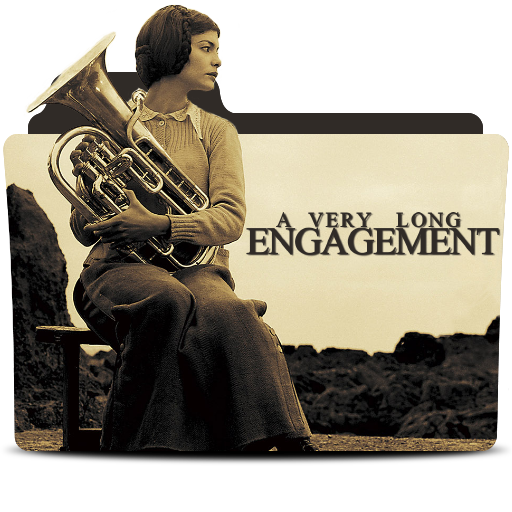
A Very Long Engagement, a film by Jean-Pierre Jeunet, explores the themes of that period in multiple layers. The film follows the story of a young French woman, Mathilde, whose fiancé, Manech, is sent off to fight in World War I. She is told he died in the trenches, basically sentenced to death because he self-mutilated. However, there are strings of uncertainty in the story, so she investigates to find the truth for herself.

Image result for a very long engagement
Mathilde solemnly plays her tuba while she waits
for Manech to return.

The Individual
In searching for the truth of her fiancé's death, Mathilde explores the lives of other men who had suffered his same sentence alongside him. She finds the unique truths behind their times in the trenches, as well as the truths of the people they left behind in France. These stories give a very personal perspective on a very large war.

The Sublime
The tragic romance of Mathilde and Manech is the classic type people have loved for centuries. It is terrible, but in a melancholy, heart-aching way that is pleasing to experience at a distance. This film entertains that form of the sublime while pushing against a greater one: war. Machine guns obliterate anyone who goes above the trenches into no-man's land, bombs explode and splatter soldiers' viscera onto their friends' horrified faces, men shoot their fingers off with shotguns in efforts to escape the rot-and-lice-ridden hell of the trenches. This film does not glorify the nobility of dying at war; it depicts death in gory, gut-wrenching detail. I, at least, went away from the film solemn and struck with the horrors of war, not inspired to pick up a rifle.

I'll admit the idea of going to battle has at times sounded  to me. It was more in the way of fantasy novels in which people fight on horseback with swords and crossbows. Regardless, with its individual approach and challenge to the sublime elements of war, A Very Long Engagement effectively horrified me against the notion that battle is in any way romantic.

Thursday, November 8, 2018

Musical Time-Travel

I remember at 5 years old sitting at my family's desktop PC in our loft, entranced by the bright green screen as Peter skipped across it to his theme. My Peter and the Wolf computer game wasn't particularly complex or stimulating; it was basically an animated movie set to Prokofiev's music and a narration, but you clicked to move from scene to scene. It was one of my favorites though. Before I started playing music myself, the game—and Prokofiev's composition through it—introduced me to music that could carry you to a different world and completely alter your emotions.

My juvenile computer game served Prokofiev's original goals for his piece well. He was commissioned to write it by the director of the Central Children's Theatre of Moscow in effort to teach children about music and a variety of instruments. The composer himself learned to play the piano out of inspiration from his mother, who played herself, and he wrote his first composition at age 5. He would continue on to write ballets, operas, piano compositions, and more over his lifetime. He began writing music for children after he had some of his own, which is when he wrote his iconic Peter and the Wolf.


Prokofiev's piece is great not only because it is stirring and educational, but also because it tells a story. That's part of why it affected me so much as a kid. I was entranced by the way the instruments, keys, and melodies illustrated the characters and events. The idea has become more common to us now because music is such a core element in movies, but it's amazing how much power of emotion and narrative a piece of music can have.

A few months ago, I listened to Peter and the Wolf again, for the first time in years. I had remembered the game and wondered if I would still enjoy the music—I was not disappointed. If anything, the themes were more stirring than I remembered, and the story even more enchanting. It transported me back to those times I spent in our loft, following Peter and his animal friends on their adventure.

Monday, October 29, 2018

Misery Loves Comedy


"Candide fled as quickly as possible to another village."
Candide witnessed the immense horrors of death in the
 aftermath of a war between the Bulgars and Abars.
Candide's reception
Voltaire's Candide, a satire following an overly optimistic man—Candide—through continual disasters, was immensely popular. In its first year, 20,000 copies were sold and 17 editions published across Europe. Its humor and criticism on the thoughts and authorities of the time were clearly welcomed by the public. People continue to debate how far the satire extends. Some think Voltaire's conclusion is that philosophy is useless, that to reach contentment you should just work and not think. Others think he merely pretends to be anti-philosophy, coming to the conclusion that you experience things, learn from them, and act on them, actually using philosophy to become active instead of passive and reclusive.

Voltaire's context
Voltaire was himself an active man. He fought (usually through writing and speaking with his powerful friends) against war and religious oppression. His hatred of both is evident throughout Candide, notably when Candide and his tutor, Dr. Pangloss, are severely punished simply for having an opinion on God that differs slightly from the Inquisitor's. Voltaire was after all a deist, believing God didn't influence the current world and that hierarchical religion was absurd.

Voltaire was greatly affected by the abuses of power and hypocrisy of government and religious leaders. In Candide all the characters have their own tragic backstories involving being enslaved, abused, and taken advantage of in one way or another. It seems Voltaire, through his own life events, came to believe that misery is the natural state of humanity; even if things do happen to go well, we then create our own misery. The characters, once they have been reunited and remain without abuse, even fantasize going back to their prior misfortunes over sitting in the contented boredom of their farm.

Wednesday, October 10, 2018

Ladies & Locke


As I looked over the talks given this weekend at General Conference, the broadcast given by the leaders of Church of Jesus Christ of Latter-Day Saints for their members, I was perturbed. Out of twenty-six talks given that weekend, one was from a woman. I think we need to hear from women more often in the church; diverse perspectives will only strengthen it. We have come far from the days when women were expected to live to cook, clean, raise children, and look nice, but we still have a way to go before they are valued equally to men.
File:Damaris Cudworth.jpg
Locke believed women were fully rational, and had
particularly high praises for Damaris Cudworth Masham.
John Locke was actually an early supporter of semi-feminist ideas. He even used religion and scriptures to support his claims in his Two Treatises on Government. In his efforts to establish that monarchies did not have a divine right to rule, he ended up claiming that this extended to the "right" of dominion God supposedly gave to Adam over Eve. 

Locke claims that God punished Eve for disobeying him, but that he did not give the authority of a monarch to Adam as the Enlightenment monarchs often claimed. This meant that women did not owe their husbands obedience, and that their children owed equal subordination to both parents, not just the father. Locke believed that men only had power over women in their physical superiority—which was actually pretty progressive for his time.

Wednesday, October 3, 2018

Hands-On Anatomy


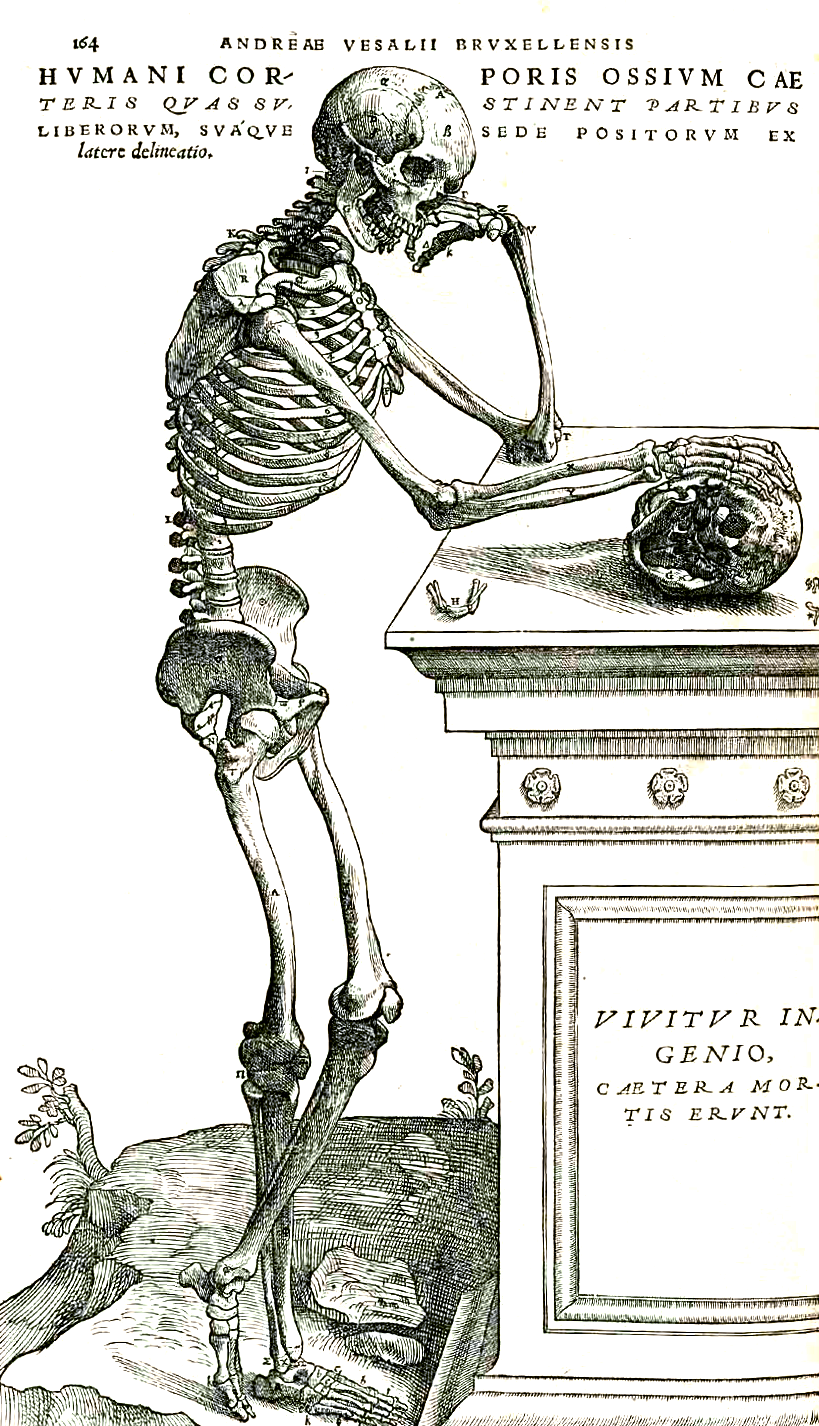
Vesalius had the models in his book
posing in picturesque environments.
We go to the doctor assuming our physicians know the difference between human and dog anatomy. However, that was not always necessarily the case. Into the 16th century, surgeons would teach their pupils about human anatomy by reading them the texts of Galen, a Greek physician in the second century. Physicians rarely if ever dissected human cadavers themselves; they learned anatomy from Galen's 1300-year-old texts, while Galen himself had never dissected a human cadaver due to religious restrictions.
Andreas Vesalius, a 16th-century physician, had a different approach. He dissected animal corpses, but he also dissected human cadavers and studied them extensively. To communicate (and show off) his knowledge, Vesalius wrote the Seven Books on the Fabric of the Human Body, commonly known as the Fabrica.

In the Fabrica, he included detailed descriptions and woodcuts of every layer of the body, from bones to nerves. Vesalius worked with commissioned artists to depict anatomy from multiple previously unseen perspectives. His goal was to clearly communicate the details of human anatomy to physicians and students. The Fabrica was so successful, cadaver dissections began to be more common. 

Friday, September 28, 2018

Audiences Shift

Happiness vs. Utilitarianism
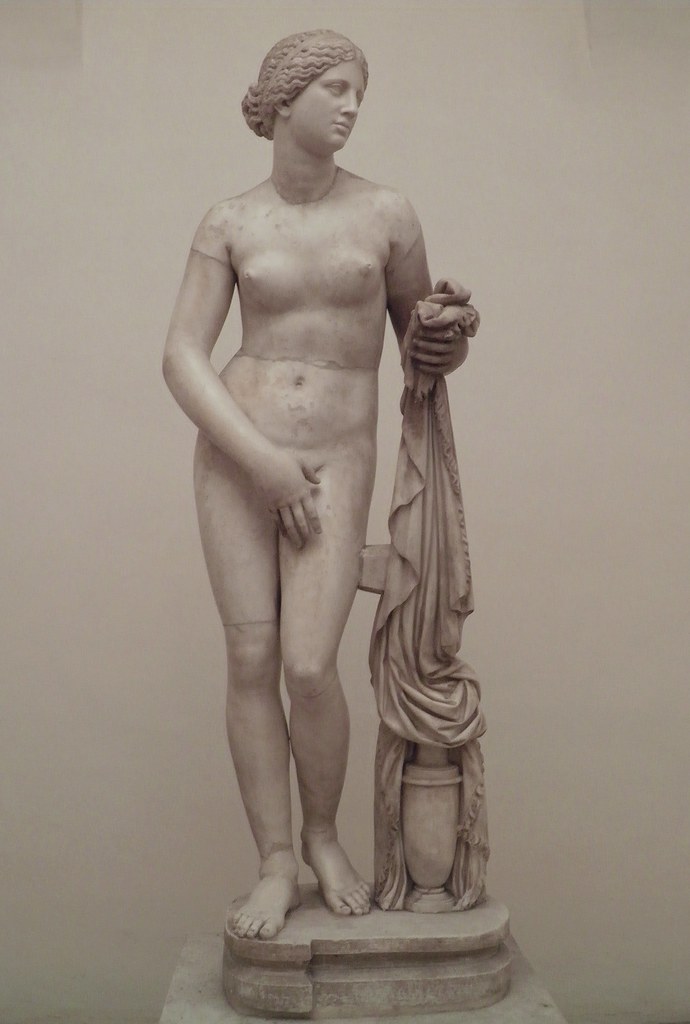
Praxiteles's Aphrodite of Knidos, a
Classical celebration of human form.
“Of all things the measure is Man, of the things that are, that they are, and of the things that are not, that they are not." Here, Protagoras is is basically saying "Man is the measure of all things." A Classical philosopher, he taught that every individual had their own version of the truth—that truth was relative to the person perceiving it. Protagoras taught people to appreciate the individual and the wide array of perspectives people have. To him, humans are not only greater than the beasts of the earth and the angels in the heavens, but higher than truth itself.

This heavily contradicts the beliefs of pre-Renaissance Christianity. The general belief during that period was that people were fallen souls and had to live by the Church’s rules to have a chance at having any worth and getting to heaven. People in anything lower than the upper class were thought of and treated like tools, made to work constantly in a feudalistic society. In any class, though, the Catholic church was law, and any education or art centered around it.

Plato, on the other hand, believed that eudamonia, happiness, was the highest goal of thinking. A fellow philosopher, Cicero also considered the individual variations within his audiences and shaped his persuasive techniques accordingly. He recognized that some people were not educated or willing enough to be persuaded by logic alone and decided it was okay to use emotion as a persuader with those audiences. As Somer discusses in her post, speakers and artists must always take the audience into consideration.

Saturday, September 22, 2018

Is the KJV for Everyone?

Would it be better for someone to read a simplified version of the Bible and understand it, or to read the King James Version in all its glory and be lost? People have gleaned a lot of spiritual knowledge from the KJV. It is known as the version that is closest in meaning to the original scriptures, so it is probably best for scholars and those who want to closely analyze it. The typical person, though,—even the typical Christian—does not read the Bible often enough to always look at it that closely.
47 scholars worked for years to translate the King James Version of the Bible.

I have never read a version of the Bible other than the KJV. However, in reading the KJV, I’ve realized that I’m often so focused on getting through all the complicated language and sentence structure that I don’t even realize what I’m reading about. I rarely recognize the intricate beauty and rhythm of the passages, because I’m just trying to figure out what’s going on.


Unlike past versions of the Bible, the King James Version includes the English forms of names rather than the Hebrew forms in effort to keep the scriptures popular. Additionally, Jewish commentaries helped to translate the Hebrew literally, rather than into English forms of speaking, and made an effort to keep the same flow the original Hebrew had. This is probably part of what makes the writing in the KJV sound so profound—but also what makes it somewhat difficult to understand.


We start children reading simple books; why not start people new to Christianity on a simplified bible? Leland Ryken points out that the prose in modern interpretations of the bible is flat and lacks the impact that verses in the KJV have. Perhaps we could come up with a modern edition that keeps every meaning the same but simplifies the syntax so any English speaker could understand it, while maintaining the same emphases and rhythm of the KJV. There is certainly modern prose that is beautiful and impactful and easy to understand. Look at the works of Brian Doyle, for example. I wouldn’t mind reading a Bible written by him.

Image obtained from Wikimedia Commons.

Wednesday, September 19, 2018

Great Ambition, Great Love

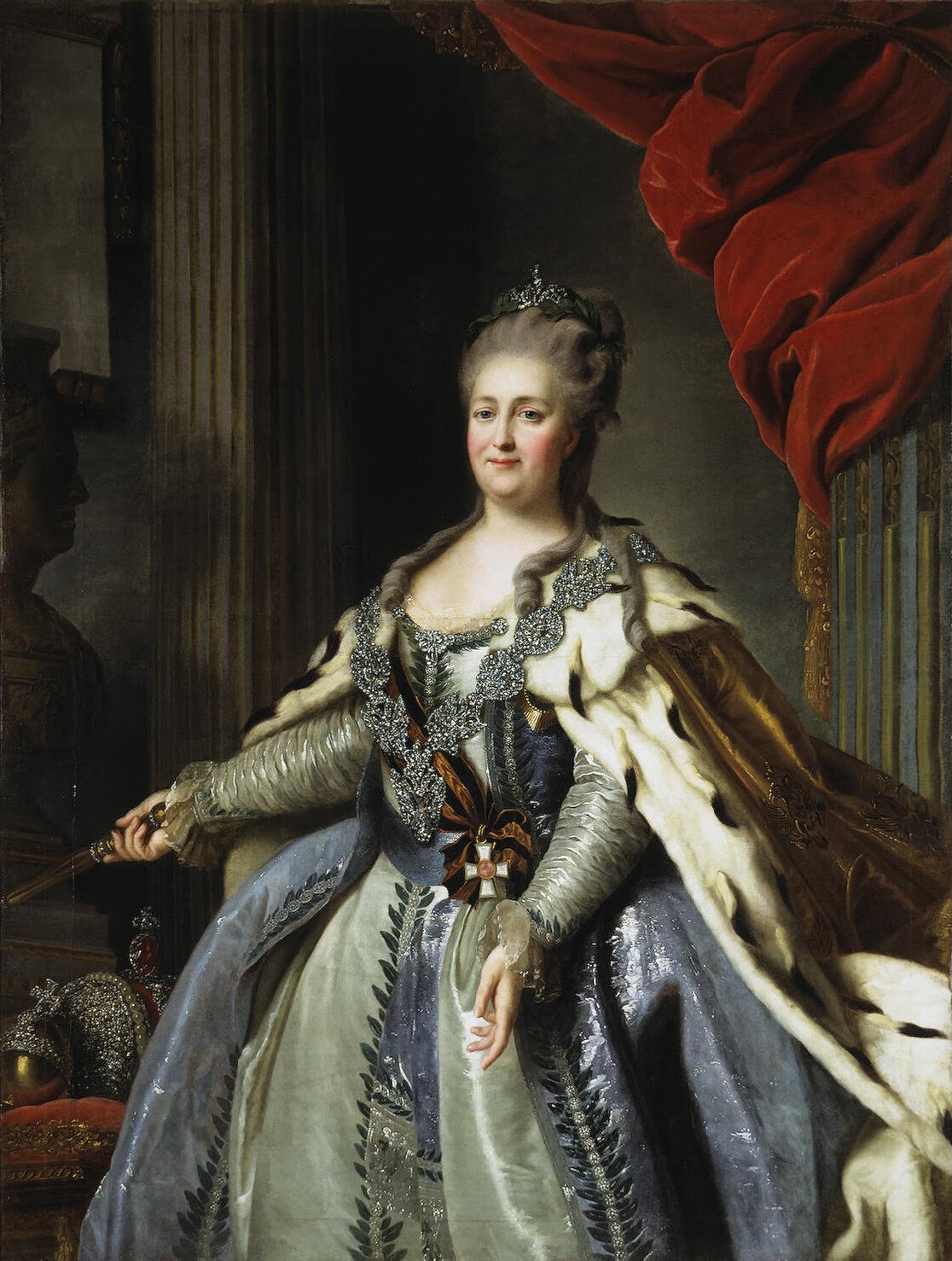
Catherine the Great relied on charm and intelligence
 to gain popularity; she exemplified sprezzatura.
Throughout history, women were generally expected to be passive; ambition was a negative trait for them to have. Even today, female leaders are often described as bossy or overbearing when acting similarly to their male counterparts. Women like Catherine the Great, however, demonstrate the good a determined woman can do. Although she made some controversial decisions, I argue that those decisions are exactly what allowed her to keep Russia afloat in turbulent times.

Catherine the Great was inarguably an ambitious woman. As a teenager she was set on becoming the next ruler of Russia, even though she was German. She begged her tutor to give her more schoolwork, and she even caught pneumonia staying up late to study Russian vocabulary. Her dedication earned her marriage to her cousin, the empress of Russia's nephew. He was a terrible ruler and husband, so Catherine forcibly took the throne from him.

Like many women today, Catherine wanted fulfillment and love. She had lovers, anywhere between 3 and 12 over her lifetime. In addition to finally giving her the love and intellectual fulfillment she sought, her relationships helped her keep Russia on good terms with other countries. It seems like a few lovers would be worth Russia's stability.
Catherine promoted education, health, and the arts, as well as equal treatment of people from all classes. She wrote the Rule of Law, a 22 chapter document for which she consulted people from every class (but serfs). She tried to free the serfs, the indentured servants of the upper classes. She gave up this feat in fear of losing the nobles' support on which she depended, but I don't think she should be blamed too much because she did more good in power than she could have out of it. 

Ambition carried Catherine the Great to uplift Russia to heights that it never would have achieved if not for her. Although she ruled in a less "respectable" way than a woman would have been expected to, she achieved her goals of power and love while ruling Russia responsibly. I argue that her greatness stemmed from her controversial deeds, rather than being hindered by them.

Image obtained from wikicommons.


Saturday, September 15, 2018

Quality vs Equality in Education


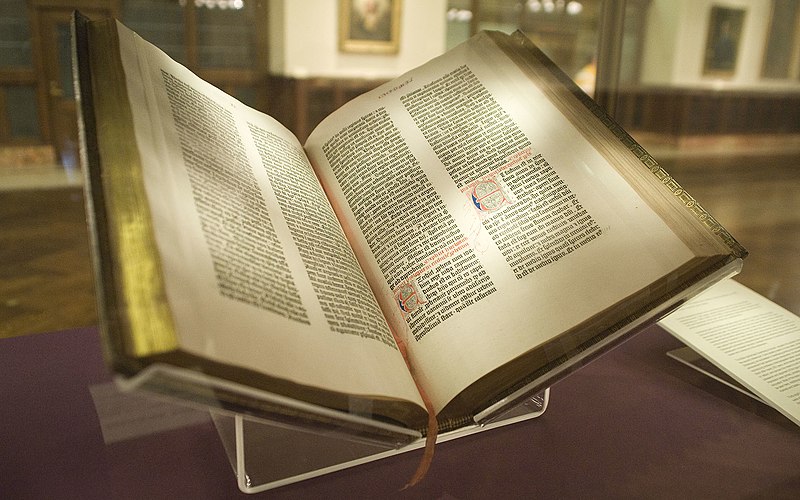
Is it better for the wide public to have access to knowledge, even if it might inhibit the learning of the wealthy? We now see the printing press as an invention that was pivotal to humanity's progression. It allowed people from all classes and trades to obtain information for themselves for which they previously would have had to rely on an academic or a church leader. However, many of those who already had access to that knowledge thought the printing press was a terrible idea. One argument, noted in The Renaissance in Perspective, was that it "would impair learning by lowering it to the level of the multitude." Others scoffed at how unattractive printed books were compared to the traditional copied ones.
File:Gutenberg Bible, Lenox Copy, New York Public Library, 2009. Pic 01.jpg
The upper class of the renaissance were hesitant to accept the printing press for fear that common people would impair their learning.
The printing press succeeded in expanding knowledge to the masses, but whether or not it tainted learning is not so certain. Regardless, I don't believe those who wanted to keep knowledge exclusive to the high classes were in the right. Societies and individuals thrive when knowledge is shared; that is worth the possibility that learning overall might be slower or less perfectly articulated. 

I think we see a similar problem in schooling now. The American government provides schooling for free so everyone in the country can be educated. It allows for a wide spread of knowledge, which as we saw with the printing press, benefits society. However, not everyone goes to public schools; those who can afford it go to private schools. This hurts public schools because they receive funding based on how many students they have. 

I see a problem of exclusivity here, similar to that with the printing press. Public schools educate children from all backgrounds, so students may receive more generalized education than if they went to a school exclusive to the wealthy. When this decreases the funding and therefore the quality of public schools, though, it becomes a problem of exclusivity. Of course this problem is more complicated than I can get into here, but we should look at the big picture: society benefits more overall when knowledge is shared among the classes than when elites have exclusive access.

Image credit: "The Gutenberg Bible" by Kevin Eng is licensed under CC BY-SA 2.0

Thursday, September 13, 2018

Trying to be human


“Finding yourself” is a common enough term today. I would say most people are interested in introspective pondering and working to figure out what makes them feel content and fulfilled. This type of thinking also abounded in the Renaissance. Rather than think only what they were told to think and do what they had to do to survive, people in the Renaissance began to think about the world and themselves in different ways than ever before.

Michel de Montaigne, the first essayist.

A leader in this art was the writer Montaigne. He wrote about his daily life, musing about one topic or another, basically recording his thoughts on paper. These writings he coined “essais” after the French word “essayer,” meaning “to try.” Montaigne’s musings were attempts to understand himself and his world, and they often delved into ideas that were deeper than their titles.

People read Montaigne’s essays and were amazed to see the situations they had experienced and feelings they had felt written so brilliantly. A line from We Taste Nothing Purely reads “In sadness there is some alloy of pleasure.” I know exactly the feeling he is talking about, but I would never have even thought to put it into words. His essays also opened people’s minds to new ideas, which was an integral aspect of the Renaissance. On Cannibals, for example, explores the idea that the cannibals Montaigne met in Brazil could be more moral than the “civilized” people of Europe.

The desire to put everyday thoughts and experiences into words never died out; Montaigne has influenced writers for centuries. Personal essays of today still exhibit that humanistic exploration of self. Joyas Voladoras, written in 2004 by the late Brian Doyle, contemplates the heart. “We are utterly open with no one in the end—not mother and father, not wife or husband, not lover, not child, not friend. We open windows to each but we live alone in the house of the heart. Perhaps we must.”

It’s certainly a testament to humanist ideals that, after all this time of people exploring what it means to be human, we’re still trying to figure it out.

Image credit: Portrait of Michel de Montaigne, circa unknown by unknown author is in the public domain.

Saturday, September 8, 2018

Da Vinci: Epitome of the Renaissance Man


Leonardo da Vinci was born right at the beginning of the renaissance; perhaps that contributes to his becoming a true renaissance man. He was the illegitimate child of a notary and a peasant girl but nonetheless grew up comfortably in his father’s house reading scholarly texts and learning to paint. He was talented enough to be apprenticed to an artist at 15, and his artistic career took off from there. His paintings, the Mona Lisa and the Last Supper among them, have been greatly admired for centuries. However, this renaissance man’s interests expanded past the creative arts. In fact, his broad interest and study across disciplines contributed to the impressive quality of his paintings.

Shakespeare notes the amazing potential of humankind in Hamlet, writing, “What a piece of work is a man! How noble in reason, how infinite in faculty! In form and moving how express and admirable! In action how like an angel, in apprehension how like a god! The beauty of the world. The paragon of animals.” Shakespeare could almost have been referring to da Vinci in this passage; da Vinci certainly demonstrated how infinite in faculty a human could be, and he certainly expressed his appreciation of the form and action of humans. He extensively studied anatomy, even dissecting corpses to examine how nerves and muscles work. He was also fascinated by physics and the natural world, filling dozens of notebooks with his observations of the natural world and ideas for inventions. There is incredible precision in da Vinci’s works because the artist incorporated his knowledge of the sciences into every detail.

In his Oration on the Dignity of Man, Pico della Mirandola discusses how part of what makes humans such high and noble beings is their ability to shape themselves into whoever they want to be. Raised an artist to eventually become a true renaissance man, a welder of the arts and sciences when many would have declared them separate entities, da Vinci certainly carved his own identity. There was so much he wanted to learn, he seldom finished the projects he started, but he was overall content with his accomplishments. This wide scope of genius and dedication to connecting the arts and sciences continue to serve as a testament to the versatility of human achievement.