Showing posts with label Romanticism. Show all posts

Tuesday, October 29, 2019

Tennyson to Twitter: Finding Yourself in Art

During the 18th century, the leaders and thinkers of the day tended to focus their research and ideologies on what was best for society. During the turn of the century, the Romantics swung the opposite direction. After all the talk of utility and the community, these radicals and revolutionaries lifted the individual. They used art in the forms of novels, poems, and paintings as the vehicle to glorify uniqueness and empower the one. In a similar way, the digital age has centered itself on the individual by affording new ways for people to discover and express themselves. Social media, blogs, and constant connectivity are all modern tools used towards this end. “You do you” was the call of the Romantics, and its echo is heard once again today.

editing by Cassidy Crosby, girl's photo by Sharbat Gula, background by Thomas Cole

Art was and is the perfect medium for celebrating the self. Oscar Wilde said, “Art is the most intense form of individualism that the world has known.” This intense individualism can be seen in William Wordsworth’s poem “Tintern Abbey.” The poem is written in first person perspective about the narrator’s thoughts. “To me was all in all,” Wordsworth writes. “I cannot paint what then I was.” Instead of telling a story of a group of people, Wordsworth attempts to discover and describe himself. The romantic vision of the beauty of the world in the self was indeed shared by Wordsworth. Although he declares himself unable to “paint what then [he] was”, he exemplifies the romantic tendency to use art to showcase that beauty to the viewer. 

Tuesday, December 11, 2018

How exactly do we define "Literature"?

By Christian Rounds

With so many technological innovations changing our view of the world, does our view of "literature" need to change as well?


I remember in my public education days how I would power through books in order to grasp at their plot, especially so with the required reading my English classes would give me. I read other things besides novels of course, but to some degree in my mind they weren't "real" literature, they were just entertainment for kids like me to read. However, it wasn't until my Senior year of high school that I would be handed a copy of a comic book called "Maus" by my English Teacher, which would change how I viewed "Literature" for the rest of my life.

ESA: Species Savior

by Haley Brown

The stakes are high when it comes to conserving the earth's biodiversity; is the Endangered Species Act up to the task?


bird wing looking wildlife beak eagle fauna bird of prey bald eagle vertebrate alaska falcon buzzard inflight bif kachemakbay andymorffew morffew naturethroughthelens baldeagle accipitriformes
The bald eagle is one of the ESA's success stories.
The Endangered Species Act (ESA) is generally considered to be a positive program. A poll from 2015 showed that 90% of Americans support it. Since Richard Nixon passed it in 1973, the act has aimed to prevent animal and plant species from going extinct due to human interference.

Ecologists agree that legislation to conserve biodiversity is necessary—each species plays a unique role in its ecosystem, so the loss of any can be detrimental. However, ecologists disagree on the ESA's efficacy. Currently over 2000 species are on the list of endangered and threatened species covered by the act. 99% of species on the list are still around, which some see as a success. However, critics are more focused on the mere 1% of those that have been recovered and removed from the list. So how should we measure the ESA's success? With the condition the earth is in now and all the destruction humans have inflicted upon our natural neighbors, the ESA's success can really only be judged justly by the species it has kept from extinction.

Wednesday, November 14, 2018

When Romantic Ideals Begin to Come True

At the very core of Romanticism is a yearning for the unknown, the unattainable, and the incomprehensible. And while the movement to spread these ideas began relatively recently, in the last few hundred years, many concepts dubbed "unattainable" had eluded mankind for thousands of years before the Romantic Era. Mysteries such as flight and lightning have consumed the imagination of men for as long as history has been recorded. In the late 19th century, however, things changed. 

Image result for lightning
Some awe-inspiring lightning
With advances in industrialization came advances in technology. Suddenly, we discovered how to capture lightning, how to harness electricity and put it to our own deliberate use. We finally conquered the air and learned how to soar through the sky without meeting the ground in an unfriendly manner. Almost overnight (in the grand span of time), things that people had romanticized about for thousands of years became possible and even accessible. The question I ask is: how did achieving some of our wildest dreams affect society?

Image result for thomas edison
Thomas Edison's Laboratory
Some might say that once a person fulfills a deep desire, that person loses purpose and becomes bored. I've definitely seen examples of this in my own life, such as finally finishing a puzzle and suddenly feeling let down because I've lost a sense of direction. On the other hand, however, I've also had experiences in which I've seen fantastic technology, been filled with awe, and immediately filled with even more questions and ideas than before. 

As we can see from history, progress did not stop in the 19th century. Perhaps some people felt a loss of direction during the Gilded Age; it is well-known that the U.S. Patent Office closed down in 1899 because someone apparently thought everything had been invented. But the evidence shows that technology continued to flood the world and advanced at a unprecented rate. 

In short, I think this quote by Walter Ong describes accurately the relationship between the Gilded Age and the Romantic Era which preceded it: 
From man’s beginnings perhaps well over 500,000 years ago until recent times […] knowledge had been in short supply. To keep up his courage, man had continually to remind himself of how much he knew, to flaunt the rational, the certain, the definite and clear and distinct. Romanticism and technology appear at the same time because each grows in its own way out of a noetic abundance such as man had never known before. Technology uses the abundance for practical purposes. Romanticism uses it for assurance and as a springboard to another world. (Walter Ong, Rhetoric, Romance, and Technology: Studies in the Interaction of Expression and Culture) 


Image Credits: in the public domain and licensed through Creative Commons 

Monday, November 12, 2018

Romantic Nationalism


I went to a Dead Soldiers Debate today, which was a presentation where actors portrayed four deceased military personnel from World War I to honor those who fought in that Great War on this 100th anniversary of Armistice Day.

One of the more interesting aspects for me was the opinions of Lt. Young, an African American fighting for the US, and Col. Junger from Germany, both of whom had very Romantic views of the war. This was exaggerated greatly by the contrast with the US private who hated the war and lived a miserable, traumatized life after it ended.
Both Lt. Young and Col. Junger were driven by a deep drive for Nationalism. Junger was convinced that the war was necessary to protect the Germans form their rivals. Young wanted desperately to be given the opportunity to prove his allegiance to his country.

Image result for lieutenant colonel charles young
Lieutenant Colonel Charles Young
Junger spoke very lovingly of his country, citing all the genius and invention that Germany had given birth to. He wanted to protect that, and saw the war as the best way to do that. Additionally, he saw combat as an ideal avenue to prove his skills and test his abilities. This was much more Romantic and in stark contrast to Allred, who viewed the war as unconstitutional servitude.

Lt. Young also idealized the war as a way to prove himself. What he wanted to prove was his loyalty to the United States. However, he also mentioned that he wasn't quite sure what democracy the US was fighting for if African Americans were banned from public office and women still weren't allowed to vote.

It is so interesting, that despite all of this, he yearned to show his loyalty to a country who had not been loyal to him in any way. That, to me, is a very Romantic sense of nationalism. It was less about what the country was or had been, but what it could be, what you believe it stands for, even if its actions don't fall in line.

All in all, it was a fascinating program that taught me a lot and showed an intriguing cross-section of opinions.

Image Credit: US Army


Sunday, November 11, 2018

Romance with War

A Very Long Engagement was clever mélange between a romance and a war film. Romanticism is built into every bit of the film. A young couple who are deeply in love is separated by a brutal war. She refuses to accept the fate of her soul-mate and a romance with the trail of his death begins.

All things considered, this is a mystery/romance however it was a painfully drawn out version of the genre. The film is great and it is really hard not to be emotionally involved with the characters. That being said, the nature of the film is to frustrate the viewers as poor Matilde runs into dead end after dead end. A well-made film should make people feel things during it or I do not feel like it is worth watching.

This film brought a stark realization of the realities of war. Every person shot has a family who misses and loves them back home. Every person has a background that is effectually erased when their lives are meaninglessly snuffed out. Too often when we talk of wars, we state the death statistics like that is all they are. Each number represents a person. Although we romanticize the idea of war because of the honor and glory it brings.

Ultimately, I feel this film wraps up the storyline as you would expect. The final scene is the bow on top. “Does it hurt when you walk” is the same line he used to first catch Matilde’s attention, and it ties the whole experience together as they are reunited. She watches him as he performs a meaningless task. “Elle le regard” a simple phrase repeated as a smile spreads across her face. I could not help but feel my own heart stir.


Image credit:WW1 Trenches, by bmewett. licensed by cc 2.0 by Pixaby

Saturday, November 10, 2018

We Are All Miners

Going into Comradeship (Kameradschaft in the original German), I didn't know exactly what to expect or how it would connect with World War I. After watching the movie, thankfully with English subtitles, I still wasn't entirely sure what it had to do with WWI. Thank you Wikipedia! After getting a better understanding of the circumstances surrounding the events of the film, I finally understand it's significance to the First World War and to romanticism.


To give you a quick recap of the movie, Comradeship portrays the real-life event of a French mine, with the structural integrity of a Jenga tower, near the border between France and Germany catching fire and a German rescue team comes to save the surviving miners. This all happened not long after WWI, so France and Germany weren't exactly on the best terms with each other. As an example, there is one point where one of the rescue crew members goes to save a miner and the miner, seeing the German facemask, suddenly flashes back to fighting German soldiers in WWI and proceeds to attack the man. Granted, this is due to PTSD, but it's not the only instance of the tension between these two peoples. There is also a group of three German miners that the film focuses on who are shown as not really liking the people of France, so you get to see the discrimination from both sides.


The movie ends with both peoples realizing that they don't need to dislike each other anymore, because they're all miners! In all seriousness, the overarching message of the film is truly that different countries can, and should, live in harmony with each other, deconstructing the idea of nationalism to some extent because they were only able to fix the situation after looking beyond their national identity and pride, their romanticized, individualistic view of themselves, to see that, whether French or German, they're all human and other labels don't matter. This is definitely a message that is still pertinent to our time and should be something we all strive to live by.

Image Credit: https://www.imdb.com/title/tt0022017/ Eureka Entertainment


Friday, November 9, 2018

Romanticizing the Day of Wrath

Having been a music lover my whole life, I went to my first day of Music 101 my freshman year of college not expecting to learn anything new that semester. Sure enough, much of it was review and the hardest part of the class was remembering which days the tests were open. 

By the end of the semester, though, I found I had gotten much more than an A out of the course. It had opened my eyes, or ears I should say, to music from composers and times that I had not before appreciated. 

In one unit, we listened to samples of Gregorian chants that were sung in Medieval churches. I was fascinated by the harmonies and stirring melodies, and I wasn't the only one.

Image result for franz liszt
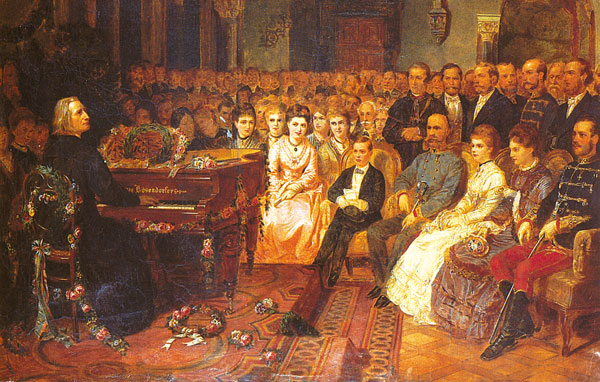
Franz Liszt playing for an audience
Franz Liszt completed Totentanz: Paraphrase on Dies Irae in 1849. It is a piece for solo piano and orchestra that takes the themes from one of the most haunting melodies from the Gregorian Era and develops it into an amazingly textured creation.

Liszt was a rock star of his time, and romanticizing the slightly grotesque and macabre was the thing to do. In his piece, the simple theme is repeated over and over, swirling across different instruments, octaves, and modes.

This piece has since been on my playlist and I listen to it often. No matter my current emotion, it always seems to satisfy. There are strong booming chords that release any anger in my system. There are fluttering, light moments that feel bouncy and pleasant. There are smooth melodies for contemplative peace and glorious finales for when I am feeling like a conqueror.

Every single listen takes me on that emotional ride and by the time it is finished I feel full and accomplished, and Dies Irae, "The Day of Wrath" is ingrained in my mind.


Image Credit: Wikipedia Commons

Thursday, November 8, 2018

Wedding Fanatic

This last spring and summer, I received enough wedding invitations to cover my entire refrigerator. This is not an exaggeration one bit. For two months, every single weekend was booked with wedding receptions.  And get this.  There were even weekends where I attended multiple receptions, just to make sure that I could congratulate my newly married friends.  I’m sure many of you can relate to this, especially those of you who are in my same stage of life.  What were your thoughts going to the mailbox day after day and seeing another one “bite the dust?”  Now, you might think I am crazy for how I felt about it, but I’m not going to hold back. Each time I opened another invitation, my heart did a little jump.

Meeting Blake's Dragon


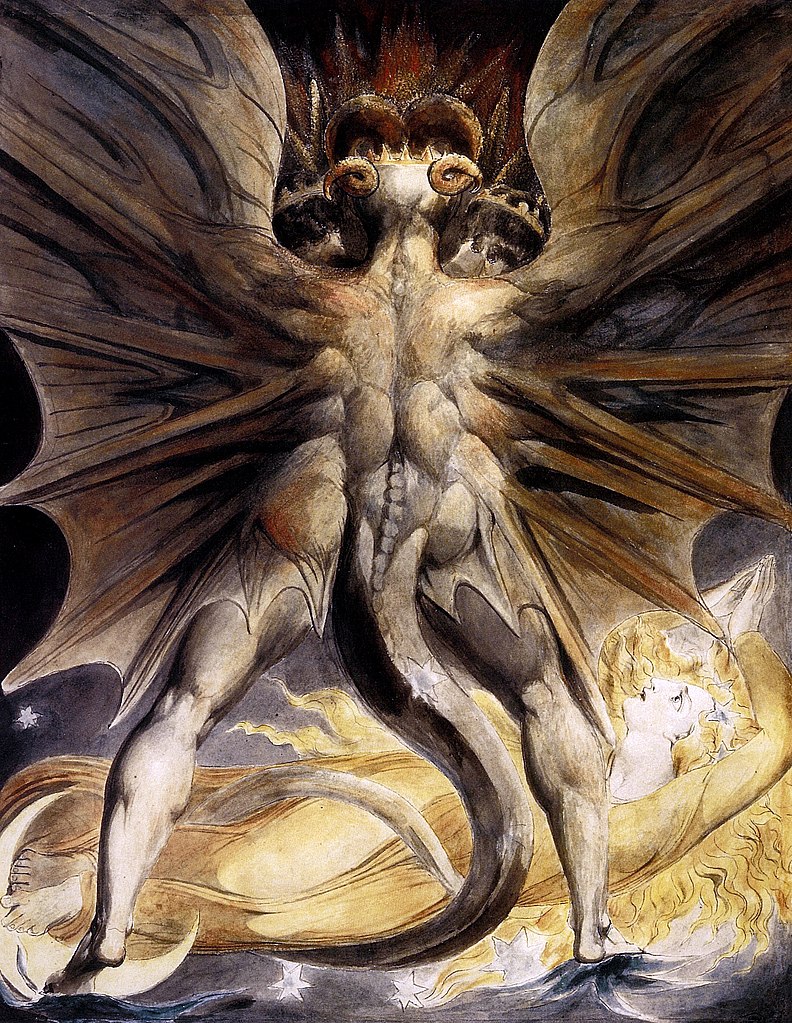
     When I first learned about William Blake I was in high school, and my education on him was far from complete. I had known him from his poetry for which he was mostly famous, but until I saw a reference to one of his works of watercolor in a movie that I watched a few years ago. After seeing that movie, I did some more research and found more of William Blake's work and was instantly turned on to his style.
      Part of the reason that this painting spoke to me is that it came from someone who I thought was known solely for his pieces of literature. Blake being so artistically rounded exemplifies the emphasis on inspiration and aesthetic common in the romantic period.
Image result for the great red dragon paintings
   Blake's work, both in literature and painting focuses extremely on emotion and symbolism, but this painting in particular also focuses on horror and terror to a degree that I would not have thought common for someone such as William Blake. The painting itself is a depiction Blake made for a version of the Bible to include illustrations, and this example is an illustration for the book of Revelations. Revelations, as a whole, is a pretty mysterious and confusing book that is easy to romanticize. The symbolic nature of Revelations bleeds into this painting to create something bizarre, yet intriguing, that is a little bit off-putting for even some today.
     This piece of art showed to me that a person does not have to simply stick with one avenue to impress the world, but it stuck out to me because of its dark, eerie style and mysterious stance, showing only the rear of what horrible beast was described in revelations. The piece itself is not logical and does not appeal to any reasonable image that man would see in real life, but it is the basis on the unseen and the emotion, rather than a basis on the seen and factual, that defined romantic art and gave the world masterpieces such as this.

Photo Credit:
https://www.google.com/url?sa=i&source=images&cd=&cad=rja&uact=8&ved=2ahUKEwiNrcOG0cbeAhUC2IMKHY7wCK4QjRx6BAgBEAU&url=https%3A%2F%2Fcommons.wikimedia.org%2Fwiki%2FFile%3AReddragon.jpg&psig=AOvVaw2K3PmcSXH-MU5idDiYmtzs&ust=1541829615427911

Musical Time-Travel

I remember at 5 years old sitting at my family's desktop PC in our loft, entranced by the bright green screen as Peter skipped across it to his theme. My Peter and the Wolf computer game wasn't particularly complex or stimulating; it was basically an animated movie set to Prokofiev's music and a narration, but you clicked to move from scene to scene. It was one of my favorites though. Before I started playing music myself, the game—and Prokofiev's composition through it—introduced me to music that could carry you to a different world and completely alter your emotions.

My juvenile computer game served Prokofiev's original goals for his piece well. He was commissioned to write it by the director of the Central Children's Theatre of Moscow in effort to teach children about music and a variety of instruments. The composer himself learned to play the piano out of inspiration from his mother, who played herself, and he wrote his first composition at age 5. He would continue on to write ballets, operas, piano compositions, and more over his lifetime. He began writing music for children after he had some of his own, which is when he wrote his iconic Peter and the Wolf.


Prokofiev's piece is great not only because it is stirring and educational, but also because it tells a story. That's part of why it affected me so much as a kid. I was entranced by the way the instruments, keys, and melodies illustrated the characters and events. The idea has become more common to us now because music is such a core element in movies, but it's amazing how much power of emotion and narrative a piece of music can have.

A few months ago, I listened to Peter and the Wolf again, for the first time in years. I had remembered the game and wondered if I would still enjoy the music—I was not disappointed. If anything, the themes were more stirring than I remembered, and the story even more enchanting. It transported me back to those times I spent in our loft, following Peter and his animal friends on their adventure.

Desperation

My dad is a graphic artist by trade, so growing up, I learned a lot about art. The art gene missed me. On a good day I can maybe draw a respectable stick figure. But art theory and art history permeated my childhood. I cannot tell you how many hours I spent wandering through museums with my dad, talking to him about different paintings and why they were good. All this to say, I have an interesting relationship with paintings. I feel like I know when one is good, but I could never tell you what it is that makes it that way.

Le Desespere, Gustav Courbet

Le Desespere by Gustave Courbet is a painting like that for me. I feel like I know this man. There is something about the expression in the eyes and the gentle tugging of the hair that is striking to me. I can see in this man's face that same kind of blank panic that grips me more often than I like to admit. The warm tone of the painting, and the sharp contrast between light and shadow makes my breath catch- it stills my heart to a stop. When I look at this painting feel like I'm caught in a moment that I've been in a million times. The moment before simmering stress breaks into full panic.

This painting meant a lot to Courbet, too. It was a self portrait, and he carried it with him wherever he went, even into his exile from France. I understand that, on a certain level. As much as desperation and panic are unsavory parts of my life, I have to remember them. Somehow, remembering the times of disorientation makes reality seem more real, and the present more tangible.

Photo Credit


Deep in Romanticism


Edgar Allen Poe has many short stories and poems that have always captivated me; this is going to sound so cliché it may make you sick, but one of my favorite pastimes is flipping through my collection of Edgar Allen Poe when it’s raining, window open, maybe sipping on some warm tea from my raccoon mug. Yes, you read that correctly. The mug in the shape of a raccoon. I think Poe would be proud to know that I read his works while simultaneously drinking from a cup the shape of a rabid, trash-picking animal.


But of all the works that Poe wrote and of all the poems of his that I have read, there is one that I have memorized and think of often (I wish I could say I was cool and can just spout off any Poe poem in any moment but you’ll see the negation to this below and understand that I am, in actuality, very uncool.)


Deep In Earth, Deep in Romanticism

The poem is titled “Deep in Earth” and goes like this:

“Deep in earth my love is lying
And I must weep alone.”

Pretty standard cryptic-ness from Poe, right? (And pretty short and therefore, very easy to memorize. #uncool)


This poem wasn’t officially written and produced and published like other Poe poems; no, it was instead found as a slightly faded note on the manuscript for the poem “Eulalie” which details a happy marriage. “Deep in Earth” as written after Mrs. Poe’s death and presumably, Poe wrote this as a reaction to this event.  


I think telling an emotional story in less than 13 words is a skill I wish I had and part of the mysticism of Romanticism.


Embracing Chaos

Personally, I become too involved with organization and perfection. I love writing, but its hard to write because the syntax, the rhythm, the meaning, and the reception
must be perfect or I failed. But in all aspects of my life, I find that honesty regarding the chaos of it all brings me closer to understanding, like a personal note of exasperated loneliness, despair and mourning on the manuscript detailing a happy marriage.

Image Credit: Portrait of my Poe collection and Raccoon the Mug

The Lady of Shalott's Final Moments

My first contact with this painting was nearly five months ago. I was studying for a final with a friend and a passerby exclaimed that she loved that screensaver! My friend’s screensaver was a picture of the painting of the “Lady of Shalott.” They had a surprisingly intense conversation about the painting and then moved on with their respective lives. This struck me as a powerful interaction about a painting that I had never experienced. It confused me how they could feel so strongly about a painting that was more than a century old.

That evening I searched the painting online. I sought to understand how they could have such strong sentiments about this painting. I love stories, I love understanding “The Why” behind people’s actions. I am generally not a fan of ambiguity and personal interpretation. I prefer the absolute truth.

"The Lady of Shalott" by John William Waterhouse 1888

During my research, I learned that this painting was created to supplement a powerful poem written by Alfred Lord Tennyson. I also learned that John William Waterhouse loved painting women right before their deaths. This appeared to be a vulnerable moment. I learned the story I wanted, and the painting suddenly struck me at a much deeper level. The Lady is dying for breaking a curse. In her last moments of life, she chooses to experience the life she has not been able to enjoy by leaving her tower and venturing out on a boat. Her face expresses a mix of deep emotions including fear and sadness, but I would also argue satisfaction and even pleasure.


In contrast with my first experience where I did not understand this piece, I have grown to love this painting. This painting typifies the Romantic period. This displays a full range of emotion expressed by the face of the Lady of Shalott. The colors in the painting are a contrast of light and dark that creates a focus on the Lady while also displaying the dark gothic or difficult emotional state that she is in. It expresses both a fear of death, desire for the unknown, and releases a tone of fatal reverence as one would feel I the presence of a dying loved one. 

Image credit: John William Waterhouse "The Lady of Shalott" 1888. By Plum Leaves licensed under CC by 2.0

The Mountain King and I

For me, music is has become part of who I am. It can both reflect my mood and shape it. I have played the piano since I was five years old and although I have much less time to practice now, I have come to find it relaxing. Over the past couple years my love for romantic/classical music has grown immensely. One of my favorite pieces is In the Hall of the Mountain King by Edvard Grieg. 

I'm not sure what initially drew me to this song, the melody itself is relatively simply as it is mostly a growing crescendo of the original refrain, resulting in an epic climax that brings the piece to an end. Perhaps what draws me to it is in the name itself, the imagery of what is happening in this hall of the fantastical Mountain King. I have always been drawn towards worlds that are fantastical in nature and this piece is a musical story, providing in its own way another world to delve into.


And all of that was before I learned about the whole story, about Peer Gynt and Edvard Grieg. Peer Gynt is notable by itself as a romantic play with the beginnings of modernism. It follows the peasant anti-hero Peer from his downfall to his redemption. It is nationalistic in that it is a call back to Norwegian heritage and story, while also providing social commentary in a satirical way. But it is Edvard's music, which was created when the author, Henrik Ibsen wanted to dramatize his poetry, that really remains with us today. The dramatic contrasts in pieces like the In the Hall of the Mountain King with its nearly imperceptible beginnings to its swelling end is powerful and helps tell a part of the larger drama that plays out across the 90 minutes of music made for Peer Gynt.

For me this piece represents exploration, into new genres of music as well as into new parts of our lives. Although I had been practicing and performing music by comparable composers of the time, this was one of the first romantic pieces that i really enjoyed listening to. It also reflects how life can feel, at first we may be very quiet, trying to explore and understand more without making to much of an impact. Then something changes, for better or worse things have changed and it will not be the same. This can be both good or bad, the music and life leaves that up to us to decide. 

Wednesday, November 7, 2018

Hugo's Tribute to Empathy and Gothic Architecture

Disney's The Hunchback of Notre-Dame was released the year I was born (1996). Like most everyone from my generation I grew up watching old classic Disney movies, but The Hunchback of Notre-Dame was one that I watched more frequently than all of them. I even had a toy Quasimodo which was one of my prized possessions. I was a strange kid.

I haven't seen the movie for probably ten years now but the parts that intrigued me the most were the creepy demons, the gargoyles, and the dark but incredibly beautiful Notre-Dame Cathedral. I didn't know it, but the mystery of beautiful, gothic, art caught my interest before I knew what I was interested in.

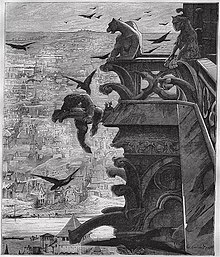
Illustration from Victor Hugo et son temps (1881)
Published in 1831, Notre-Dame de Paris (The Hunchback of Notre-Dame) by Victor Hugo carried with it humanistic themes of the Romantic period such as sympathy for the suffering of the dispossessed, which is common throughout Hugo's writing. Hugo wrote this story, however, to prove the humanistic utility of Gothic architecture.

When Hugo wrote Notre-Dame de Paris, Notre-Dame had its circular colorful stained glass window replaced with clear glass to let in more light. Gargoyles were being removed from their structures. The rapid replacement of the medieval architecture in place of contemporary themes was to Hugo a loss of appreciation for the Gothic side.


Hugo exemplifies Romanticism's reaction to the French Revolution. His father; a general in Napoleon's army, loyal to the new regime. Whereas his mother was loyal to the original monarchy. The conflicting politics eventually led to their separation, leaving Hugo left to decide on his own where he would find meaning as he moved back and forth between parents. He chose to move on and married a childhood friend with whom he had five children.

Throughout his life, Hugo saw both the light and the darkness of humanity. Absolute joy and unforgiving dispair.  Leading him to eloquently articulate both the Gothic mysteries of the unknown and the empathetic compassion for the less fortunate, properly encapsulating Romanticism in its essence.   


Photo Credit: http://paperplanereviews.blogspot.com/2013/06/the-hunchback-of-notre-dame-by-victor.html         

Section C


It was one of those surreal moments when the world seems to stand still and nothing exists but you and the music you're playing.  I always feel that way when I play the C section of Edvard Grieg's Wedding Day at Troldhaugen.  The volume gradually builds over several measures and finally releases into a majestic melody that's both thrilling and liberating.  And then it ends. 

But you know there's more the composer wants to say.  He takes a breath and begins again, and the dynamic contrast is unmistakable.  The melody is tender and clear, captivating but soft.  This is section C.  (Start clip around 0:55 or the beginning then see if you can identify section C.)


My mom is a pianist and taught me for several years before I studied with other teachers.  Wedding Day at Troldhaugen is one of a plethora of pieces I grew up listening to her play and decided to learn.  It’s beautiful listening to it, but it’s the music transforms when you’re the one playing it (I actually get really frustrated trying to find recordings that accurately reflect that emotion.)  While I love nearly all classical music, Romantic and 21st-century pieces specifically seem to have that extra element of the sublime that so accurately expresses what words fail to yet how is the part that remains mysterious in its indefinability.

Grieg was also raised in a musical family in Norway and was taught piano lessons by his mother for several years before going to a conservatory to learn more.  His pieces reflect the emotion and imagination of the Romantic era, telling exciting and moving stories.  The above-mentioned piece was written in commemoration of his 25th wedding anniversary; this expression of his personal feelings is consistent with the emphasis on the individual during that time period.

A few of his other pieces revolve around stories and events as well.  For example, his piece, In the Hall of the Mountain King, was written for a play about a troll king and elicits a mysterious feeling that's exhilarating and almost scary because the audience doesn't know where it's going to lead.  This song is also played in the movie The Pied Piper.  He wrote a funeral march for his fellow composer and it was later played at Grieg’s own funeral.  Grieg was able to meet with several composers throughout his life, including Franz Liszt and Tchaikovsky, both of whom inspired Grieg through their music.

Tuesday, November 6, 2018

Personal Experiences with Romantic Art: Example Posts

I've asked my students to explore art of the Romantic period (see instructions). Here, I'd like to model how they might do this. It's a bit tricky, as I want them to write both about Romantic art / artists but also in a romantic way (that is to say, by focusing on personal feeling and experience).

So, in what follows, I give examples of personalizing my experience with some romantic visual art (Francisco Goya's Saturn Devouring His Children); with romantic music (Mussorgsky's Pictures at an Exhibition); and romantic literature (Melville's Moby Dick). Enjoy.

Tuesday, October 30, 2018

Kidnapped: Warriors, romance, and mystery

Kidnapped by Robert Louis Stevenson is an adventure story set in the Scottish Highlands. When Stevenson wrote this novel in the late 19th century, authors like Sir Walter Scott and poets like Robbie Burns had collectively conjured a literary image of Scotland filled with romance and mystique. The wild, rugged highlands and their inhabitants were a ripe setting for adventures and escapades and magical prose. 

Stevenson writes, "So we sat again and at and drank, in a place whence we could see the sun going down into a field of great, wild, and houseless mountains, such as I was now condemned to wander in with my companion." (Stevenson, 164)

Scottish Highland scenery near where Kidnapped takes place
The novel takes place in the 18th century, just a few years after the last of the Jacobite risings had been defeated at Culloden Moor. Kidnapped captures the noble yet rebellious spirit of the conquered chiefs and their clansmen, and uses this romantic atmosphere to tell the story of a young boy who is kidnapped and later accused of conspiracy and murder. 

In reading various reviews on the novel, I've discovered that although Stevenson originally wrote it for a young audience, it gradually gathered acclaim from adults and even critics. Stevenson, the author of other favorites such as Dr. Jekyll and Mr. Hyde and Treasure Island, even said Kidnapped was the best thing he'd ever written. 

On one hand, the novel seems to convey the fantastical adventures that a young boy could only dream of--shipwrecks, dubious relatives, wild Scottish highland scenery, dangerous bravado, a murder mystery, and even a blind catechist who can somehow aim a pistol. However, many of the issues raised in the story can give insight into relationships and into various political issues of the day. 

For instance, one important lesson is that people have very different motivations in pursuing virtue. The two friends who occupy the attention of the novel are often at odds because one seeks simple financial restoration while the other seeks revenge. Each of these wants justice but in his own way. This side of the novel grants it appeal to more mature readers in addition to the young, and gives it both depth and life. And really, what more can you ask for in a novel?

Image Credits: Isaac Smith, 2014

Monday, October 29, 2018

"Emma Woodhouse, handsome, clever, and rich"

At the crossroads of the Enlightenment and Romanticism, Jane Austen writes her novel, Emma, filled with ordinary people, places and events, unlike other novels of the time.  This was the time in history when reading novels became one of the main forms of entertainment for many people, but especially the middle class. This highlights an idea of the Enlightenment regarding literacy and the popular press where individuals gained access to learning for themselves on a personal level.  Of course, many new works were too expensive to buy, but around this time period, methods for sharing and borrowing the latest fiction came about including libraries, reading clubs, and subscriptions.  These methods are all still alive in our day as we see the sharing of literary works.