Showing posts with label The guilded age. Show all posts

Monday, November 19, 2018

The Birth of Film

     1878 marked the year that the first ever "movie" or moving picture was introduced in the world. The title was The Horse in Motion and it was created by Eadweard Muybridge. Following this short sequence of moving pictures that Muybridge brought into the world, many other creators latched onto this idea of moving photography and thus film was born.
     I was surprised to find that many movies of this time period already began to explore the realms of horror and science fiction. There was a film by the name of Le Voyage dans la Lune, (A Trip to the Moon) that depicted a man landing on the moon in what is recognized by all as the first sci-fi film. Many other genres emerged from this genesis of an art form, such as the western, animated cartoons, and horror films.
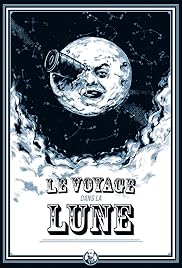
Image result for trip to the moon
     It is interesting to note that many of these filmmakers hung on to many of the ideas and themes of the romantic period such as horror and the exploration of the illogical. Film, like many other mediums, would become a vessel for the ideas and aspirations of society, helping turn the wheels and grease the axle of progress in its own, new way.
     While certainly not as timeless as written literature or many other forms of visual art, film today is certainly one of the most lucrative as well as one of the most talked about art forms. Movies such as documentary have the power to raise awareness, social issues could be represented on a accessible scale in adventure films to help spread ideas and highlight certain injustices, and inspiration for the future of technology could be found in many great science fiction films in a way that words written on a paper or motionless drawings simply could not.
     There were many different political and economical calamities of the Gilded Age, and those should not be overlooked, but the emergence of such a universal and beautiful form of art is often overlooked in the wake the great depression and the two world wars. I often wonder why film is not studied as seriously as a part of general education among public schools and universities, as the richness and depth of this particular form of art is still being uncovered to this day.

Photo Credit:
https://www.google.com/url?sa=i&source=images&cd=&cad=rja&uact=8&ved=2ahUKEwiO_aSOrOLeAhXFnuAKHUQNDFwQjRx6BAgBEAU&url=https%3A%2F%2Fwww.imdb.com%2Ftitle%2Ftt0000417%2F&psig=AOvVaw3VANW47pvehHu4a9I07SPt&ust=1542781772315509

Thursday, November 15, 2018

Man vs. Nature and the Optimism of the Guilded Age

The Guilded Age (1870-1914) was characterized by an intense optimism. The world was reaping all the rewards of its previous progress without the scars of the First World War yet. Huge advancements swept the globe in every field, one notable area of development being vaccines.

When I was in kindergarten, my older sister got chicken pox. She was kept home from school, quarantined, and had strange cream put all over her body. For the dramatic 6-year-old that I was, it seemed to me that she was dying. Two hundred years ago, she might have been.

Image result for virus
Bacteria and viruses
Chicken pox, however, was not the scariest pox out there. Small pox was a killer. In 1796, Edward Jenner produced a vaccine for small pox using cow pox. This idea that man could overcome a deadly virus fueled the optimism into the Guilded Age, and by 1900, there were successful vaccines against five viruses and bacteria.

That was huge for society. Man had become industrious and intelligent, productive and creative, but Mother Nature had stood firm. We were finding ways to avoid her, but the birth of vaccines showed she was beginning to be outsmarted.

Looking at the public health scene of today, it is clear that Mother Nature has found a way to fight back. There are what scientists are calling "superbugs" on the rampage, resistant to any drug that we could throw at them, the cure for HIV and the associated AIDS remains elusive, and our own bodies are fighting against us through many forms of cancer.

I don't believe that we aren't meant to live forever. It seems we are hitting a wall of some kind, but for a few glorious decades, we, the underdogs, were on the rise. And it felt so good.

Image Credit: Wikipedia Commons 

Wednesday, November 14, 2018

When Romantic Ideals Begin to Come True

At the very core of Romanticism is a yearning for the unknown, the unattainable, and the incomprehensible. And while the movement to spread these ideas began relatively recently, in the last few hundred years, many concepts dubbed "unattainable" had eluded mankind for thousands of years before the Romantic Era. Mysteries such as flight and lightning have consumed the imagination of men for as long as history has been recorded. In the late 19th century, however, things changed. 

Image result for lightning
Some awe-inspiring lightning
With advances in industrialization came advances in technology. Suddenly, we discovered how to capture lightning, how to harness electricity and put it to our own deliberate use. We finally conquered the air and learned how to soar through the sky without meeting the ground in an unfriendly manner. Almost overnight (in the grand span of time), things that people had romanticized about for thousands of years became possible and even accessible. The question I ask is: how did achieving some of our wildest dreams affect society?

Image result for thomas edison
Thomas Edison's Laboratory
Some might say that once a person fulfills a deep desire, that person loses purpose and becomes bored. I've definitely seen examples of this in my own life, such as finally finishing a puzzle and suddenly feeling let down because I've lost a sense of direction. On the other hand, however, I've also had experiences in which I've seen fantastic technology, been filled with awe, and immediately filled with even more questions and ideas than before. 

As we can see from history, progress did not stop in the 19th century. Perhaps some people felt a loss of direction during the Gilded Age; it is well-known that the U.S. Patent Office closed down in 1899 because someone apparently thought everything had been invented. But the evidence shows that technology continued to flood the world and advanced at a unprecented rate. 

In short, I think this quote by Walter Ong describes accurately the relationship between the Gilded Age and the Romantic Era which preceded it: 
From man’s beginnings perhaps well over 500,000 years ago until recent times […] knowledge had been in short supply. To keep up his courage, man had continually to remind himself of how much he knew, to flaunt the rational, the certain, the definite and clear and distinct. Romanticism and technology appear at the same time because each grows in its own way out of a noetic abundance such as man had never known before. Technology uses the abundance for practical purposes. Romanticism uses it for assurance and as a springboard to another world. (Walter Ong, Rhetoric, Romance, and Technology: Studies in the Interaction of Expression and Culture


Image Credits: in the public domain and licensed through Creative Commons