Showing posts with label Art. Show all posts

Friday, October 4, 2019

Art and Religion: where the falling angel meets the rising ape

The 14th and 15th centuries may have been the birthplace of philosophical, scientific, and religious innovation and discovery, but when we think of the Renaissance, the first thing that comes to mind for most people will always be the art. And for good reason—of all the brave new worlds opened in the Renaissance, the world of art was at the forefront; was part and parcel of a heady new worldview. The art of the Renaissance encapsulates everything that the period was.

We can see this in the way art changed from the medieval era: the expression of humanism in a renewed appreciation for the beauty of the human form; the Renaissance emphasis on verisimilitude reflecting a broader shift in a society newly enamoured of observation, of critical thinking. Where medieval art was symbol, Renaissance art was a representation of reality as it was seen. A manifestation of a pattern, found throughout the Renaissance, of intellectual openness and honesty. A desire to look at the world, to think for oneself. The same curiosity, observation, criticism, would give birth not just to painting and sculpture, but to the Protestant Reformation.

Power to the People: How Humanism Prompted Martin Luther's Success


Martin Luther once said: “I am more afraid of my own heart than of the pope and all his cardinals. I have within me the great pope, Self.”

I have always wondered what allowed Martin Luther to be as successful as he was. He made bold statements against an institution that seemed to be untouchable, and still managed to reform one of the biggest powers of the time period with only, as Luther calls it, Self.

As I was discussing with my friends Bella and Fay on Tuesday, we considered the effect individualism (an importance Renaissance ideal) had on the Reformation. One thing that was said during the conversation really stood out to me: 

Thursday, September 12, 2019

Humanism and the Repair of the World

To a medieval man or woman, society was ordered, hierarchical: if you live in the Middle Ages, someone else is always in charge. One of the most fundamental ideas born during the Renaissance is humanism: a philosophy that hinges on the then-radical concepts of self-determination and free will. Where do the laws come from? Who takes care of problems? Humanism puts that responsibility on us as individuals rather than trusting to the established hierarchy.

To me, this rings the same bells that rang when I learned about the Jewish concept of tikkun olam, often translated as 'the repair of the world'. Tikkun olam is a way of describing a sense of social responsibility. The world is broken, in need of perfecting. But God is not snapping Their fingers and fixing it, because They want us to aid in repairing it. This is our duty, obligation, and privilege.


“The phrase 'Someone ought to do something' was not, by itself, a helpful one. People who used it never added the rider 'and that someone is me'.”

― Terry Pratchett, Hogfather


The concept of tikkun olam as well as Pratchett's works have deeply informed my own practice as a hearthcrafter: I believe that I am helping to perfect the world by perfecting my own home. I hold on tightly to what is mine, and do everything in my power to protect it and the people that depend on me. Pratchett might describe my approach to the sacred duty of hospitality as weaponized selfishness.

One of the ways I keep my home feeling safe and welcoming: a ruchnik, or embroidered ritual towel-- a gift from a dear friend.


Perhaps Niccolò Machiavelli would approve of this, or perhaps he would scoff at me as naive. Of course, he is only one side in the Renaissance debates about how this newly individual responsibility is to be accomplished.

Another side, one that resonates much more deeply for me, is the various artistic movements celebrating the beauty of the world and the beauty of humans, our place in the world as something inherently valuable. Because inherent value means it's worth putting effort into. The world, say Giotto and Petrarch and Botticelli, is worth fixing. And so why would we not do everything in our power to fix it?

Thursday, May 16, 2019

Hot Spots in Graphics and Design

Appropriation Art


Appropriation is taking possession of something (object and/or image) that already exists. Artists who use appropriation is in no way trying to pull one over anyone, but rather putting these objects and images in a new context without transforming their original concepts. The earliest form of appropriation art was in 1912 by Pablo Picasso who created a glass bottle and guitar out of newspaper clippings discovered this form of art and design, but this does not dismiss the fact that an artist runs the risk of accusation and lawsuits due to plagiarism, non-original and copyright infringement. This is one that Andy Warhol became much familiar with when he was sued by Campbell's Soup for his portrait of the Campbell's Soup Can. 


A Literary​ Discipline


When an author writes, they face the task of creating characters which develop throughout the book. An editor then brings form into the writers' text like a carver brings form to a block of wood or stone. A graphic designer could add new layers of meaning to the text they are structuring —  they’re capable of permeating the immediacy of a single word, phrase or expression with narrative. Writers, editors and designers all speak the same language. 

An example of writers, editors and designers speaking the same language, I am currently reading HonorĂ© de Balzac’s classic novella, “The Girl with the Golden Eyes”, the first 30 pages Balzac is basically walking the reader through Paris describing how horrific and awful it is. An artist name Eugene Delacroix created a painting called ‘The Death of Sardanapalus’ which depicts a society of chaos, giving Balzac’s textual description of Paris a new layer of meaning.


Not Self-Expression


Self-expression is the way we declare our personalities, our feelings, thoughts and ideas in a variety of ways. Throughout my two years at Salt Lake Community College studying graphic design, most of my professors would constantly state that graphic design is a service rendered by you for other people and that your own design idea(s) were irrelevant. So, we were taught and trained to follow specific instructions given in the form of assignments and projects. 

Presentation days were the most boring and longest days of my life, not because I hate speaking in front of the class (I really do hate speaking in front of a large group of people), but enduring a whole two hours of students presenting on the same thing, using the same terminology only with a twist in sequence in the process of completing the assignment. This is true in the sense of a marketing profession or a product designer but not for graphic designers who draw inspiration from their own ideas and interests.  


We are constantly surrounded by graphic design, whether we notice it or not. It is the visual communication through the combination of typography, photography and illustration which creates a symbolic representation of an idea or message. It is on the clothes we wear, the cars we drive and the candy wrappers we immediately discard after devouring its contents. Some of us may have drawn a mustache or two on an image on our handouts, added curly hair to a character in a book, filled in the holes in the letters p, o, capital A or even added serif and tails to printed text. You may have done this unconsciously, but you were able to add a new layer and idea to something even if boredom inspired you, it is a form of self-expression in the form of graphic design.

Monday, November 19, 2018

The Birth of Film

     1878 marked the year that the first ever "movie" or moving picture was introduced in the world. The title was The Horse in Motion and it was created by Eadweard Muybridge. Following this short sequence of moving pictures that Muybridge brought into the world, many other creators latched onto this idea of moving photography and thus film was born.
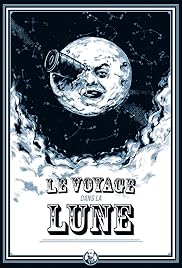
     I was surprised to find that many movies of this time period already began to explore the realms of horror and science fiction. There was a film by the name of Le Voyage dans la Lune, (A Trip to the Moon) that depicted a man landing on the moon in what is recognized by all as the first sci-fi film. Many other genres emerged from this genesis of an art form, such as the western, animated cartoons, and horror films.

Image result for trip to the moon
     It is interesting to note that many of these filmmakers hung on to many of the ideas and themes of the romantic period such as horror and the exploration of the illogical. Film, like many other mediums, would become a vessel for the ideas and aspirations of society, helping turn the wheels and grease the axle of progress in its own, new way.
     While certainly not as timeless as written literature or many other forms of visual art, film today is certainly one of the most lucrative as well as one of the most talked about art forms. Movies such as documentary have the power to raise awareness, social issues could be represented on a accessible scale in adventure films to help spread ideas and highlight certain injustices, and inspiration for the future of technology could be found in many great science fiction films in a way that words written on a paper or motionless drawings simply could not.
     There were many different political and economical calamities of the Gilded Age, and those should not be overlooked, but the emergence of such a universal and beautiful form of art is often overlooked in the wake the great depression and the two world wars. I often wonder why film is not studied as seriously as a part of general education among public schools and universities, as the richness and depth of this particular form of art is still being uncovered to this day.

Photo Credit:
https://www.google.com/url?sa=i&source=images&cd=&cad=rja&uact=8&ved=2ahUKEwiO_aSOrOLeAhXFnuAKHUQNDFwQjRx6BAgBEAU&url=https%3A%2F%2Fwww.imdb.com%2Ftitle%2Ftt0000417%2F&psig=AOvVaw3VANW47pvehHu4a9I07SPt&ust=1542781772315509

Wednesday, November 14, 2018

Change of Pace, Change of Scenery


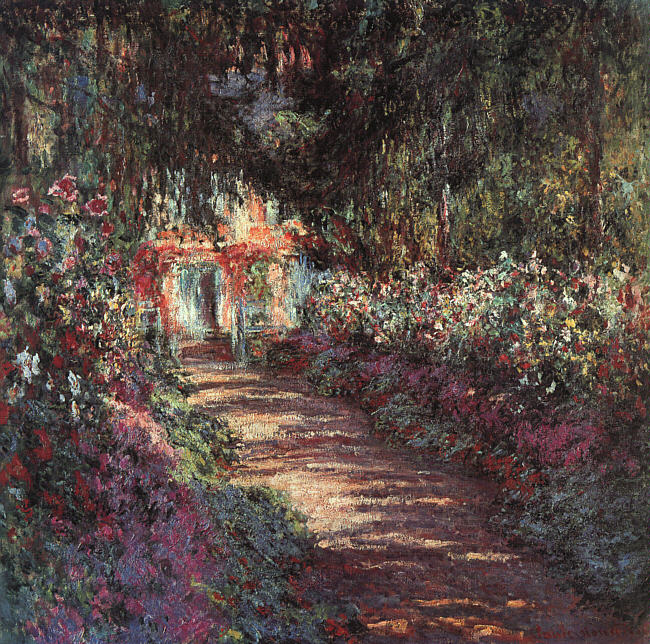
The Garden in Flower Claude Oscar Monet 1900.jpgBorn and raised in Northern Delaware, I was always a stone’s throw away from some of the art hubs of the East Coast, like 25 minutes away from the Philadelphia Mueseum of Art and the about 2 hours away from the Metropolitan Museum of Art. These were easy for field trip destinations for my schools growing up and day trips with my mom when I didn’t want to go to school. Whenever the museums had exhibits of impressionism, specifically of Claude Monet.


When I graduated high school, I skipped the normal ceremonies, took all my savings, and travelled around Europe with my cousin. On my itinerary was the Museum d’Orsay which houses a rather large selection of impressionist-era paintings, including works of my favorite childhood painter Claude Monet.


Patrons of the museum weren’t allowed to photograph anything inside, and for the first time in a rather hectic vacation of two poor East Coast girls, one of them freshly tossed into the world and having no idea what to do with her life, I just sat and looked at the famous paintings that literally wrapped around the room. I took in the thoughts and colors of a dead painting and suddenly felt full of life.


With a weekend for attending international cinema movies and a debate of dead soldiers from WWI, the heaviness of those topics were elevated when I decided to spend some time writing this post about the tranquility of Monet’s impressionism the generation before the War to End all Wars. I think that some of the beauty that came from the impressionism era is that it add beautiful color to the stark, gray contrast of battlefields, shell-shock, and the carnage of war. Like my experience in stepping out of the chaos of a busy city in the quiet of Monet’s gardens, art like impressionism preceded the war in what I can only hope was a serendipitous therapy offered to the war via nature-art.

Photo Credit: The Garden Way (Public Domain Image via Wikimedia Commons)

Friday, November 9, 2018

The Creative Runt of the Family

As the youngest of five children, I grew up seeing my siblings develop and display great artistic talent. It came as no surprise since my dad was an avid painter when he was young. I saw my siblings sing enchanting melodies, draw riveting portraits, and play infectious tunes on a variety of musical instruments. I was quite disappointed the day I realized that my talents in those areas were far from being on the same level as my siblings'. I've since realized that my creativity is channeled in a very different way. I've longed to look at an impressionistic painting and feel a burst of emotion or feel the pull on my heartstrings upon reading a lovely poem, but try as I might, I see art in a very different way. I like art that imitates reality. I like logic. I like raw emotion, exposed meaning. So while I looked through the art of the Romantic Era, I wondered if I would find anything that truly made me stop and feel.

"Fishermen at Sea" Joseph Mallord William Turner
Joseph Mallord William Turner was from a middle-class family. He didn't have high social standing or abundant wealth. He had his art. He was classified as a prodigy in his youth and continued to receive renown for his artistic genius. What stands out to me though isn't the lines or colors, it's the reality of the scene. It's the fact that I can close my eyes and be in this painting. I can feel the spray of the water and the glimmer of the moon as it reflects off the water. I can look at this painting and feel like I'm a part of it, even without an overly artistic mind. I don't have to study it for an hour with my feet together and my head tilted to one side. I can let the emotions that I already have connect with this scene that feels familiar to me even though I've never been a fisherman at sea.

image credit: public domain images via Wikimedia Commons

Saturday, September 22, 2018

The Role of Art for Today's Youth


John Donne (pictured to the left) was a poet alive during the time of the British Renaissance. In his earlier years, his poetry was primarily about love and he enjoyed a lavish lifestyle. However, after growing older and getting married, the topics of his poetry changed and he began to write to about religious things, such as his personal relationship with God.


For Donne, his poetry helped him to work through and understand his feelings. Poetry was not just a means of making an income or persuading people towards one school of thought or another, it was his outlet, his means of understanding the world around him. Art, in its many forms, is capable of having this kind of effect on all who call themselves an artist.


However, art does not hold the same respect that it had in the Renaissance in today's world. Many schools around the country have greatly reduced or even completely pulled funding from their arts programs, meaning some students aren't learning how to express themselves through a creative medium. Artistic expression may be what makes the difference between a student growing up to be a criminal or a productive member of society.


If we could simply have the same appreciation for art that our ancestors had, we could help so many students in America have the resources that they need to learn and grow. If we can look to the example of John Donne, then we can see the kind of change that can occur in the life of an artist who is allowed to exercise their talents.

Image Credit: John, http://www.luminarium.org/sevenlit/donne/ Public Domain