
 Born and raised in Northern Delaware, I was always a stone’s
throw away from some of the art hubs of the East Coast, like 25 minutes away
from the Philadelphia Mueseum of Art and the about 2 hours away from the Metropolitan
Museum of Art. These were easy for field trip destinations for my schools growing
up and day trips with my mom when I didn’t want to go to school. Whenever the
museums had exhibits of impressionism, specifically of Claude Monet.
Born and raised in Northern Delaware, I was always a stone’s
throw away from some of the art hubs of the East Coast, like 25 minutes away
from the Philadelphia Mueseum of Art and the about 2 hours away from the Metropolitan
Museum of Art. These were easy for field trip destinations for my schools growing
up and day trips with my mom when I didn’t want to go to school. Whenever the
museums had exhibits of impressionism, specifically of Claude Monet.
When I graduated high school, I skipped the normal
ceremonies, took all my savings, and travelled around Europe with my cousin. On
my itinerary was the Museum d’Orsay which houses a rather large selection of
impressionist-era paintings, including works of my favorite childhood painter
Claude Monet.
Patrons of the museum weren’t allowed to photograph anything
inside, and for the first time in a rather hectic vacation of two poor East Coast
girls, one of them freshly tossed into the world and having no idea what to do
with her life, I just sat and looked at the famous paintings that literally
wrapped around the room. I took in the thoughts and colors of a dead painting and
suddenly felt full of life.
With a weekend for attending international cinema movies and
a debate of dead soldiers from WWI, the heaviness of those topics were elevated
when I decided to spend some time writing this post about the tranquility of
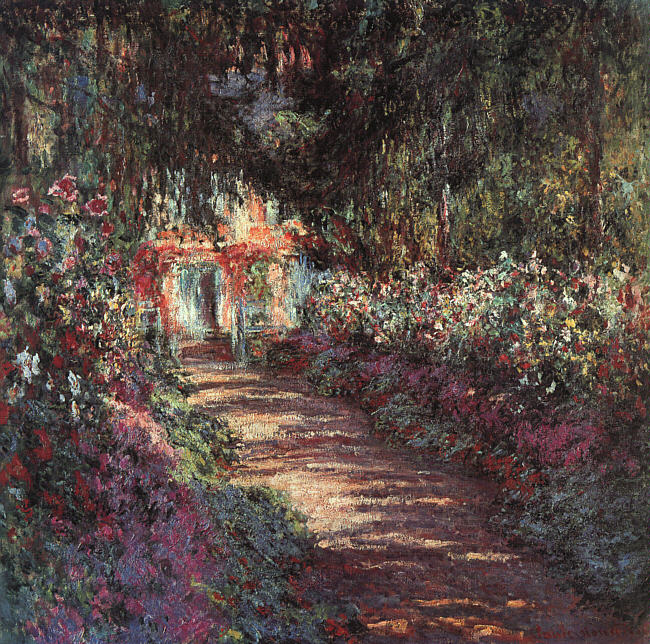
Monet’s impressionism the generation before the War to End all Wars. I think that
some of the beauty that came from the impressionism era is that it add beautiful
color to the stark, gray contrast of battlefields, shell-shock, and the carnage
of war. Like my experience in stepping out of the chaos of a busy city in the
quiet of Monet’s gardens, art like impressionism preceded the war in what I can
only hope was a serendipitous therapy offered to the war via nature-art.
Photo Credit: The Garden Way (Public Domain Image via Wikimedia Commons)
