Showing posts with label piano. Show all posts

Wednesday, November 7, 2018

Frederic Chopin: Accessing the Heart

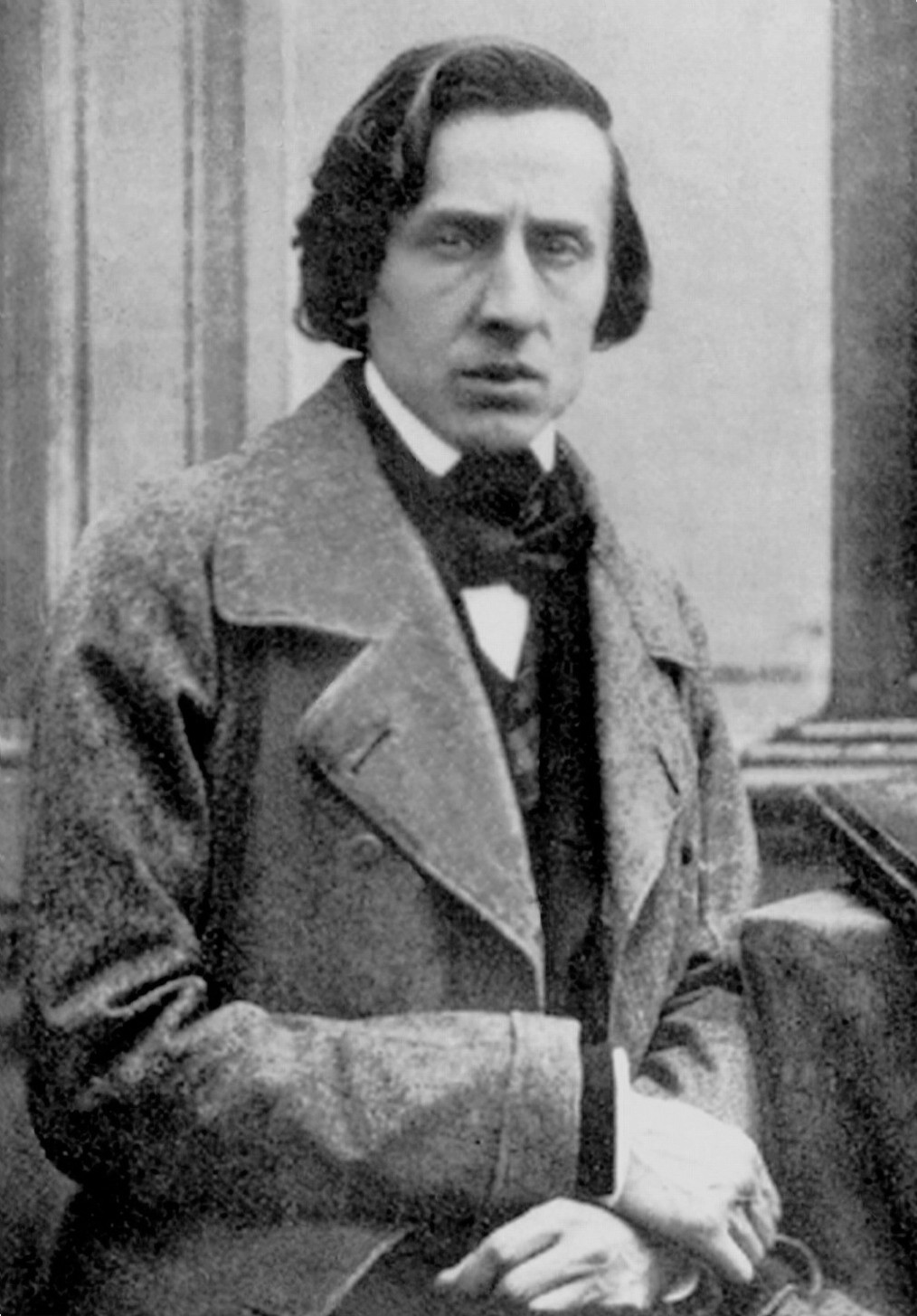
Image result for chopin
Frederic Chopin, looking ever so cheerful

Emotional expression through music has always seemed rather mathematical to me. When you want to feel anger, you listen to loud, harsh music. When you want to feel love, you listen to sweeping, sweet tones. When you want to feel patriotic, you find majestic, triumphant marches. To be happy, you listen to music in a major key, to be sad, you listen to the minor. It all seems very simple. 

About a year ago, I had an experience that changed all of this. I had been exploring classical music as a companion to literature; I wanted to read with accompaniment but without distraction, and Impressionist and Romantic piano music seemed to do the trick. In the course of my searching, I stumbled across an artist named Frederic Chopin, whose name I had heard dozens of times, but whose work I had never sought out. Chopin was a child prodigy on the piano. In fact, his virtuosity was such that he hardly ever explored any other instrumentation in his compositions. Solo piano works comprise almost his entire corpus.

At the time I discovered Chopin, I was reading a book called Anna Karenina, by Leo Tolstoy. Anna Karenina is a novel centered around love and heartbreak and follows the story of the eponymous character as she navigates the consequences of adultery. When I began to listen to Chopin's work while reading this book, I suddenly felt my emotions at the events in the story begin to swell up. My mild annoyance with certain characters or actions was fanned into a passionate bonfire when I immersed myself in pieces such as Op. 28, No. 15, or Nocturne in C-Sharp Minor
 
Through this experience, I began to realize that music can act similarly to a window in a wall. The more empty space there is, the greater amount of wind that can rush through. Sometimes, the quietest and simplest of pieces may not necessarily reflect my emotions the best, but I discovered that those pieces can have great power in accessing them. 

Curious what could have inspired such perceptive melancholy, I researched a little into Chopin's personal life. I discovered that he was often ill and died at a relatively young age, thirty-nine. In addition, he was known for having a turbulent love life. I guess circumstances like those almost seem stock for a Romantic-era composer, but the raw emotion in his pieces tell me that Chopin was a true Romantic, filled with passion and blessed with a talent to express that passion through music.


Image Credits: in the public domain, licensed through CC

Section C


It was one of those surreal moments when the world seems to stand still and nothing exists but you and the music you're playing.  I always feel that way when I play the C section of Edvard Grieg's Wedding Day at Troldhaugen.  The volume gradually builds over several measures and finally releases into a majestic melody that's both thrilling and liberating.  And then it ends. 

But you know there's more the composer wants to say.  He takes a breath and begins again, and the dynamic contrast is unmistakable.  The melody is tender and clear, captivating but soft.  This is section C.  (Start clip around 0:55 or the beginning then see if you can identify section C.)


My mom is a pianist and taught me for several years before I studied with other teachers.  Wedding Day at Troldhaugen is one of a plethora of pieces I grew up listening to her play and decided to learn.  It’s beautiful listening to it, but it’s the music transforms when you’re the one playing it (I actually get really frustrated trying to find recordings that accurately reflect that emotion.)  While I love nearly all classical music, Romantic and 21st-century pieces specifically seem to have that extra element of the sublime that so accurately expresses what words fail to yet how is the part that remains mysterious in its indefinability.

Grieg was also raised in a musical family in Norway and was taught piano lessons by his mother for several years before going to a conservatory to learn more.  His pieces reflect the emotion and imagination of the Romantic era, telling exciting and moving stories.  The above-mentioned piece was written in commemoration of his 25th wedding anniversary; this expression of his personal feelings is consistent with the emphasis on the individual during that time period.

A few of his other pieces revolve around stories and events as well.  For example, his piece, In the Hall of the Mountain King, was written for a play about a troll king and elicits a mysterious feeling that's exhilarating and almost scary because the audience doesn't know where it's going to lead.  This song is also played in the movie The Pied Piper.  He wrote a funeral march for his fellow composer and it was later played at Grieg’s own funeral.  Grieg was able to meet with several composers throughout his life, including Franz Liszt and Tchaikovsky, both of whom inspired Grieg through their music.

Saturday, November 3, 2018

My world

  • Something big:  I stepped off of the plane on an uncomfortably hot and humid afternoon in September of 2015.  I felt the humidity entrenched over my body.  All I had in hand was two small suitcases filled with belongings and photos of my loved ones.  I scanned the view around me to take it all in.  The sky stretched out before my eyes for miles and I witnessed the vast, brightly colored sky that I had only witnessed in movies.  This would be my home for the year and a half of my life. 
  • Something broken: I was on the freeway driving home from a long and stressful day at work.  Unfortunately, my week outside of work was also long and stressful.  I sat in my car thinking about how I couldn’t possibly take another thing.   Just then, I felt my car being launched forward several feet in front of me. I pulled over to the side of the road, stepped out of my vehicle, and surveyed the damage that had taken place.  My back fender was completely smashed in.  This event was the icing on the cake of my undesirable and unfortunate week.
  • Something artistic or something man made: I can still the voice of my mother in the back of my mind reminding me to practice the piano.  As a child, sitting down to practice the piano was at the very bottom of my "favorite things" list.  I grew up on the east coast, as a nine year old girl, I felt like my time was best spend playing in the forest behind my house and getting dirty rolling around in the leaves.  You can imagine the struggle it was for my mother to get me to sit down and actual practice my songs.  I can't say I appreciated that persistency at the time, but looking back, I am so grateful she stuck to her guns. 
  • Something Mysterious: Why was I born into the family that I have?  Why was a born a member of The Church of Jesus Christ of Latter-day Saints? Why did my life path lead me to BYU? Why have I met the people that I have? Why do I feel strong love from a God I’ve never seen? These questions are pertinent in my mind, and honestly, I don’t think I’ll know the answers to these questions in this life.   
Image: my first photo taken in Oklahoma 

Friday, November 2, 2018

That's What I Was Gonna Say

Something Big: The Black Hills
Alyssa & I at Mount Rushmore
I stared up at the faces looming before me, their detail lessened the distance between them and me, but their size defined two separate worlds.  Driving through the Black Hills reveled greater depth and greater height.  It was a sea of rocky mountains and trees.  It was expansive and unending, and I felt small.

Something Broken: Partners in Crime
We ran up Old Main hill, taking pictures and laughing as we usually did.  But something had changed in the past year.  My best friend, M, and I were partners in crime, running buddies, doorbell-ditching pals, and homework helpers.  But something shifted the last year of high school.  We still had our share of time together, but the camaraderie we'd had changed.  And soon we spent less and less time together.  Our first semester of college together was the same, and even though we said we were best friends we never reached the point of closeness we'd had before.  She left on her mission the week after I came home, so who knows what will happen when she gets back.

Something Artistic or Man-Made: Servant or Master?
My favorite part had arrived.  All else evaporated into the silence and I closed my eyes.  The music led my hands from one key to the next--ever pulling, demanding, hungry and desperate to expose itself.  I thought I was the musician here.  Yet I felt something that my fingers couldn't express: it transcended physical ability and captured what couldn't be spoken.  The striking melody was both haunting and beautiful; calming yet intensifying; satisfying but at the same time disappointing--for nothing else could articulate what a wordless conversation had inspired. (see Khachaturian Concerto Part I below; see 3:22 or 11:14)


Something Mysterious: That's What I Was Gonna Say
I opened the email from my mom with anticipation.  The previous week I'd asked her to send me my biological dad's address.  At the end of the email she said, "Oh that's funny--Alyssa asked me the same thing last week too."  We, my twin sister and I, were both serving missions and this wasn't the first time (nor the last) something similar happened.  My older brother frequently yells, "Jinx!" as he hears us say the same thing at the same time.  Often when Alyssa and I are talking, I say what she's thinking (or vice-versa) or we finish each other's sentences.  And although we only have a few of the same clothes, we nearly always wear them on the same day.  

Sunday, September 23, 2018

Bach's Got Sprezz?


Our nonchalantly clever friend, sprezzatura, made his mark not only in conversation and dress but also in music.  As a pianist, this was exciting to discover.  But I wasn’t surprised to find out what its theme-song is: jazz.  You can hear it in the music as much as you can see it in the pianist--one hand on the keyboard, eyes wandering around the room, reflecting an ambiance of easiness.  The music itself is laid back, seemingly casual, but paradoxically striking and captivating.

But that’s not what they played in the 1600s.

Johann Sebastian Bach was the star of the 1600s and is still a highly-praised musician today.  His music is admirable for its technicalities—it’s very vertical, systematic, and almost dry.  Yet this somehow expressed the culture of the scientific revolution.  The music has purpose; it moves progressively forward towards a predetermined destination.  (For image of Bach's sheet music, click here).

Playing Bach requires concentration and drilling--there's little room for improvisment because the interpretation is straightforward.  It's dull but comfortable.  Jazz, on the other hand, is a whole different ball game.  A few chords are thrown at you but the music that stares back at you from the piano is more white than black.  It's daunting, sometimes petrifying, but also thrilling.  It could take you nowhere and it'd still be a great adventure (try it out here).
Jazz Piano Sheet Music

So was sprezzatura re-personified in the 1600s?  Or did Bach's music, coupled with other Baroque arts and scientific discoveries take center stage?  

Image Sources: "Piano clip art" (via pxhere)
"Jazz Piano" (public domain images via Wikimedia Commons)