Showing posts with label posted by Cherileigh L. Show all posts

Tuesday, December 11, 2018

The Keepers of Economic History

Typical Balance Sheet

by Cherileigh Leavitt

The language of business: a fictional tale or a reliable report?  What do investors and businesses really want?


The technological innovations of the Digital Age caused people to question and sometimes abandon traditional methods.  For example, CBS News released an article last year reporting that over fifty percent of U.S. households no longer used landlines and only had cellphone service.  Flash back just over a decade to 2004 and over ninety percent of U.S. households had landlines, but they’re now considered a “dying breed.”  Just as traditional systems have been challenged in the past, a traditional accounting system is being challenged today.  Assets and liabilities are traditionally reported at historical cost, but historical value also has a competitor: fair market value.


Wednesday, December 5, 2018

Accounting: Past, Present,...but Future?

The first records of accounting were taxes recorded on clay tablets in Egypt and Mesopotamia.  As the economy adopted a monetary system years later, accounting was also used to record transactions.  One of the most significant events in the history of accounting is the development of the double-entry method in 1458 which consists of recording transactions with both a debit and credit value.
Evolution of Accountants
An Italian mathematician named Luca Pacioli published this idea using the Gutenberg press in 1494, and because his twenty-seven page lecture on double-entry bookkeeping was accessible to many, Pacioli’s book was a frequent reference for accounting for several hundred years.
The industrial revolution created a greater need for more efficient and accurate bookkeeping.  As companies grew and became more competitive, they needed to communicate who were the shareholders in the corporation.  During the information age, many accounting organizations were created to create general principles that would establish constituency across the board regarding how values were to be reported on financial statements.

And the digital age would change it even more.  The rapid progress of technology has enabled the invention of computerized accounting systems that contain the transactions of a business—they even comply with the Generally Accepted Accounting Principles (GAAP) required by the US Securities and Exchange Commission.  So if the computers can run the numbers, then what’s our job?  While accounting is clearly useful and necessary, do we still need the accountants? 

Image Credit: Evolution of Accountants (via i Edu Note)

Monday, December 3, 2018

Hot Spots in Accounting


Auditor Disclosure
A recent rule requires auditing firms to include signatures of the audit engagement partners and names of other involved firms on the auditing report.  It’s been met with some resistance since the name of the firm carries a reputation with it which could enhance or decrease the credibility in the audit report and/or financial statements that investors read.  (See https://www.accountingweb.com/aa/auditing/pcaob-adopts-new-rules-on-naming-audit-engagement-partner)

Responsibility Accounting: Good or Bad?
Responsibility accounting is a networking system that businesses use to delegate assignments to managers in subsystems to make goals and be held accountable for specific costs and revenues.  Some advocate this method because it allows specialization, more accountability on the manager, more motivation, etc.  Others argue that this method “promotes subsystem optimization” and therefore prevents “inter-functional cooperation.” (See number 6 in https://maaw.info/ArticleSummaries/ArtSumMartin94.htm)
           
Earnings Management vs. Earnings Manipulation
Many decisions are based on the reported accounting numbers, including whether or not an investor decides to invest in the company.  Therefore, managers have various motivations and incentive to manage the earnings reported on the financial statements.  Some of the financial accounting is left to the say of the accountant, which allows for earnings management.  However, there’s a difference between earnings management and earnings manipulation—that is, ethical strategic timing versus fraud.  But where do you draw the line?  (See https://smallbusiness.chron.com/ethical-issues-facing-accounting-profession-18307.html)

I’m most opinionated about this third topic.  Accounting is the “language of business” which makes the financial statements a sort of medium not only for internal purposes but it serves as a link between the company and investors.  A lot depends on the numbers reported, so I see where the motive comes to manage the numbers to the company’s benefit.  However, I value integrity more than these other incentives, and I think accountants can be strategic in their reporting without being deceptive.

Friday, November 23, 2018

The Temple of Peace


In Winston Churchill's speech, Sinews of Peace, he outlines a metaphor for peace that builds his credibility and appeals to the audience’s both emotional and logical senses. 

Churchill's painting of the Parthenon; conveys destruction of war
Churchill sets the stage for his metaphor by preceding it with an outline of the tragic and painful consequences of war the United States (and Britain) have already experienced.  Vocabulary such as “two gaunt marauders,” “frightful disturbance,” “the curse of war,” “distorted,” and “broken” evoke haunting memories and fear of the future that cause the audience to open their ears to a solution.  Before diving into the solution just yet, Churchill carefully creates for his audience a sense of ownership—this is “our supreme task,” not just mine, and not just yours.  Only by recognizing this responsibility will his listeners heed his suggestions.

In that moment of vulnerability, he expands on the already-proposed solution of a world-wide organization whose purpose is to prevent war by emphasizing that this method must be a "true temple of peace…not merely a cockpit in a Tower of Babel."  By labeling this proposition as a temple of peace, Churchill connects with the audience, appealing to their desire to live lives free of war and worry.  Whereas they beforehand might not have seen the self-applicability of the world-wide war-preventing organization, they are now on board.  They consider temples places free of war and full of refuge, and this can now be their goal.

Churchill specifies that this must be an immovable temple--"built…upon a rock"--that won't crumble and fall, thus building trust with his audience by assuring them that this is no half-hearted endeavor; he’s committed to doing all he can to bring this to pass.  Churchill's following paragraph outlines his "definite and practical proposal."  This word-choice and the s
ubsequent explanation provide a logical appeal to his audience, and now they not only feel the validity of his proposal and understand how it can happen.

These several emotional and logical appeals, as well as the credibility Churchill builds, inspire his audience to feel a need to do something, take ownership for the problem, and understand how the solution will be executed.

Image source: The Parthenon (via Providence Mag)

Wednesday, November 14, 2018

The Forgotten Man


I dug my spurs into my horse’s flanks, urging her forward to cut off the cow before she wandered off the trail, dragging half the herd with her.  She complied but bellowed to let me know she wasn’t happy, and it wasn’t too long before a heifer tried the same thing.  My horse diligently obeyed, though I could feel her heavy breaths as her sides expanded and deflated, moving my legs out and in with each pant.  Her mane was damp and her hide glistened with sweat, but on she went. 

It’s not a perfect parallel, but to coincide with William Sumner’s ideas, we could call this horse “the forgotten horse.”  William Sumner was an American social scientist who taught at Yale during the Gilded Age.  The uprisings of monopolies and flourishing of the middle class starkly contrasted with the life the new immigrants and lower class were living.  Efforts were put forth to hinder the growth of booming businesses and others sought ways to assist the immigrants and lower class.  So what does this have to do with a forgotten horse?

In Sumner’s work, What Social Classes Owe to Each Other, he passionately argues that “every effort to realize equality necessitates a sacrifice of liberty.”  He sees many people working diligently and seeing success, yet the fruits of their labors are laid at the feet of those in poverty.  There is no motive to rise above that condition when “social doctors flock about him, bringing the capital which they have collected from the other class, and promising him the aid of the state to give him what the other had to work for.”  With these circumstances, the social reformers and philanthropists, A and B, dictate what C will do for the poor, D.  And what does he call C?  The Forgotten Man. 

Image Credit: Scale (via mesosyn)

Monday, November 12, 2018

Dead Soldiers' Debate: Where is Nationalism Now?

German damage to the Statue of Liberty

“I didn’t want to serve in the war,” Private Leonard Allred expressed with heaviness in his voice at the Dead Soldiers’ Debate on BYU campus.  Sorrow and brokenness weighed down his tone as he expressed the pains he experienced in war: body lice constantly biting him, rats and bugs, the stench of death, trekking over hills, the moaning of wounded men.  He hadn’t wanted to be a part of any of it, but he’d been drafted, “involuntary servitude” he labeled it.  This was infringing on their rights protected in the 13th amendment.  Was this the nationalism he wanted to be a part of? 

And the affects didn’t end when he left the battlefield.  Private Allred’s wife welcomed home a veteran who was abusive and beat her, driving her to attempt suicide.  He lived as an outcast for years before spending the last part of his life in a veteran’s hospital with others who had the same psychiatric case.  Where was the help he needed?  Where was his nation now after he’d served them in war?

On the other hand, Lieutenant Colonel Charles Young was an African American born shortly after the end of the Civil War.  He’d led several cavalries and had experience in combat.  He wanted to serve the United States of America and express his loyalty to the country in which he hoped to experience liberty.  However, the African American soldiers were initially denied military service.  Eventually they were allowed to fight but still experienced measures of segregation: they weren’t allowed to fight overseas, and their units were segregated by color.  Colonel Young wanted so bad to demonstrate the loyalty he felt to his country yet was constantly being rejected that opportunity.

Both accounts illustrate nationalistic feelings.  Private Allred wanted the America he already supported—the one that protected his rights.  Colonel Young wanted to be part of America not only because of where he physically lived, but he wanted his people and his sacrifices to be seen and accepted as his loyalty to the country.  Did their participation in the war do more to preserve or hurt nationalism?

Image credit: German damage to the Statue of Liberty (via Spartacus Educational)

Wednesday, November 7, 2018

Section C


It was one of those surreal moments when the world seems to stand still and nothing exists but you and the music you're playing.  I always feel that way when I play the C section of Edvard Grieg's Wedding Day at Troldhaugen.  The volume gradually builds over several measures and finally releases into a majestic melody that's both thrilling and liberating.  And then it ends. 

But you know there's more the composer wants to say.  He takes a breath and begins again, and the dynamic contrast is unmistakable.  The melody is tender and clear, captivating but soft.  This is section C.  (Start clip around 0:55 or the beginning then see if you can identify section C.)


My mom is a pianist and taught me for several years before I studied with other teachers.  Wedding Day at Troldhaugen is one of a plethora of pieces I grew up listening to her play and decided to learn.  It’s beautiful listening to it, but it’s the music transforms when you’re the one playing it (I actually get really frustrated trying to find recordings that accurately reflect that emotion.)  While I love nearly all classical music, Romantic and 21st-century pieces specifically seem to have that extra element of the sublime that so accurately expresses what words fail to yet how is the part that remains mysterious in its indefinability.

Grieg was also raised in a musical family in Norway and was taught piano lessons by his mother for several years before going to a conservatory to learn more.  His pieces reflect the emotion and imagination of the Romantic era, telling exciting and moving stories.  The above-mentioned piece was written in commemoration of his 25th wedding anniversary; this expression of his personal feelings is consistent with the emphasis on the individual during that time period.

A few of his other pieces revolve around stories and events as well.  For example, his piece, In the Hall of the Mountain King, was written for a play about a troll king and elicits a mysterious feeling that's exhilarating and almost scary because the audience doesn't know where it's going to lead.  This song is also played in the movie The Pied Piper.  He wrote a funeral march for his fellow composer and it was later played at Grieg’s own funeral.  Grieg was able to meet with several composers throughout his life, including Franz Liszt and Tchaikovsky, both of whom inspired Grieg through their music.

Friday, November 2, 2018

That's What I Was Gonna Say

Something Big: The Black Hills
Alyssa & I at Mount Rushmore
I stared up at the faces looming before me, their detail lessened the distance between them and me, but their size defined two separate worlds.  Driving through the Black Hills reveled greater depth and greater height.  It was a sea of rocky mountains and trees.  It was expansive and unending, and I felt small.

Something Broken: Partners in Crime
We ran up Old Main hill, taking pictures and laughing as we usually did.  But something had changed in the past year.  My best friend, M, and I were partners in crime, running buddies, doorbell-ditching pals, and homework helpers.  But something shifted the last year of high school.  We still had our share of time together, but the camaraderie we'd had changed.  And soon we spent less and less time together.  Our first semester of college together was the same, and even though we said we were best friends we never reached the point of closeness we'd had before.  She left on her mission the week after I came home, so who knows what will happen when she gets back.

Something Artistic or Man-Made: Servant or Master?
My favorite part had arrived.  All else evaporated into the silence and I closed my eyes.  The music led my hands from one key to the next--ever pulling, demanding, hungry and desperate to expose itself.  I thought I was the musician here.  Yet I felt something that my fingers couldn't express: it transcended physical ability and captured what couldn't be spoken.  The striking melody was both haunting and beautiful; calming yet intensifying; satisfying but at the same time disappointing--for nothing else could articulate what a wordless conversation had inspired. (see Khachaturian Concerto Part I below; see 3:22 or 11:14)


Something Mysterious: That's What I Was Gonna Say
I opened the email from my mom with anticipation.  The previous week I'd asked her to send me my biological dad's address.  At the end of the email she said, "Oh that's funny--Alyssa asked me the same thing last week too."  We, my twin sister and I, were both serving missions and this wasn't the first time (nor the last) something similar happened.  My older brother frequently yells, "Jinx!" as he hears us say the same thing at the same time.  Often when Alyssa and I are talking, I say what she's thinking (or vice-versa) or we finish each other's sentences.  And although we only have a few of the same clothes, we nearly always wear them on the same day.  

Monday, October 29, 2018

Persuaded.


In Jane Austen’s novel, Persuasion¸ the importance of social class in the early 1800s is demonstrated by the measures characters take to preserve their status.  Sir Walter is forced to "let" his primary residence in Kellynch Hall to avoid further economic harm, and he intends to do so discreetly to avoid negative repercussions.  However, he later openly regards the Admiral and his wife as his "tenants" as it seems fit to his advantage.  Austen ends the book novel with Anne and Wentworth wed and in good social standing, reflecting her own consideration of the importance of social class.

Admiral and Mrs. Croft give insight to how roles of men and women have changed individually and collectively, as in marriage.  Admiral Croft was just that--an admiral. He wasn't a wealthy landowner or member of the aristocracy, nevertheless he represents an evolving group of those who would be considered “gentlemen.”  Mrs. Croft likewise defied the norm and accompanied her husband on his voyages rather than stay at home.  In the 21st-century we see an increasing number of women embracing and pursuing what might be considered male roles, whether through education or careers or social interactions.

Anne & Lady Russell
Persuasion is heavily evident in the novel, specifically with Anne.  These persuasions frequently result in negative consequences until a strong-willed character, Louisa, is seriously injured because she would not be persuaded.  In the end, Anne herself, speaking of the decision to not marry Wentworth initially, acknowledges, “I must believe that I was right, much as I suffered from it, that I was perfectly right in being guided by [Lady Russell],” because she felt it her duty to obey who she considered a maternal figure.  Many readers think Anne was right to have waited and allow herself to be persuaded by Lady Russell given that she was so young and would have to elope without her father’s consent.  On the other hand, some are frustrated with her submission to Lady Russell’s advice and wish she wasn’t so easily persuaded.

Image Source: persuasion1995-1 (via Kalafudra)

Thursday, October 18, 2018

Austen's Final Debut


Persuasion, Jane Austen's last novel, was written during the time of the Napoleonic wars which affected the English social and economic circumstances.  The book ties these aspects in with its characters.  The situation of Captain Wentworth, a naval officer who earns a lot of money, demonstrates the “shift in the balance of power” between the aristocracy and middle class, and there’s a thread of nationalism intertwined in Austen’s novel (Cantor).

Austen has a lot to say about the aristocracy.  It isn’t them in and of themselves that she disapproves of but rather that the “aristocratic status was in effect self-justifying" (Cantor).  These perceptions are portrayed through the characters’ and their dialogue.  As in Pride and Prejudice, characters aren’t always who they initially seem to be, which can be good and bad.

Another prevalent theme is marriage and the social circumstances women faced in a patriarchal society.  In current society in many parts of the world, women aren’t limited by social circumstances or marital status; they are free to obtain education, pursue careers, own land, and much more.  There’s a stark contrast between this and the 19th-century perspective of women.  The famous first sentence of Pride and Prejudice indicates, “It is a truth universally acknowledged, that a single man in possession of a good fortune, must be in want of a wife.”  One of the ideas this statement implies is that social status was tied closely with economic status.

The form and genre of her writing reflect the novels of the 19th-century in its non-heroic protagonists, less formal tone, everyday content, and personal experience.  Jane Austen drew upon her own personal experience in writing her novels. 

Image Source: Persuasion (via Girl ebooks Blog)

Cantor, Paul A. "A Class Act: Persuasion and the Lingering Death of the Aristocracy." Nineteenth-Century Literature Criticism, edited by Kathy D. Darrow, vol. 222, Gale, 2010. Literature Resource Center, http://link.galegroup.com/apps/doc/H1420097305/LitRC?u=byuprovo&sid=LitRC&xid=5bc9435d. Accessed 19 Oct. 2018. Originally published in Philosophy and Literature, vol. 23, no. 1, Apr. 1999, pp. 127-137.


Wednesday, October 10, 2018

Of Cattle & Commonwealth


A More Contended Life
Caleb after roping a wild bull
In his outline of causes for commonwealth, Thomas Hobbes points out that man has a desire for a “more contended life.”  They want their rights of life and liberty and their properties secured and protected.  Thus, they need a social contract to sacrifice some comfort and liberty for a greater liberty.

In my little brother’s seminary class, upon being asked if he wanted grow up as a calf in the safety, comfort, and warmth of the stall responded, “Nah, the cattle hate being corralled and cornered; I’d rather be free to roam and find my own food.”

While as humans we really do desire the “contended life” with not just its luxuries but assurance that our rights and properties will be protected, having grown up on a cattle ranch, Caleb understood that cattle prefer the range over the corral and peace over protection.

Like Bees & Ants
Some of the reasons Hobbes says creatures live harmoniously are:
  • Men seek their “own superiority” whereas with creatures, so long as one is happy, doesn’t care what the other has
  • Creatures can communicate but can’t express what’s good and evil
  • Harmony is natural among creatures but only comes by agreement and a common power for men.

The “only solution” to prevent injury and insure protection is to form not just an agreement, for man can back out on his word, but to form a common power to which everyone submits his will and judgments—a commonwealth.

Commonwealth
This commonwealth is procured by one of two ways: by natural force or by voluntary agreement.  The governing power is the “sovereign” that exists solely to protect and preserve the rights of the people.  If this power is split up, the sovereign is deserting the purpose.  Therefore, it’s his responsibility to maintain those rights and inform the people of his purpose in establishing rights.

Wednesday, October 3, 2018

Her Portrait, Their Palace


The Baroque era is known for its “emotional richness and technical complexity.”  This was largely manifest in the ostentatious architecture of this period as opposed to a simple structure.  It was dramatic, theatrical, and elaborate effects and decorations.  For example, look at the architecture of the Blenheim palace in England.

Blenheim Palace
The size is intimidating, and the stone work adds to the intensity of the architecture.  Vaulted ceilings, impressive murals, and intricate detail, and grand staircases are a few of the features that typified the baroque architecture in the Blenheim palace.

sor Juana InƩs de la Cruz
In my Spanish literature class we studied a poem by sor Juana InĆ©s de la Cruz that she wrote during the Baroque era.  She was born out of wedlock in Mexico and later became a nun.  Much of her efforts were geared toward prejudice against women and minorities.  Her poem, “A Su Retrato” (or “To Her Portrait”) is about how a beautiful and impressive portrait of a woman is a disillusionment of the what’s really underneath the what appears on the surface.  Flattery has sought to hide the wrinkles that come with old age and the passing of time, but when it comes down to it “this coloured counterfeit” of a painting is really “corpse and dust, shadow and nothingness" (source).


This poem, written in the baroque era, made me think back to the grandiose architecture.  Was there harm in this specific characteristic of the baroque era?  Was it a disillusionment of something that would disappoint as each layer was peeled back until nothingness remained?  Should they have returned to simplicity, too?  Or was there a separate, more valuable purpose to this art?

Image sources: Blenheim Palace (via Literary Festivals), sor Juana InƩs de la Cruz (via biography.com)

Friday, September 28, 2018

Back, Forward, & Back Again


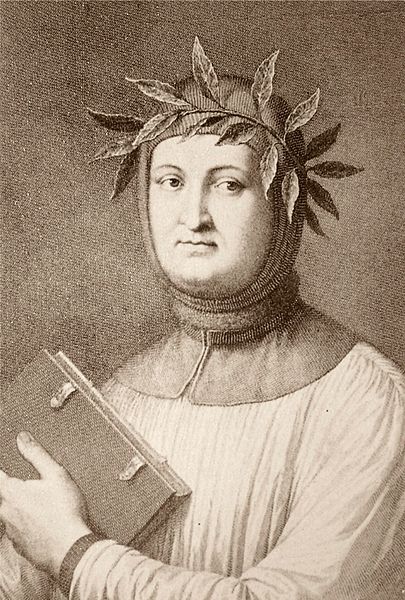
Petrarch looked back over his shoulder nearly thirteen centuries to glimpse sight of works that would make mankind wonder and marvel for centuries to come: Cicero’s letters.  This demonstration of ‘ad fontes’ triggered a new perspective of communication.  Somehow, diving back into the past allowed our forefathers to move more quickly forward. 

Letters to Cicero
Petrarch’s discovery didn’t stop there.  He continued to dig deeper into the past and introduced ideals of humanism—that man was capable of great things.  “What a piece of work is man!”  Shakespeare would later exclaim, which is the very sentiment that fueled and sustained a new awareness of communication.

The two letters Petrarch wrote to Cicero were only the beginning; humanism ideals couldn’t be contained to the written word alone.  Artists like Leonardo da Vinci and Michelangelo communicated their ideas and passions through arts, and for others, it was speech.  Castiglione’s The Courtier masterfully illustrates how the Renaissance-theme of sprezzatura shifted the communication-focus to speech. 

Sunday, September 23, 2018

Bach's Got Sprezz?


Our nonchalantly clever friend, sprezzatura, made his mark not only in conversation and dress but also in music.  As a pianist, this was exciting to discover.  But I wasn’t surprised to find out what its theme-song is: jazz.  You can hear it in the music as much as you can see it in the pianist--one hand on the keyboard, eyes wandering around the room, reflecting an ambiance of easiness.  The music itself is laid back, seemingly casual, but paradoxically striking and captivating.

But that’s not what they played in the 1600s.

Johann Sebastian Bach was the star of the 1600s and is still a highly-praised musician today.  His music is admirable for its technicalities—it’s very vertical, systematic, and almost dry.  Yet this somehow expressed the culture of the scientific revolution.  The music has purpose; it moves progressively forward towards a predetermined destination.  (For image of Bach's sheet music, click here).

Playing Bach requires concentration and drilling--there's little room for improvisment because the interpretation is straightforward.  It's dull but comfortable.  Jazz, on the other hand, is a whole different ball game.  A few chords are thrown at you but the music that stares back at you from the piano is more white than black.  It's daunting, sometimes petrifying, but also thrilling.  It could take you nowhere and it'd still be a great adventure (try it out here).
Jazz Piano Sheet Music

So was sprezzatura re-personified in the 1600s?  Or did Bach's music, coupled with other Baroque arts and scientific discoveries take center stage?  

Image Sources: "Piano clip art" (via pxhere)
"Jazz Piano" (public domain images via Wikimedia Commons)

Sunday, September 16, 2018

Copyright: Friend or Foe?

French Author, Priest, and Secretary Jean MiƩlot Writing
On September 1, 1486, Marco Sabellico walked the streets of Venice with his chin a little higher. Amidst the recent invention of the printing press and the plethora of works being printed by colleagues and strangers alike, Sabellico was the first to petition for and receive printing privilege—the first copyright.

Sabellico’s proposed work, Decades rerum Venetarum, was a history of Venice. His laborious efforts could have been published just like any other author’s, but this “was a form of reward…which promoted the public interest, rather than the inherent rights of the author” (Kostlyo). If any unauthorized entity published his book, they would be fined, and replication of it was illegal.

For our Renaissance friends, this measure was largely viewed as a wise business move, the authors being more concerned about protecting their work than necessarily claiming it. They pored over their work, doing extensive research with limited resources, then meticulously drafting it by hand before taking it to a publisher, often only to be hired to proofread and/or publish his own work (Kostylo). It was no easy task, making it clear why the author would want his/her work protected.

For many of us, an alarm goes off when we hear the word copyright; we usually hit ‘snooze’ and settle into our indifference to copyright and its complexities, yet there’s the occasional nag, warning us to tread carefully. It’s almost fitting, given twenty-first century culture. For our voices to be heard, we simply download an app, push a few buttons, and announce how we feel about homework. The process doesn’t begin to compare with what Sabellico surmounted. 

Author Roy Leeper pointed out that “copyright was the best means of encouraging the development of new knowledge that benefitted society,” suggesting that the very Renaissance ideals that inspired the invention of the printing press would in turn inspire more people to discover more ideas (emphasis added). Although copyright laws clearly exist and are enforced in many situations, would stricter policies, particularly regarding social media usage, promote originality and unearth golden ideas? If so, what possible ways would this be implemented?


Works Cited:

Kostylo, J. (2008) ‘Commentary on Marcantonio Sabellico's privilege (1486)', in Primary Sources on Copyright (1450-1900), eds L. Bently & M. Kretschmer, www.copyrighthistory.org

Leeper, Roy V. "Copyright." Encyclopedia of Public Relations, edited by Robert L. Heath, vol. 1, SAGE Reference, 2005, pp. 201-202. Gale Virtual Reference Library, http://link.galegroup.com.erl.lib.byu.edu/apps/doc/CX3439100108/GVRL?u=byuprovo&sid=GVRL&xid=872b759a. Accessed 16 Sept. 2018.

Image Sources: 

Wednesday, September 12, 2018

Around the World in…1095 Days?


Portuguese explorer, Ferdinand Magellan, actually only made it 596 days—a stab wound in the ended his life while in the Philippines—but his crew continued their exploration and made it back to Spain 1095 days after they’d left, becoming the first people to circumnavigate the world.  That record has since been exceeded--credited largely to the advances of technology--and cultures have mixed more than ever before.

Magellan and his ships
Phileas Fogg’s Voyage 
In the  movie, Around the World In 80 Days, Phileas Fogg, because of a bet, decides to travel the world in 80 days using almost any and mode of transportation available in the late 1800s: “boats, trains, balloons, elephants” (https://www.imdb.com/title/tt0327437/plotsummary#summaries).  His adventures lead him from London to Paris, to Turkey then India, and from China to San Francisco and New York.  Although fictional, the movie illustrates how technology had advanced, allowing ordinary people to launch their own voyages, tasting a larger sample of cultures in a shorter amount of time.

“When Steve Fossett Became the Magellan of the Skies”
Flash forward to February 28, 2005 when American pilot and businessman, Steve Fossett, flew around the world in 67 hours (https://www.smithsonianmag.com/history/when-steve-fossett-became-magellan-of-skies-180954323/).  That’s 392 times faster than Magellan’s ships, again demonstrating how advanced technology increased man’s ability to explore the world.

Coming Full Circle
Instead of taking on several-year voyages or multi-day flights to travel around the world, much of what the early explorers discovered comes to us instead.  In mere seconds we can access pictures of Paris’s Eifel Tower, find recipes from Rome, listen to Mexico’s Mariachi band, or watch the World Cup from nearly anywhere.

But technology isn’t the only reason we can experience a cultural feast in our day-to-day lives.  When I served as a Spanish-speaking missionary for the Church of Jesus Christ of Latter-Day Saints, my “trainer” was Hermana (Sister) Fastidio.  I thought her last name sounded Spanish and quickly learned what fastidio meant: a nuisance or annoyance.  But Hermana Fastidio was from the United States—in fact, she wasn’t Hispanic at all. Her grandfather was Filipino, and because the Spanish (the first voyage being led by Magellan) conquered the Philippines several centuries earlier, many of the surnames are resultantly Spanish. 

I doubt the early explorers envisioned that technology would breach the scope it has or that their voyages would lead this melting pot of cultures.

Image Credit: (Laurence Bergreen: Poza krawedz swiata, Rebis, Poznan 2005), (https://www.pexels.com/photo/camera-caucasian-cell-cellphone-267438/)

Saturday, September 8, 2018

Perspective, Petrarch, & Potential


How man viewed himself in the 14th-17th centuries largely shaped their actions and their work.  The Italian scholar, Francesco Petrarch, sparked the flame of the Renaissance when he discovered letters written by the Roman philosopher, Cicero.

Petrarch saw in Cicero’s work what he himself felt: potential.  He saw greatness in Cicero—a man whose mastery of Latin was unparalleled and whose philosophies were praiseworthy.  Addressing Cicero, Petrarch exclaims, “O great father of Roman eloquence!” and proceeds to praise his works that enliven and inspire.  Petrarch’s letters are Renaissance-personified.  He laments, “the shame of failing to cultivate [their] talents,” expressing his disappointment in his fellowmen.  So he proceeds to reawaken himself and others to the ideals of humanism and individualism, thus fathering part of the Renaissance.

What Petrarch saw in Cicero was soon manifest in da Vinci’s Mona Lisa, Michelangelo’s sculptures, Shakespeare’s plays, and Thomas More’s Utopia.  It seemed that when society believed in man, and man believed in himself, he rose to the occasion, producing works that reflected those of their Greek and Roman predecessors.  Pico della Mirandola said it best when he declared, “Let a certain saving ambition invade our souls so that, impatient of mediocrity, we pant after the highest of things and…bend all our efforts to their attainment.”  This humanistic belief didn’t cause a disregard for Higher power but rather a different perspective; in Mirandola’s case, the revealing arts and ideas were more reason to recognize Diety.