Showing posts with label war. Show all posts

Monday, November 26, 2018

Plight of the Ordinary Family


Winston Churchill begins his speech by addressing all and then proceeds with using “I.” He uses “I’ to compliment and show respect. He then switches to “we” as a show of solidarity. His voice is powerful, yet not overpowering. He speaks slowly, giving the audience time to take in every word. He pauses when he should, and he gives time for the audience to clap.

                                          Image credit: https://www.flickr.com/photos/45909111

There are several examples of Churchill using alliteration. When he says, “preach what we practice––let us practice what we preach,” he uses both repetition and alliteration. This rhetorical style gets the attention it desires. In that same paragraph, there is “poverty and privation” used. In the last paragraph of the speech, the alliteration is strong: “walk forward in sedate and sober strength seeking….”

Churchill uses a fair amount of metaphors, beginning with those used in his paragraph on the UNO. He says that the UNO is “already at work…that its work is fruitful…that it is a temple of peace…not merely a cockpit in a Tower of Babel.” And that “…we must be certain that our temple is built, not upon the shifting sands or quagmires, but upon a rock.” He continues with “…our path will be difficult and also long….” By quoting from the Bible, he is appealing to religious beliefs. He alludes to religion two other times when he says, “God has willed…” and “In my father’s house are many mansions.”

One of the most powerful paragraphs is a good example of appeal to pathos, with repetition and metaphors added in. In speaking of “the myriad of cottage or apartment homes where the wage-earner strives amid the accidents and difficulties of life…” he describes well their plight: “They must be shielded from two gaunt marauders, war and tyranny. We all know the frightful disturbance in which the ordinary family is plunged when the curse of war swoops down upon the breadwinner….” He shows empathy to the common man by bringing to attention “… the designs of wicked men…aggressive urge of mighty States…humble folk are confronted with difficulties with which they cannot cope.”

He ends with the powerful sentence: “For them is all distorted, all is broken, all is even ground to a pulp.” A visual description of the plight of the common man. 

Spheres of Influence

The timing of this discourse is important to how receptive the audience will be. With the war having ended just months before, the world was beginning to see the lines of influence being drawn by the Soviet Union and the democratic nations. With war being so vivid in the minds of the people, all sides were anxiously on alert for how diplomacies would take place.

Churchill understands what the audience wants to hear. The main topic of interest is the tension between communist and capitalistic states. In paragraph 21, he states this and proceeds to state the facts as he sees them. This is important because he does not tell the audience what to believe but tells them what he believes and allows them to make their own judgments accordingly. He does weigh in on what he believes by using an artful display of words as described by the following quote:
“From Stettin in the Baltic to Trieste in the Adriatic an iron curtain has descended across the Continent.
               Churchill understands the power of metaphors and likens the situation in Europe to that of a curtain. As is well known, curtains are used to block out a person’s view or to establish privacy. In this case, Churchill emphasizes that the Iron Curtain has blocked much of Europe from the influence of democracy. By using this unmistakable metaphor, Churchill establishes his view on the matter in a powerful way.


               Churchill concludes with a powerful explanation of the consequences of what their actions will have on the future. He makes it clear that war is unlikely, however, the Soviets desire the fruits of war and the spread of their influence. His call to action is to assert that World War II was the most preventable war if timely action was taken. If timely action is taken now, future devastating wars can be prevented as well. He names the title of his discourse “Sinews of Peace” which illustrates just how delicate peace can be.


Image credit: Iron Fence, by eliver22. licensed by CC through Pixaby 2.0

Friday, November 23, 2018

The Temple of Peace


In Winston Churchill's speech, Sinews of Peace, he outlines a metaphor for peace that builds his credibility and appeals to the audience’s both emotional and logical senses. 

Churchill's painting of the Parthenon; conveys destruction of war
Churchill sets the stage for his metaphor by preceding it with an outline of the tragic and painful consequences of war the United States (and Britain) have already experienced.  Vocabulary such as “two gaunt marauders,” “frightful disturbance,” “the curse of war,” “distorted,” and “broken” evoke haunting memories and fear of the future that cause the audience to open their ears to a solution.  Before diving into the solution just yet, Churchill carefully creates for his audience a sense of ownership—this is “our supreme task,” not just mine, and not just yours.  Only by recognizing this responsibility will his listeners heed his suggestions.

In that moment of vulnerability, he expands on the already-proposed solution of a world-wide organization whose purpose is to prevent war by emphasizing that this method must be a "true temple of peace…not merely a cockpit in a Tower of Babel."  By labeling this proposition as a temple of peace, Churchill connects with the audience, appealing to their desire to live lives free of war and worry.  Whereas they beforehand might not have seen the self-applicability of the world-wide war-preventing organization, they are now on board.  They consider temples places free of war and full of refuge, and this can now be their goal.

Churchill specifies that this must be an immovable temple--"built…upon a rock"--that won't crumble and fall, thus building trust with his audience by assuring them that this is no half-hearted endeavor; he’s committed to doing all he can to bring this to pass.  Churchill's following paragraph outlines his "definite and practical proposal."  This word-choice and the s
ubsequent explanation provide a logical appeal to his audience, and now they not only feel the validity of his proposal and understand how it can happen.

These several emotional and logical appeals, as well as the credibility Churchill builds, inspire his audience to feel a need to do something, take ownership for the problem, and understand how the solution will be executed.

Image source: The Parthenon (via Providence Mag)

Monday, November 12, 2018

Becoming a Man?


World War I
In the movie All Quiet on the Western Front, boys, straight out of high school, some even younger, are shipped off to save the “Father Land.” As they march in formation, three little boys are trailing behind, wishing and waiting their turn.

A young soldier begins his war experience traumatized by the shooting of innocent horses. He can’t stand the pain, crying out in anger, “Shoot the wounded horses…shoot them!”

Arriving in the battle field, their leader tells them, “I’ll teach you how to kill ‘Frenchies’.” When Paul (the main character) finally has the experience of killing a “Frenchie,” he is overcome with grief. Lying in a trench, next to the soldier he has attempted to kill, he has to listen to the man slowly die. Paul whispers, “I didn’t want to kill you. I never even met you before, face to face. If we threw all the bayonets, rifles, and grenades away, we could be brothers. But they don’t want us to know that.”

There is agony in the belief that they have been transformed from decent human beings to those who “can destroy and kill. When we see their faces, we become wild beasts…murderers. If your own father came…you wouldn’t hesitate to fling a bomb into him.”

Paul asks his leader, “Who is right?” “The one who wins,” his leader responds, saying that one country offended another. “That is the reason for war.”

World War II
It was 1943. My dad was drafted at the same time that his mother lie dying of cancer. He had only been at Fort Snelling, near his home, for a few weeks before coming home for the weekend. He went to his mother’s bedside; she looked up at him and said, “I suppose that we should say good-bye, because we probably never will see each other again.” She died the next day. My dad remembers crying in his bunk that evening. He says that his mother’s death “was a loss from which I sometimes believe I never recovered.”


These boys all had dreams and ambitions, and my dad was no different. Speaking of his dream of becoming a cartoonist, he remembers thinking, “When in the world am I going to get a chance to do this? The war is still going on, and none of us knew if we were going to return. It was so depressing.”

World War I
After a short convalescent leave from the war, Paul returns. His mother is dying, so from his bedroom, he writes her a letter. “I used to live in this room…all my things are here…but they no longer speak to me…for I am no longer what I used to be. I am a soldier…my business is not reading…it is killing. Out there, all men think as I do…there is no argument about the meaning of life because it has no meaning.

World War I…World War II. Boys sent off to become men––the men they never wanted to be.

Sunday, November 11, 2018

Romance with War

A Very Long Engagement was clever mélange between a romance and a war film. Romanticism is built into every bit of the film. A young couple who are deeply in love is separated by a brutal war. She refuses to accept the fate of her soul-mate and a romance with the trail of his death begins.

All things considered, this is a mystery/romance however it was a painfully drawn out version of the genre. The film is great and it is really hard not to be emotionally involved with the characters. That being said, the nature of the film is to frustrate the viewers as poor Matilde runs into dead end after dead end. A well-made film should make people feel things during it or I do not feel like it is worth watching.

This film brought a stark realization of the realities of war. Every person shot has a family who misses and loves them back home. Every person has a background that is effectually erased when their lives are meaninglessly snuffed out. Too often when we talk of wars, we state the death statistics like that is all they are. Each number represents a person. Although we romanticize the idea of war because of the honor and glory it brings.

Ultimately, I feel this film wraps up the storyline as you would expect. The final scene is the bow on top. “Does it hurt when you walk” is the same line he used to first catch Matilde’s attention, and it ties the whole experience together as they are reunited. She watches him as he performs a meaningless task. “Elle le regard” a simple phrase repeated as a smile spreads across her face. I could not help but feel my own heart stir.


Image credit:WW1 Trenches, by bmewett. licensed by cc 2.0 by Pixaby

Saturday, November 10, 2018

The Anti-Sublime

World War I convinced the Enlightenment thinkers who believed they lived in the best of all possible worlds that, in fact, the world was not all crêpes and crème brûlée. In the war, most of Europe had experienced the horrors that people could inflict upon each other first-hand. One result of this was that people became fascinated with the sublime.

A Very Long Engagement, a film by Jean-Pierre Jeunet, explores the themes of that period in multiple layers. The film follows the story of a young French woman, Mathilde, whose fiancé, Manech, is sent off to fight in World War I. She is told he died in the trenches, basically sentenced to death because he self-mutilated. However, there are strings of uncertainty in the story, so she investigates to find the truth for herself.

Image result for a very long engagement
Mathilde solemnly plays her tuba while she waits
for Manech to return.

The Individual
In searching for the truth of her fiancé's death, Mathilde explores the lives of other men who had suffered his same sentence alongside him. She finds the unique truths behind their times in the trenches, as well as the truths of the people they left behind in France. These stories give a very personal perspective on a very large war.

The Sublime
The tragic romance of Mathilde and Manech is the classic type people have loved for centuries. It is terrible, but in a melancholy, heart-aching way that is pleasing to experience at a distance. This film entertains that form of the sublime while pushing against a greater one: war. Machine guns obliterate anyone who goes above the trenches into no-man's land, bombs explode and splatter soldiers' viscera onto their friends' horrified faces, men shoot their fingers off with shotguns in efforts to escape the rot-and-lice-ridden hell of the trenches. This film does not glorify the nobility of dying at war; it depicts death in gory, gut-wrenching detail. I, at least, went away from the film solemn and struck with the horrors of war, not inspired to pick up a rifle.

I'll admit the idea of going to battle has at times sounded  to me. It was more in the way of fantasy novels in which people fight on horseback with swords and crossbows. Regardless, with its individual approach and challenge to the sublime elements of war, A Very Long Engagement effectively horrified me against the notion that battle is in any way romantic.

Saturday, November 3, 2018

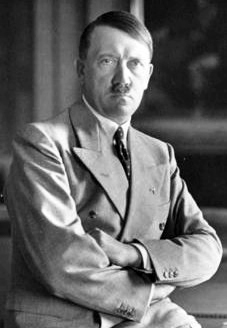
I Do It Because of Hitler


People often ask me why I decided to become an English major, and they are usually shocked by the answer. I tell them I decided to study English because of Adolf Hitler. 
The Fuhrer
Hitler, as everyone knows, is the infamous dictator who, during World War II, waged war on several countries, who sought to ensure communist governments throughout the world, and who was responsible for the inhumane deaths of six million Jews. Whether or not Hitler was a moral man is never in question by those who seek peace, but those who examine his life will come to see that he was indeed a successful leader.

Hitler came from humble circumstances, and with both parents dead by the age of 19 (accompanied with his rejection to Vienna’s Academy of Fine Arts), it may have seemed as though Hitler would struggle to ever amount to anything. Nonetheless, he soon became interested in politics, served on the German side in World War I, and was later arrested after announcing in a beer hall that a national revolution was beginning. During his time in prison, he wrote Mein Kampf. This book sold modestly at first, but soon became the second best selling book of Germany (after the Bible). Hitler’s power continued to grow, and he was triumphant in launching one of the most horrific wars the world had ever seen.

Hitler didn’t begin with an army. He didn’t start with concentration camps. He began humbly, armed with only words. This is where true power lies: with dialogue and the ability to use it.

As I learned more of Hitler in middle school and onward, I couldn’t help but wonder at the damage he was able to due with words. Then, it made me think about what might happen if good people could be able to use their words as effectively as he did. So much light would come into the world— and it has! Inspirational speakers give hope to those struggling with various issues. Comforting words build up those brought down by sadness, and words can be used to express love and appreciation. If all words were used for good, the world would be infinitely easier to live in.

And that’s why I study English. I want to learn to use my words as effectively as I can so that I might bring a little more peace to those around me.

Image Credit: Wikipedia's page "Adolf Hitler" image in the public domain

Monday, October 29, 2018

Misery Loves Comedy


"Candide fled as quickly as possible to another village."
Candide witnessed the immense horrors of death in the
 aftermath of a war between the Bulgars and Abars.
Candide's reception
Voltaire's Candide, a satire following an overly optimistic man—Candide—through continual disasters, was immensely popular. In its first year, 20,000 copies were sold and 17 editions published across Europe. Its humor and criticism on the thoughts and authorities of the time were clearly welcomed by the public. People continue to debate how far the satire extends. Some think Voltaire's conclusion is that philosophy is useless, that to reach contentment you should just work and not think. Others think he merely pretends to be anti-philosophy, coming to the conclusion that you experience things, learn from them, and act on them, actually using philosophy to become active instead of passive and reclusive.

Voltaire's context
Voltaire was himself an active man. He fought (usually through writing and speaking with his powerful friends) against war and religious oppression. His hatred of both is evident throughout Candide, notably when Candide and his tutor, Dr. Pangloss, are severely punished simply for having an opinion on God that differs slightly from the Inquisitor's. Voltaire was after all a deist, believing God didn't influence the current world and that hierarchical religion was absurd.

Voltaire was greatly affected by the abuses of power and hypocrisy of government and religious leaders. In Candide all the characters have their own tragic backstories involving being enslaved, abused, and taken advantage of in one way or another. It seems Voltaire, through his own life events, came to believe that misery is the natural state of humanity; even if things do happen to go well, we then create our own misery. The characters, once they have been reunited and remain without abuse, even fantasize going back to their prior misfortunes over sitting in the contented boredom of their farm.