Showing posts with label novel. Show all posts

Thursday, November 1, 2018

Artificial Social Division


The novel Evelina by Frances “Franny” Burney was first published anonymously because during the time period that this novel was written, women such as Franny held opinions that weren’t important…er, wait, I meant women in Franny’s social class weren’t supposed to interject in literary circles –no I don’t think that’s right either…


Burney's Class Motivations

Satirically laced commentary like above is found in Evelina, or the History of a Young Lady’s Entrance into the World. Evelina soon finds that the “higher” class of people that she meets throughout the novel aren’t much superior than others. The men attempt to seduce her, there are feuds in her family between her mother’s relatives and her father and who deserves what and is entitled to which inheritance. Essentially, people fight for money, power, and sex.


Verga's Reality of Poverty

Serendipitously, I was reading an Italian anthology of short stories by Giovanni Verga published in the 19th century while reading Evelina. Verga follows the impoverished Sicilian people in southern Italy and thematic elements of these stories were the same; the fight for money, power, and sex.
From the high society living of Evelina to Verga’s representation of poverty, I think the question that I wonder is: Why is there tension between social classes if they are founded on the same basic human 
nature?

Our Modern Financial Division 

Modern research shows that this tension still exists! I remember when the finicial crisis of 2007/2008 destroyed my parent’s personal business and left them depressed, anxious and scared. They were looked down on because they no longer had the small fortune that was providing for their large family. In an attempt to identify the psychology and stigma of social division, researchers Miguel Moya and Susan Fiske outlined the negative social impact the Great Recession had on American social class in an article titled “The Social Psychology of the Great Recession and Social Class Divides.”


I’ll let you read the article on your own time but it proves that social class tension still interferes with individual progression today, even with the same innate nature.


As written in Evelina, “the right line of conduct is the same for both sexes [and classes], though the manner in which it is pursued may somewhat vary, and be accommodated to the strength or weakness of the different travellers.”

Image Credit: Homeless New York  and High Class Lady (Public Domain Images via Wikimedia Commons)

But Now, I Thought

I'm not sure how to say this without sounding pretentious, but I'm pretty well read. I've been around the proverbial literary block and because of this, I thought I knew what to expect from Jane Eyre. Not only were my expectations completely wrong, I had absolutely no concept of what I was getting myself into. It was an exhilarating experience. Every now and again, there is a novel that is really, truly new. It's a departure from everything that has been done before. It strikes out into new terrain. Jane Eyre is a novel like that.

The most remarkable thing about the novel to me, and to most of the people I've talked to about this book, is how strong the character of Jane is. She's a force of nature. She marches to the beat of her own drum. She thinks, and she decides things.  At a crucial point in the narrative, Jane makes this statement that sums up her attitude toward life brilliantly.

"till now I had only heard, seen, moved-followed up and down where I was lead or dragged- watched event rush upon event, disclosure open upon disclosure: but now, I thought." (pg. 267)
Rather than being pushed about from plot point to plot point, Jane's character makes things happen, and takes charge of her own life. 

Portrait by J.H. Thompson at the Bronte Parsonage Museum
Reading about the history of this novel more, I found that Jane comes by her fortitude and depth of character honestly. Charlotte Bronte, the author of Jane Eyre, lived a very individualistic life. She lost her mother and several siblings when she was young. She, like Eyre, lived and eventually worked at schools far away from home. She wrote, despite social pressures, and published under a pseudonym in order to protect her privacy and to conceal her gender.

She didn't do what people thought was proper. She did was she decided to do, including, at one point, falling deeply in love with a married man. Bronte endowed her heroine with the same strong character that she had in abundance, and people felt the effects of it.

The book was a hit immediately. People saw it as fresh, raw and challenging the status quo- which it was. A book detailing the life of a woman who chose who she was going to be, who defied the circumstances of her birth and made something, not only respectable, but remarkable of herself, was in direct contrast to the almost fatalistic view of socioeconomic standing and rank-by-birth that prevailed at the time.

 It was revolutionary to purport that a man could become something of his own choosing- even more so to assert that a woman could do the same. It struck the hearts and deepest desires of everyone who read it, and it's still doing that today.

We are a lot more free to decide our own futures than those who read this book on it's first printing, but the message of unwavering identity, of choosing your own path, still resonates soundly. All of us, especially women, are still trying to find our voices. We're still trying to find the ground we're most comfortable standing on, and Jane Eyre speaks to that search eloquently.

The obstacles may change, the end goals may shift, but the yearning of the human soul to be expressed and individual will always be the same. And for as long as people are looking to the future with a hope of a better tomorrow, Jane Eyre will be there to urge them on.
Photo Credit

Tuesday, October 30, 2018

Kidnapped: Warriors, romance, and mystery

Kidnapped by Robert Louis Stevenson is an adventure story set in the Scottish Highlands. When Stevenson wrote this novel in the late 19th century, authors like Sir Walter Scott and poets like Robbie Burns had collectively conjured a literary image of Scotland filled with romance and mystique. The wild, rugged highlands and their inhabitants were a ripe setting for adventures and escapades and magical prose. 

Stevenson writes, "So we sat again and at and drank, in a place whence we could see the sun going down into a field of great, wild, and houseless mountains, such as I was now condemned to wander in with my companion." (Stevenson, 164)

Scottish Highland scenery near where Kidnapped takes place
The novel takes place in the 18th century, just a few years after the last of the Jacobite risings had been defeated at Culloden Moor. Kidnapped captures the noble yet rebellious spirit of the conquered chiefs and their clansmen, and uses this romantic atmosphere to tell the story of a young boy who is kidnapped and later accused of conspiracy and murder. 

In reading various reviews on the novel, I've discovered that although Stevenson originally wrote it for a young audience, it gradually gathered acclaim from adults and even critics. Stevenson, the author of other favorites such as Dr. Jekyll and Mr. Hyde and Treasure Island, even said Kidnapped was the best thing he'd ever written. 

On one hand, the novel seems to convey the fantastical adventures that a young boy could only dream of--shipwrecks, dubious relatives, wild Scottish highland scenery, dangerous bravado, a murder mystery, and even a blind catechist who can somehow aim a pistol. However, many of the issues raised in the story can give insight into relationships and into various political issues of the day. 

For instance, one important lesson is that people have very different motivations in pursuing virtue. The two friends who occupy the attention of the novel are often at odds because one seeks simple financial restoration while the other seeks revenge. Each of these wants justice but in his own way. This side of the novel grants it appeal to more mature readers in addition to the young, and gives it both depth and life. And really, what more can you ask for in a novel?

Image Credits: Isaac Smith, 2014

Monday, October 29, 2018

Misery Loves Comedy


"Candide fled as quickly as possible to another village."
Candide witnessed the immense horrors of death in the
 aftermath of a war between the Bulgars and Abars.
Candide's reception
Voltaire's Candide, a satire following an overly optimistic man—Candide—through continual disasters, was immensely popular. In its first year, 20,000 copies were sold and 17 editions published across Europe. Its humor and criticism on the thoughts and authorities of the time were clearly welcomed by the public. People continue to debate how far the satire extends. Some think Voltaire's conclusion is that philosophy is useless, that to reach contentment you should just work and not think. Others think he merely pretends to be anti-philosophy, coming to the conclusion that you experience things, learn from them, and act on them, actually using philosophy to become active instead of passive and reclusive.

Voltaire's context
Voltaire was himself an active man. He fought (usually through writing and speaking with his powerful friends) against war and religious oppression. His hatred of both is evident throughout Candide, notably when Candide and his tutor, Dr. Pangloss, are severely punished simply for having an opinion on God that differs slightly from the Inquisitor's. Voltaire was after all a deist, believing God didn't influence the current world and that hierarchical religion was absurd.

Voltaire was greatly affected by the abuses of power and hypocrisy of government and religious leaders. In Candide all the characters have their own tragic backstories involving being enslaved, abused, and taken advantage of in one way or another. It seems Voltaire, through his own life events, came to believe that misery is the natural state of humanity; even if things do happen to go well, we then create our own misery. The characters, once they have been reunited and remain without abuse, even fantasize going back to their prior misfortunes over sitting in the contented boredom of their farm.

"Emma Woodhouse, handsome, clever, and rich"

At the crossroads of the Enlightenment and Romanticism, Jane Austen writes her novel, Emma, filled with ordinary people, places and events, unlike other novels of the time.  This was the time in history when reading novels became one of the main forms of entertainment for many people, but especially the middle class. This highlights an idea of the Enlightenment regarding literacy and the popular press where individuals gained access to learning for themselves on a personal level.  Of course, many new works were too expensive to buy, but around this time period, methods for sharing and borrowing the latest fiction came about including libraries, reading clubs, and subscriptions.  These methods are all still alive in our day as we see the sharing of literary works.  

The First Mystery

The Moonstone offers a fascinating view of the social constructions of the late 19th century that creates a unique dynamic. Many of the actions made by characters in the book are formal and when there is an outburst, they immediately apologize for “breaking the norm.” I found it interesting that it reflected an almost feudal system where the rich family was waited on by several servants, however, it was much more progressive as the relationship between the characters was not only financially motivated but often out of love or loyalty. Despite potential motivations for their work, the servants were much like an extended family to the nobles they served. This book reflected the strong distinction of social class between these nobles, government officials, and the common servants and lower class, evident during this time period.

This novel seems like one of the original thief stories. I noticed connections between both mystery and crime forms of media.  These connections to mystery include a highly observant detective seeking the truth who is hedged up from every side. Such films, books and tv shows as the timeless Sherlock Holmes come to mind in this department. The intricacies of the plot to steal the diamond remind me of Ocean’s 8, which is a film about an inside job performed to steal a multimillion-dollar diamond. In the real world, we rarely hear about intricate thieving plots.
The Moonstone was a large diamond worth an outrageous amount

While participating in a discussion online at Goodreads.com, I found an interesting viewpoint on what this book brings many firsts to the table by Bill Kerwin. He points out that this book was the first to detective novel with a large guest list of suspects, the first to have a small, suggestive clue have significant impacts, the first crime reenactment at the scene of the crime, and the first pursuit of a disguised criminal through a major city.
I believe that this book opened up a new form of entertainment. While many novels already existed, this genre engages a new market of mystery lovers. This niche of entertainment has become a large part of the entertainment industry with thousands of films, books, and stories utilizing precedence’s set by The Moonstone.

A quote that struck a chord with me was when a character of the book was announced to have killed herself, Gabriel, the narrator at the time, made the quote: 
“Your tears come easy, when you're young, and beginning the world. Your tears come easy, when you're old, and leaving it. I burst out crying.” - Wilkie Collins, The Moonstone

Image: 17914, by PublicDomainPictures/Images, Licensed by Pixaby from CC 2.0 

Friday, October 19, 2018

Keeping Up with the Great Expectations

In the Enlightenment Era, periodicals became more common. At the same time, the novel was on the rise. Charles Dickens used both of these forms of media to create something akin to today's reality television.

Instead of tuning in each week in order to keep up with the Kardashians, people would buy the next periodical to see the next chapter of Dickens' new novel Great Expectations to keep up with Pip and his adventures.

This way of slowly feeding the story to the public changed the face of an already new idea of the novel. It changed the way characters were formed. Because you couldn't read it in one sitting and had to remember the characters without reading for a week, their characteristics and idiosyncrasies had to be particularly memorable.

It also affected the types of stories portrayed. The readers' attention needed to be held over until the next installment. This meant that each short chapter had to end with a slight cliff-hanger.

We see this in today's reality TV even down to the pieces of episodes between commercial breaks, leaving cliff-hangers to keep the audience watching. Just my personal opinion, but having seen an episode of "Keeping Up With the Kardashians" for "research", I'd say this form of media has taken a turn for the worse since the Enlightenment.


Image Credit: Vimeo "Keeping Up With the Kardashians"

Thursday, October 18, 2018

A shift in the meta: Dracula as a sign of changing times

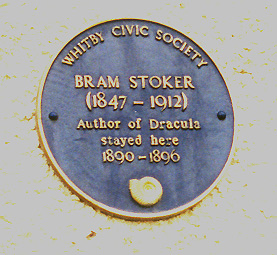
It was apparently VERY important that Bram Stoker stayer there once.

In a modern day context, Dracula is one of the most well icons in the current culture, numerous works of fiction have either included him or referenced him at some point. His presence is practically impossible to avoid when even mentioning the word "Vampire" and has become as synonymous with the term as King Arthur with "Knights". Of course, many people also know by now that the real-life Dracula, Vlad the Impaler, was not an actual vampire, but the association is ironclad at this point. I myself knew about "Dracula" long before I ever heard the name "Vlad Tepes", and I have no doubt that for all reading this, it was the same way with you.

"Dracula" was written by Bram Stoker and published in 1897, on the cusp of the 20th century. It was the founder of many Horror tropes still used to this day, and can actually be considered one of the most famous examples of "Zombie Horror" in literature (Albeit intelligent zombies, but the point still stands). It tells the tale of an undead creature in the guise of a man named Count Dracula who seeks to spread his "disease" to all the people of England, and how his efforts are ultimately thwarted by a small group of extraordinary gentlemen (and Mina, she's important too). This story of ordinary people trying their best to thwart a large supernatural creature created a new sub-genre of the trope of "Knight versus Dragon", namely that man who accomplishes with wits and integrity that which required his predecessors divine or magical intervention.

Of course, what exactly does Dracula represent as a symbol (that is the point of this post, right)? As Tanya Pikula points out in her paper "Bram Stoker's Dracula and Late-Victorian Advertising Tactics", Dracula is a social predator, a literal "consumer" of women, and the only women in the novel who get turned by him are those girls who deviate from the Victorian Ideals of the time: Soft-spoken, motherly and submissive to their spouses. To this end, Dracula is "the enabler", the one who leads those astray further off the path. He could also be seen as a literal avatar of the changing times, with promiscuity on the rise and crime emerging from the underground. He was the rockstar of his era, the "Bad Boy" that we see so much in television, and an omen of times to come.

Image Credit: "Bram Stoker Commemorative Plaque" obtained via Wikimedia Commons

Austen's Final Debut


Persuasion, Jane Austen's last novel, was written during the time of the Napoleonic wars which affected the English social and economic circumstances.  The book ties these aspects in with its characters.  The situation of Captain Wentworth, a naval officer who earns a lot of money, demonstrates the “shift in the balance of power” between the aristocracy and middle class, and there’s a thread of nationalism intertwined in Austen’s novel (Cantor).

Austen has a lot to say about the aristocracy.  It isn’t them in and of themselves that she disapproves of but rather that the “aristocratic status was in effect self-justifying" (Cantor).  These perceptions are portrayed through the characters’ and their dialogue.  As in Pride and Prejudice, characters aren’t always who they initially seem to be, which can be good and bad.

Another prevalent theme is marriage and the social circumstances women faced in a patriarchal society.  In current society in many parts of the world, women aren’t limited by social circumstances or marital status; they are free to obtain education, pursue careers, own land, and much more.  There’s a stark contrast between this and the 19th-century perspective of women.  The famous first sentence of Pride and Prejudice indicates, “It is a truth universally acknowledged, that a single man in possession of a good fortune, must be in want of a wife.”  One of the ideas this statement implies is that social status was tied closely with economic status.

The form and genre of her writing reflect the novels of the 19th-century in its non-heroic protagonists, less formal tone, everyday content, and personal experience.  Jane Austen drew upon her own personal experience in writing her novels. 

Image Source: Persuasion (via Girl ebooks Blog)

Cantor, Paul A. "A Class Act: Persuasion and the Lingering Death of the Aristocracy." Nineteenth-Century Literature Criticism, edited by Kathy D. Darrow, vol. 222, Gale, 2010. Literature Resource Center, http://link.galegroup.com/apps/doc/H1420097305/LitRC?u=byuprovo&sid=LitRC&xid=5bc9435d. Accessed 19 Oct. 2018. Originally published in Philosophy and Literature, vol. 23, no. 1, Apr. 1999, pp. 127-137.


The Darwinian universe and the supernatural

Of all the great detectives, surely none is better known that Sherlock Holmes. There is something magnetic that pulls us toward his logical way of thinking, his ability to make sense out of the senseless. The Hound of Baskervilles is the third novel written by Sir Conan Doyle about Sherlock but is significant and different from his other books for several reasons. Although Doyle had already killed Sherlock Holmes (spoilers for a book that is over a century old?) in his previous novel and had taken an 8 year break to focus on other writings, Doyle decided to return to the narrative. Although he had originally intended to use other characters, he found that Sherlock fit too well, resulting in a structured and sustained narrative that most detective novels rarely achieve. 
Cover (Hound of Baskervilles, 1902).jpg
The Hound of Baskervilles is a blend of the detective, Gothic, and even thriller novel. As we are taken outside of London into the Devonshire moor, far away from civilized society we feel a loss of order. The sweeping and gloomy landscapes present in Gothic novels adds to the tension as we can see primal nature exerting its influence over our small and insignificant lives. There is a clear contrast between the present danger of the hound and the timeless universe and sense of finality as all living things eventually die, creating a sense of a Darwinian universe. It also makes his characters more vulnerable and alone, in a way that could never be achieved while in a city like London.

Yet it is ultimately a careful and reasoned approach that is able to overcome the supernatural. We are shown through Watson that although it may be easy to dismiss the very idea of supernatural powers in the safe "modernized" world, when confronted with primordial nature far away from the warmth and safety of our own homes, it is easy to start wondering. This is something that still resonates with me today. All to often when we are frightened, alone, and in the dark, we forget science and reason and let our imaginations run wild. In our society we are insulated from most of the dangers of the natural world and it is easy to be detached. Yet there is still a primal part of our nature that is awakened when we are out and something goes bump in the night.

In the end, it is Sherlock's modern, empirical, and scientific mind are able to show us that our fears. When confronted with these tools, we are shown that our fears were nothing more than illusion. Order and security are returned as we are taken away from the moor, to London and civilization, and back to comfy chairs next to fireplaces to the backdrop of a busy city.

The Hound of Baskervilles by Sidney Paget is a public domain image.