Showing posts with label nature of power. Show all posts

Thursday, November 1, 2018

Artificial Social Division


The novel Evelina by Frances “Franny” Burney was first published anonymously because during the time period that this novel was written, women such as Franny held opinions that weren’t important…er, wait, I meant women in Franny’s social class weren’t supposed to interject in literary circles –no I don’t think that’s right either…


Burney's Class Motivations

Satirically laced commentary like above is found in Evelina, or the History of a Young Lady’s Entrance into the World. Evelina soon finds that the “higher” class of people that she meets throughout the novel aren’t much superior than others. The men attempt to seduce her, there are feuds in her family between her mother’s relatives and her father and who deserves what and is entitled to which inheritance. Essentially, people fight for money, power, and sex.


Verga's Reality of Poverty

Serendipitously, I was reading an Italian anthology of short stories by Giovanni Verga published in the 19th century while reading Evelina. Verga follows the impoverished Sicilian people in southern Italy and thematic elements of these stories were the same; the fight for money, power, and sex.
From the high society living of Evelina to Verga’s representation of poverty, I think the question that I wonder is: Why is there tension between social classes if they are founded on the same basic human 
nature?

Our Modern Financial Division 

Modern research shows that this tension still exists! I remember when the finicial crisis of 2007/2008 destroyed my parent’s personal business and left them depressed, anxious and scared. They were looked down on because they no longer had the small fortune that was providing for their large family. In an attempt to identify the psychology and stigma of social division, researchers Miguel Moya and Susan Fiske outlined the negative social impact the Great Recession had on American social class in an article titled “The Social Psychology of the Great Recession and Social Class Divides.”


I’ll let you read the article on your own time but it proves that social class tension still interferes with individual progression today, even with the same innate nature.


As written in Evelina, “the right line of conduct is the same for both sexes [and classes], though the manner in which it is pursued may somewhat vary, and be accommodated to the strength or weakness of the different travellers.”

Image Credit: Homeless New York  and High Class Lady (Public Domain Images via Wikimedia Commons)

Tuesday, October 16, 2018

Maximilien Robespierre: Hero or Monster?

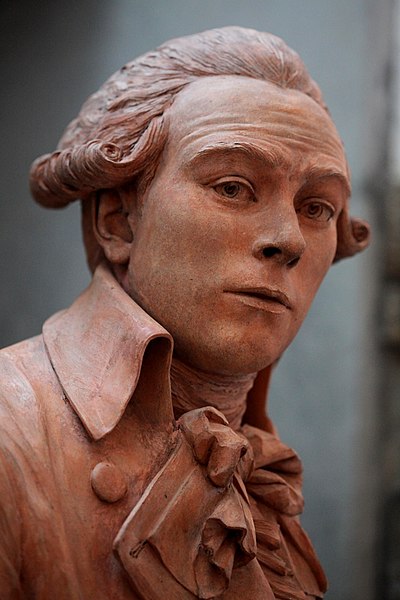
Each time that I've studied the French Revolution in my life, one public figure continues to fascinate me, consuming my interest as I work through the Revolution from his perspective as a revolutionary spearhead. This figure is Maximilien Robespierre. 


Image result for robespierrePrior to the Revolution, Robespierre was a lawyer and politician, and "an outspoken advocate for the poor and for democratic institutions. He campaigned for universal male suffrage in France, price controls on basic food commodities and the abolition of slavery in the French colonies." (see: https://en.wikipedia.org/wiki/Maximilien_Robespierre) 

From the modern American's perspective, these all seem like noble causes. "His steadfast adherence and defense of the views he expressed [even] earned him the nickname l'Incorruptible (The Incorruptible)." 

After the initial movement of the French Revolution, the National Convention (the mob-counsel that ruled Paris) formed the "Committee of Public Safety" and instated Robespierre as a member.  He led the committee to institute what is now called the "Reign of Terror," in which tens of thousands of citizens were executed without trial. Robespierre, who had opposed the death penalty before the Revolution, now argued that terror was an incarnation of virtue, because it embodied swift and effective justice. 

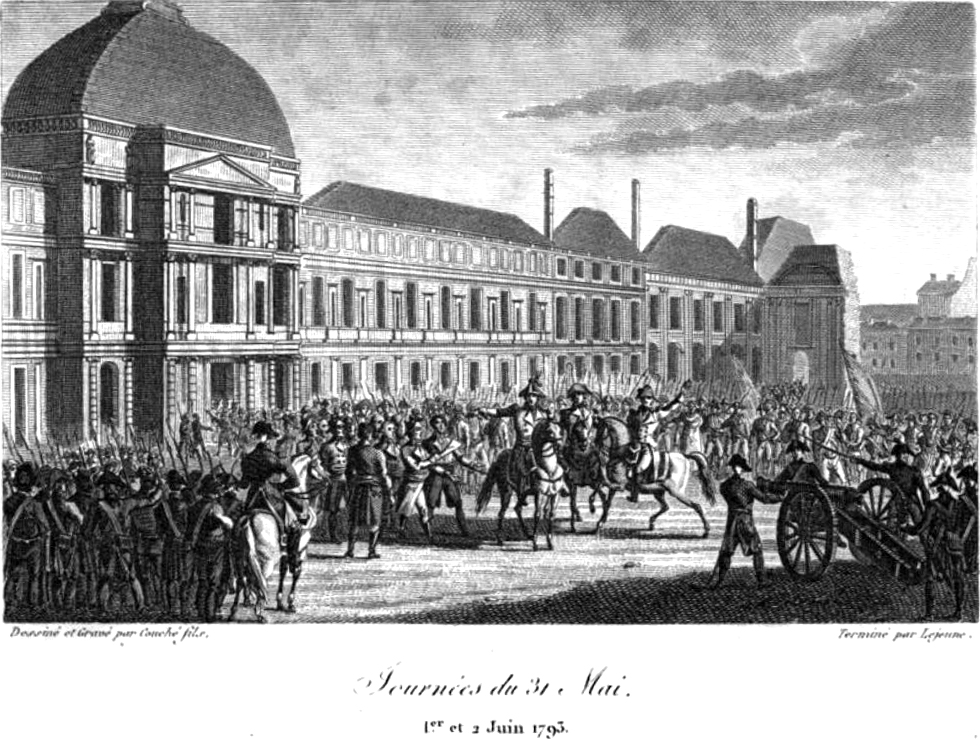
Robespierre's power over public opinion, combined with his hard-line stance against potential traitors, frightened even the members of the National Convention. Soon enough, he himself was accused of plotting to depose members of the Convention, and despite a two-hour oration in defense of his character, Robespierre was captured and executed by the same system he had instituted. 

Image result for Journées des 31 Mai
Riots organized by the
Convention against Robespierre

Looking into Robespierre's history gives us the sense of a very singleminded and idealistic man, but one who was capable of committing horrible acts in order to achieve his ends. We also receive insight into the nature of power; namely, how the power of a person is merely an illusion of reputation and crumbles when others don't voluntarily surrender to that reputation. 

How could a man so noble stoop so low? How could such a powerful public figure be removed so quickly and easily? These are the questions that continue to occupy me as I study the paradoxical and unique story of the French Revolution. 

Image Credits: "Robespierre," by Fichier, and "Journées des 31 Mai, 1973", engraving. Both licensed through CC.