Showing posts with label A Very Long Engagement. Show all posts

Saturday, November 10, 2018

The Anti-Sublime

World War I convinced the Enlightenment thinkers who believed they lived in the best of all possible worlds that, in fact, the world was not all crêpes and crème brûlée. In the war, most of Europe had experienced the horrors that people could inflict upon each other first-hand. One result of this was that people became fascinated with the sublime.

A Very Long Engagement, a film by Jean-Pierre Jeunet, explores the themes of that period in multiple layers. The film follows the story of a young French woman, Mathilde, whose fiancé, Manech, is sent off to fight in World War I. She is told he died in the trenches, basically sentenced to death because he self-mutilated. However, there are strings of uncertainty in the story, so she investigates to find the truth for herself.
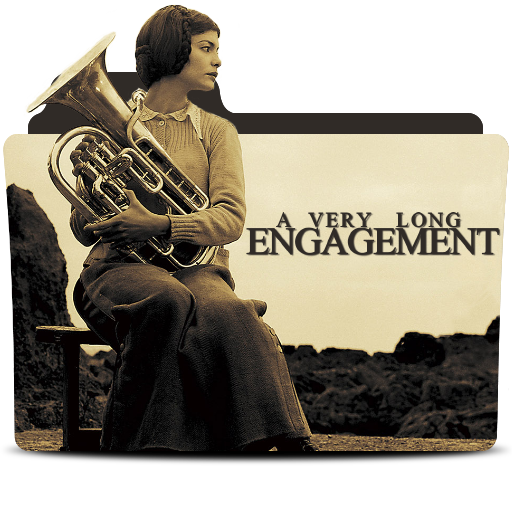
Image result for a very long engagement
Mathilde solemnly plays her tuba while she waits
for Manech to return.

The Individual
In searching for the truth of her fiancé's death, Mathilde explores the lives of other men who had suffered his same sentence alongside him. She finds the unique truths behind their times in the trenches, as well as the truths of the people they left behind in France. These stories give a very personal perspective on a very large war.

The Sublime
The tragic romance of Mathilde and Manech is the classic type people have loved for centuries. It is terrible, but in a melancholy, heart-aching way that is pleasing to experience at a distance. This film entertains that form of the sublime while pushing against a greater one: war. Machine guns obliterate anyone who goes above the trenches into no-man's land, bombs explode and splatter soldiers' viscera onto their friends' horrified faces, men shoot their fingers off with shotguns in efforts to escape the rot-and-lice-ridden hell of the trenches. This film does not glorify the nobility of dying at war; it depicts death in gory, gut-wrenching detail. I, at least, went away from the film solemn and struck with the horrors of war, not inspired to pick up a rifle.

I'll admit the idea of going to battle has at times sounded  to me. It was more in the way of fantasy novels in which people fight on horseback with swords and crossbows. Regardless, with its individual approach and challenge to the sublime elements of war, A Very Long Engagement effectively horrified me against the notion that battle is in any way romantic.

Friday, November 9, 2018

That's Not the Point

There is no glory in war. I know that. I don't know it first hand, of course, but I've been taught over and over throughout the years by study of war after war that there is nothing glorious, nothing to be sought after in man's conflict against man. That said, studying WWI drives that home to me more poignantly than any other conflict. Maybe it's the dull waiting of the stale-mated trenches. Maybe it's the bleakness of no-man's land. Maybe it's the devastation and inescapability of mustard gas. Or something else. I don't know.

Art inspired by "In Flanders Feilds" by John McRae
No one knew. WWI was a war that came at the end of a line of dominoes. No one knew why anyone was fighting, really. And it dragged on. It got messy. It became big. Broken. Incomprehensible. I can't say that I've studied WWI in depth, but every brush I've had with it through art or film or literature has left me with a longing to understand. It seems to pour out of the souls of everyone who was involved in the conflict, either directly or indirectly. "Why? Why did this happen? Why did we allow this to destroy so many lives?"

"A Very Long Engagement" speaks to that longing for truth. It's a beautiful movie that embraces the Romantic ideal of letting some things be too big to be resolved. The heroine, Mathilde, sets herself on a seemingly impossible journey to find the truth of what happened to her fiance in the war. She follows her heart. She leads with her irrationality, and it leads her to rational discovery upon rational discovery. That was actually one of my favorite parts of the film. At crucial moments, when everything seemed to be suspended in uncertainty, hovering over the void of crushing disappointment, Mathilde would seek the truth in the mundane. She'd say to herself, "If my dog comes in before dinner is ready, then there's still hope." She'd wait. Often, the parameters she'd set for her hope wouldn't be filled. But she'd keep going.

She wanted her fiance to be alive. That was her driving purpose. But it wasn't the point. The point was finding the truth. Mathilde hardly wasted time asking "why". She accepted that "why" was too big. To incomprehensible. "What" was what concerned her, and it was the only thing that mattered. The truth could have been hideous, and often was, it wouldn't matter. She needed to know.

Nothing was really resolved at the end of the film. The war had still ruined the lives of almost everyone depicted. People were dead. Holes were blown in reality. Nobody had any answer for why any of it had happened. But resolution wasn't the point. Mathilde found the truth. One unknowable became known,though it was at the price of uncovering a thousand more unanswerable questions. Nothing was fixed. But that was fine. Fixing things wasn't the point.

Photo Credit