The passenger pigeon was once the most abundant bird in North America, at about 3 to 5 billion individuals. Accounts from settlers to the continent note that when the pigeons would pass overhead in their huge flocks, the sky would go completely dark. Yet, in 1914, the bird went extinct. People hunted them until the population was so small they couldn't reproduce. There were no kill limits (or those that were finally enacted were not well enforced), and no conservation efforts until it was too late.
We may never see a cloud of passenger pigeons again, but their extinction did lead to something beneficial: an awareness of the importance of conservation and a boom in environmentalism. After that point, countries began to pass acts that would help to conserve species from the same fate. In 1973, the United States passed the Endangered Species Act (ESA), which increased the level and scope of protection given to animals and plants considered endangered or threatened.
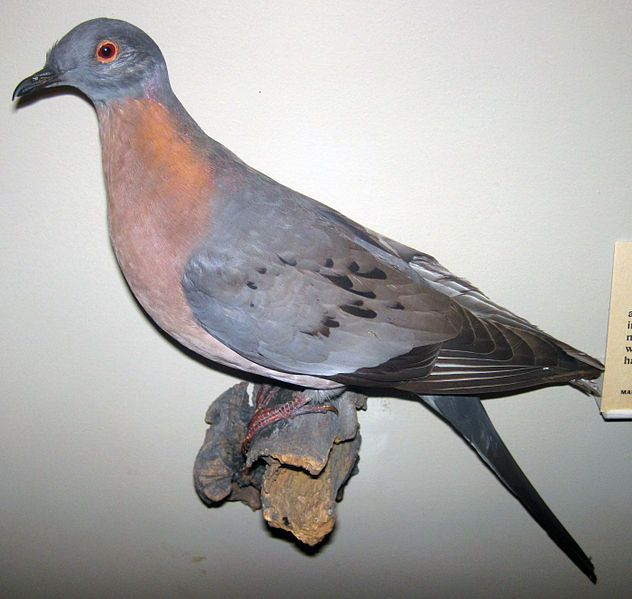 |
The passenger pigeon serves as a testament to humans' effects
on nature and the need for conservation efforts |
Since 1973, the ESA has seen multiple successes, some of the most famous being the recoveries of the bald eagle and the peregrine falcon. However, increasingly more species need attention as human population, pollution, and habitat destruction increase. The ESA does not have the funding to save every organism in danger of extinction.
The US Fish and Wildlife Service and NOAA Fisheries recently proposed changes to the ESA. Those changes include reducing spaces reserved for endangered species recovery and reducing the protection for threatened species. Some big businesses in this capitalist society would welcome fewer regulations on land use. It could also open up room for the ESA to even out their species focus.
The open platforms of the internet have allowed for myriad opinions to be shared on the proposition. Some think these changes will allow funding to be better distributed and focus on species with high potential for recovery. Others think these changes would leave regulations too open and, at best, slow the ESA's progress.
What most Americans seem to agree on (about 90%, actually, across both parties) is that we need an act like the ESA to keep our environment safe from ourselves. But is the current ESA, flawed as it may be, our best option? Will changing it further endanger our endangered species, repeating the tragedy of the passenger pigeon? Or do we need to alter our strategy to better prioritize conservation funds?
Image source


.jpg)