Showing posts with label Brave New worlds. Show all posts

Friday, October 4, 2019

Personal Exploration and the Unknown Frontier

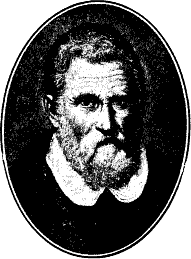
Portrait of Marie Curie, by R. chido Hanečková
As expeditionary voyages became more common during the early Renaissance period this sense of exploration spread across the land.  It permeated the cultural atmosphere of Europe and led to a fascination with discovery. People were excited - and rightly so - as these explorers would bring back new ideas, new stories, and new possibilities.

But physical exploration isn't the only way to discover new worlds of possibility.  During the Reformation many people found their world expanded with a similar set of new possibilities: religious and ideological freedoms.  This brave new world of ideas and opportunity would be just as inspiring to the reformers as those voyages had been to the watching public.

Still Pioneers

Known as a pirate to the Spanish, and knighted as an English hero, Sir Francis Drake was one of the premier explorers of the 16th century. His exploration and efforts, along with those of many others, marked the beginning of global trade and the foundation of the world as we know it. (See here and here for more details and thoughts on exploration). This major historical figure died of dysentery in Portobelo, Panama, over 5000 miles from the city where he was born. I wonder, in that moment, if he believed it was worth it.
Sir Francis Drake, 16th Century Explorer


The Necessity of Individualism


Despite claims that individualism leads to narcissism and is an overall menace to society, individualism can be seen to have profound positive effects throughout history particularly during the Reformation, as well as the Renaissance.

A recent article in the New York times, titled “The Age of Individualism”, explains that because of individualism, our country and our world will eventually become a disaster of self-absorbed individuals only concerned with trivial, self-centered things.

However, the Reformation and Renaissance are clear indicators of what happens when a society turns to individualism. The society flourishes. Without individualism, there would be no-one standing up to age-old theories, accepted as absolute truth and successfully prohibiting any forward progression. In his journal article about religion and modern individualism, Herbert Butterfield explains, “The individual must be able to confront the tyranny of majorities, the prejudices of prevailing culture, and the dominating spirit of the age itself.” This is why individualism is needed. Personal ideas and convictions were recognized by our predecessors as something that needed to be shared and addressed, especially if it went against what was popular and accepted at the time.

It was mentioned in one of my discussions that individualism was the reason that Martin Luther experienced success in his fight for religious reform. Martin Luther is celebrated throughout the world for the courage he had to “oppose the dominating spirit of the age itself.”  Without individualism inspired by Renaissance humanism, the Reformation could be a very different story. Without the few who believed strongly in humanism and the individuals potential to be moral and good, the higher powers against change would have destroyed the Reformation before it even really began.

I’m sure, much like individualism is presented today, some in the reformation viewed Luther as an extremist, a fanatic, someone so blinded by their own ideas and ideals that they were past reason and actually detrimental to the good of everyone around them. People feared individualism because they knew it would bring change. Their solution? Persecution.  However, despite the animosity and violence they experienced, reformers endured, bringing the world all kinds of new religious and social possibilities.

Individualism continued to change society. It encouraged Thomas Moore to write about brave new worlds that could lead to literal new worlds. It was what allowed plough boys to receive bibles of their own and Shakespeare to become a theatrical genius, despite his poverty. America itself was born from ideas created by individualistic minds during the enlightenment. That is why we continue to need individuals who celebrate individualism, who have enough conviction in their own ideas and ideals to do something about it. And through that, we can continue to change the world for the better.


Thursday, December 6, 2018

Happy Birthday to a New World

About a week ago, He Jiankui announced to the world, the birth of identical twin baby girls. This, however, was not your average birthday. In many ways, it was the birth of an entirely new era. These baby girls are the first genetically modified humans ever born, and the implications to humankind are massive.

The technology Jiankui used has been around for about 40 years. Basically it is a genetic copy and paste tool. Using the system allows scientist to insert and delete portions of DNA, altering structures and functions of cells.

This technique was utilized in 1982 to make bacteria produce insulin, which dropped the price of the drug for Diabetes patients. Even before that, scientists were already seeing the possible direction of this science, towards the editing of the human genome. Conferences were called and the consensus was that if that were to be attempted, it should wait.

Soon after, in 1996, the first genetically modified produce hit the markets. The applications soon expanded beyond foods and led to the first cancer gene therapy drugs to be approved in 2017.

Now, we have on our little Earth two genetically modified little girls. Their genome has been altered to offer them immunity from HIV. The effectiveness of this is still being debated. It could put them more at risk for other diseases.

Regardless, a door has been opened, or rather a wall demolished. Whether for health, or beauty, or strength, or intelligence, the possibility for GMO humans is now very real and at our doorstep.

It is as if we have stepped off our world of random genetic phenomena and into a world of predictability and perfection. The voyages of discovery in the Renaissance revealed more of what was already around us but out of sight. These scientific voyages are truly venturing into the unknown.

What drives this science? Desire for human greatness? Mastery over Mother Nature? Ever since man realized who he was and what he was capable of, he has been striving to become more. Genetic engineering of humans is the perfect way to do this.

And when creating the essence of ones being becomes an art, we will truly be able to say "What a piece of work is man".

Wednesday, December 5, 2018

ESA: Hopeless, or our last hope?


The passenger pigeon was once the most abundant bird in North America, at about 3 to 5 billion individuals. Accounts from settlers to the continent note that when the pigeons would pass overhead in their huge flocks, the sky would go completely dark. Yet, in 1914, the bird went extinct. People hunted them until the population was so small they couldn't reproduce. There were no kill limits (or those that were finally enacted were not well enforced), and no conservation efforts until it was too late.

We may never see a cloud of passenger pigeons again, but their extinction did lead to something beneficial: an awareness of the importance of conservation and a boom in environmentalism. After that point, countries began to pass acts that would help to conserve species from the same fate. In 1973, the United States passed the Endangered Species Act (ESA), which increased the level and scope of protection given to animals and plants considered endangered or threatened.
File:Ectopistes migratorius (passenger pigeon).jpg
The passenger pigeon serves as a testament to humans' effects
 on nature and the need for conservation efforts

Since 1973, the ESA has seen multiple successes, some of the most famous being the recoveries of the bald eagle and the peregrine falcon. However, increasingly more species need attention as human population, pollution, and habitat destruction increase. The ESA does not have the funding to save every organism in danger of extinction.

The US Fish and Wildlife Service and NOAA Fisheries recently proposed changes to the ESA. Those changes include reducing spaces reserved for endangered species recovery and reducing the protection for threatened species. Some big businesses in this capitalist society would welcome fewer regulations on land use. It could also open up room for the ESA to even out their species focus.

The open platforms of the internet have allowed for myriad opinions to be shared on the proposition. Some think these changes will allow funding to be better distributed and focus on species with high potential for recovery. Others think these changes would leave regulations too open and, at best, slow the ESA's progress.

What most Americans seem to agree on (about 90%, actually, across both parties) is that we need an act like the ESA to keep our environment safe from ourselves. But is the current ESA, flawed as it may be, our best option? Will changing it further endanger our endangered species, repeating the tragedy of the passenger pigeon? Or do we need to alter our strategy to better prioritize conservation funds?

Image source

Literature: By the Books?

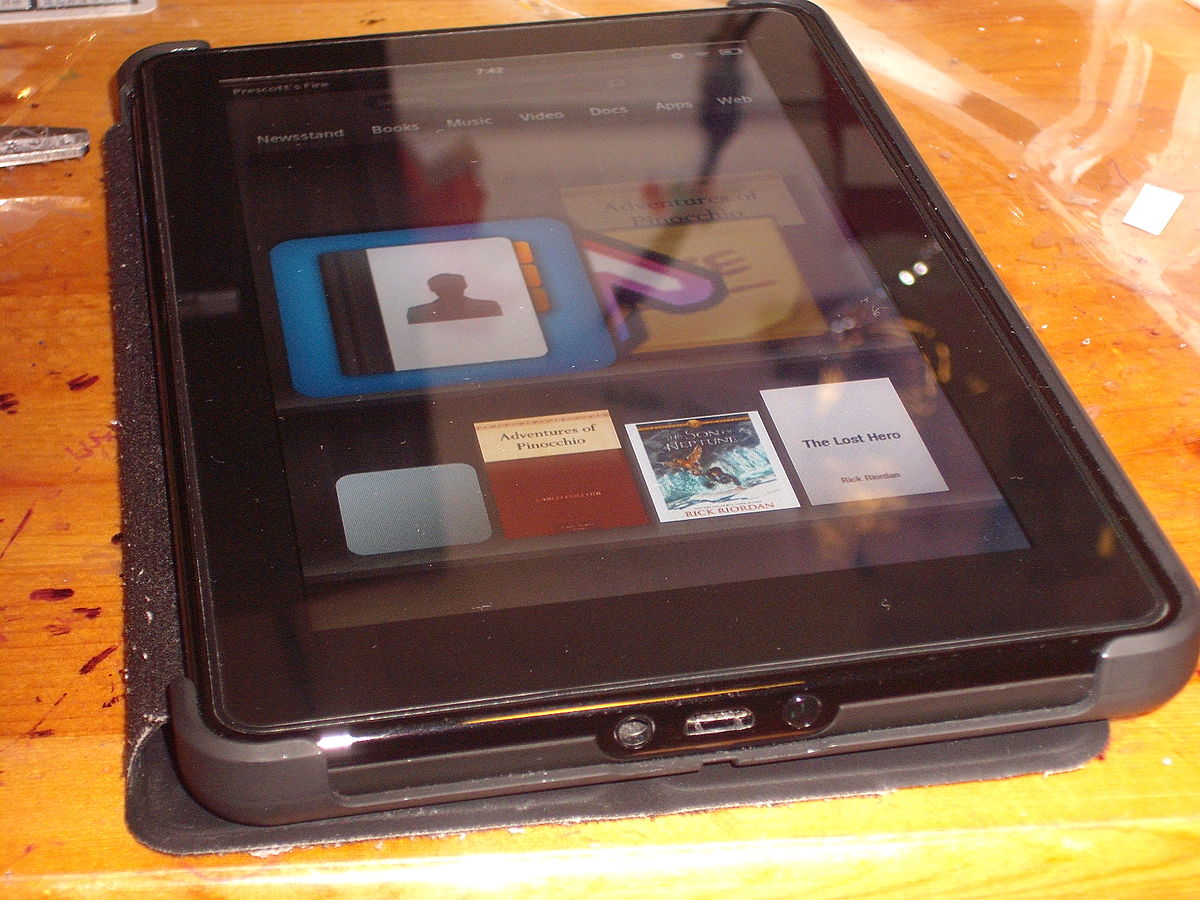
Does this even count as a book?

The definition of what we call "Literature" has been quite contentious in this past century. Thanks to (relatively) recent innovations in printing, coloring and digital downloading, new mediums to tell a story have cropped up like dandelions. In the past, the only three ways to tell a story were through oral tradition, books and the theater, and for over a millennia this is how it was. The invention of the newspaper changed that, however, as now stories could be printed piecemeal each week to get readers hooked onto an ongoing saga. After that came radio, movies, comics, and the face of Literature was forever destabilized as chaos took hold of it's image. This "Disruptive Innovation" broke all of the previous rules established in favor of finding stories in unlikely places.

These inventions have forced people in recent years to reevaluate what we consider to be "Literature", and though most agree that it only covers "Written Works" as defined by the Encyclopedia Britannica (see here for more details), that only really eliminates Radio, Movies and television broadcasts, as well as videos online. Comics are still considered a written work after all, the same with Manga, "visual novels", and even that topic that people are ever wary of: Fan Fiction. How are we supposed to take those things into account, how do we change our frame of reference, to include these different styles under the same umbrella that books or perhaps plays fall under?

You could liken the situation to the "Age of Exploration" from years past, but I disagree in that regard. In my view, the issue isn't that these new mediums haven't been explored to their full capacity, they have, it's just a matter of whether they count at all for the title. Just because a man discovers a new location in the sea does not make it a continent, it could easily be island that is all on it's lonesome.

Image Credit: "Amazon Kindle Fire" obtained via Wikimedia Commons

Wednesday, October 10, 2018

Galleons by the Gallon: An Innovation in Naval Technology

The new sleek design that's cool with the kids these days

Many of us remember the stories of Christopher Columbus and the three ships he sailed in to reach the Americas, namely, the Nińa, the Pinta and the Santa Maria. These three iconic ships have defined the human imagination for centuries, and with their captain they have sailed into the lands of legend...

...It's quite terrible, then, that they were so bad at their jobs.

Enter the 16th century galleon, the newest model in a legacy of ocean traversers. Unlike previous models offered at the local dealer, this achievement in naval technology was able to maintain a stability previously unheard for ships at it's time. By simply elongating the hull (and lowering that large compartment in the front called the "Forecastle") the ship was able to reduce air resistance by a large margin, improving not just maneuverability, but pure speed as well. The best part of this deal was, that the Galleons were far more cheap to produce compared to the leading brand of the time, the "Carrack", which was reduced to being the 16th century equivalent of a minivan compared to the Galleon's horsepower. After all, when you've got a boat that's faster, easier to use and costs less to make, it's hard not to follow the trend.

While I might not be old enough to remember the major innovations in the automobile industry, and not even a twinkle in my Great-Great-Grandmother's eye for the improvements in naval technology, I was old enough to witness the increasing innovations in the internet, watching as internet speeds climbed higher and higher and more and more websites were being created. This combined with new programs being created each day has lead me to compare the progress of the internet to the genesis of the Galleon, and how much it changed the world of transportation. No longer would there need to be month-long journeys from one European country to the next simply due to a bad current, now the ships (and the captains who commanded them) could go where they wanted to go, and with Colombus' discoveries in the 15th century, there was all the more incentive to go out and explore. And now in this modern age, where we have hundreds of libraries at our fingertips, I think it's high time we go out and explore some more ourselves.

Image Credit: "French Galleon" via Wikimedia Commons

Wednesday, October 3, 2018

Our Approximate Location is...: The Sextant's Beginnings

A rather stylized copy of the original
In the old days of naval navigation, sailors would have to rely on the stars to direct them wherever they needed to go. Even the invention of the compass could only help as to telling you where North is, but not necessarily where you currently are. To do that, you had to stare directly at a celestial body, usually the Sun or Polaris depending on the time of day, and give an estimate as to it's angle versus the horizon, this is used to determine latitude. Seems simple, right? Finding longitude at the time, meanwhile, was almost impossible. It required guessing at the distance and angle of the moon to some other large mass body, which at a glance, especially on cloudy or new moon nights, is simply unreasonable to expect any decent results from. This is what prompted the need for a device that could alleviate this concern in the form of the Octant, the predecessor to the Sextant.

Cue the entrance of the Octant's inventor... er, inventors. Funnily enough, two different people have claimed to have invented the octant at around the same time, and the evidence points to the conclusion that they had invented it separately without any knowledge of the other. These people in question are Thomas Godfrey (an American optician, and according to sources from after his death, someone who legitimately had OCD), and John Hadley (an English mathematician). With the octant's invention, a sailor could simply see through the scope vertically and with the mathematical compass attached to it, determining the sun's angle was easy as pie. While still more difficult, determining longitude became magnitudes easier due to the Octant being able to be used as ruler as well. With this invention, navigation became something far easier compared to before it's inception.

I'll admit, I found it funny that such an important invention was "invented" by two people simultaneously. It reminds me of my own favorite past time, writing stories, where in I would try to write what I thought was a unique idea, but the moment I showed it to friends, I would inevitably be redirected to another author who did a story based on the same exact idea. Perhaps creativity is dead, but at least coincidence is funny occasionally.

Image Credit: "Octant de Ramsden" obtained via Wikimedia Commons

Friday, September 28, 2018

The Consequential Age of Discovery

Since the beginning of time, humans have been led by an insatiable desire to explore the world. This is particularly evident during the Renaissance time period. While explorations in the past have not always brought great change, several of the discoveries have had astronomical effects on the world.

Trade routes dominated early European economies
Vasco de Gama was a Portuguese explorer. He was one of the first to sail around the horn of Africa and landed in India. What makes this voyage particularly significant is the trade routes that it opened up. The spice routes brought great riches to Portugal. The effects of controlling these trade routes would set in motion events that would change the world. I would argue that this is one of the most important events in history. This time of prosperity that Portugal enjoyed was an inspiration to rival nations that riches lay in undiscovered trade routes. This is one of the primary reasons Spain sent Christopher Colombus in search of a different route to the Indies. While watching their neighbors grow richer by the day, they were willing to take a bold step to find a better way.

The discovery of the Americas by Christopher Colombus led to a series of events that would change the world forever. Conquerors, missionaries, and explorers alike would be drawn to the New World for the unknown opportunities that could be discovered. The New world offered seemingly limitless land. Many an explorer left their homes in search of treasures in the Americas. Other notable explorers of the New World include:

  • Hernan Cortez who conquered the Aztecs
  • Francisco Pizarro who conquered the Incas
  • Jacques Cartier explored Eastern Canada 

Jessie Bruner wrote a blog post titled "World Discovery: A Necessary Evil..?" about how the conquistadors and other ruthless explorers were a necessary evil to discover the new lands. their methods were inhumane, yet, it opened up a world of opportunity that would lead to the founding of many great nations. Spain would soon be plagued by war, which would tear the New World from the Spanish control, however, they have already left their mark as millions of South and Central Americans still speak Spanish today.

America would continue to draw explorers and settlers for centuries to come. Carter Shearer wrote a blog titled "Manifest Destiny"  about the people who would soon sweep the nation as they spread west. As America was settled by immigrants from across the world, it would soon become a land of opportunity like none before it. Unclaimed land was oftentimes given away by the government to motivate settlers to develop lands.

Despite all these incredible discoveries, I believe the most significant discovery was not of lands or people.  I would argue that the discovery of the printing press was the most consequential discovery of the Renaissance, and perhaps of any time.  It revolutionized the spread of information. The Protestant Reformation could have never succeeded without it, as many had tried before to reform the Roman Catholic Church. The common folk finally had access to books, including the Bible, which had never been possible before in history. This opened a world of discovery for the lower classes.

Image credit: TheAndrasBarta World maps 2015, by Andras Barta licensed under CC 2.0

Wednesday, September 19, 2018

Not the First Man There, But the First Tale Told: Marco Polo

A More Modern Makeover for Marco

"Ad Fontes" is the belief in "going back to the sources", which is to say in the context of the Renaissance, to learn from the Greek and Roman philosophers of the past. However, just because it implies such, doesn't mean we can't go back to a more... recent source. Marco Polo, the man whose journey to China would inspire Columbus' search for India, was born in the year 1254 to a large merchant family, where he himself took up the trade (literally). At the young age of 17, he left with his father and uncle on a return trip to China. This journey would serve as the inspiration behind his work "The Travels of Marco Polo". While some historians argue over the book's authenticity, it has been noted that the book contains less errors compared to other travel logs of the time, as well as containing far less "miraculous" events within. On the other foot, it has also been noted that there are a few glaring omissions of China in the work, such as the itty bitty little issue of the Great Wall of China. Regardless of whether you believe that he made the actual journey or not, what can be confirmed is that he is the first to have a detailed account of their "journey". This account would serve as "the source" of inspiration to explorers for centuries to come.

Throughout my life, I've had to take both people and works on the basis of faith. Whether it be my friends, classmates or even my church, these things at various times have required me to place my trust in what they had said. Some times my faith was well-placed, at other times I wish I could go back and change my mind. Such experiences have made me empathize with Columbus, who had no way to verify what Marco Polo told was a true account. Despite that, he took his word as the motivation necessary to try his own journey to what he presumed was "Asia". And really, such faith? It's admirable.
Image Credit: "Marco Polo" via Wikimedia Commons

Manifest Destiny

In the process of reading about explorers during the Renaissance voyaging out to "Brave New Worlds" and experiencing new peoples and cultures I pondered on what may have prompted their voyages. Governments surely dispatched some for reasons such as trade or imperialism. Others were prompted by a desire to experience new things and bring that knowledge back to their homes. 

We all are explorers and adventurers facing our own Brave New worlds
Continuing on with this thought process I thought of others who left their homes to venture to new places and thought on their reasons. I ended up in America in the 1800s where Manifest Destiny was in full swing. Manifest Destiny was an attitude that America was a virtuous country who had an obligation to bring this virtue to the world and that this mission was divinely appointed to them from God. One of the big outcomes of Manifest Destiny was the settling of the west. I feel this expands the theme from the Renaissance of a Brave New World. While those who were settling the west weren't traveling oceans, they were expanding into their own new worlds and bringing American traditions with them. They were expanding their country and proliferating its values in new areas. Whether is was right or not for these people to spread and often force American culture onto the areas in which they settled is a discussion for another time. But their manifest destiny mindset and them traveling into their own "Brave New World" is something I think many people can relate to.

Many people grow up being taught values and principles which they hold close. In my own case, I was raised in the Church of Jesus Christ of Latter day saints and grew up with a specific set of beliefs and morals. I served a mission to spread the Gospel of Jesus Christ and in a way went out with a manifest destiny mindset, feeling I had a mission from God to bring those beliefs and morals to others. I ventured out into the unknown, ready for new experiences and too meet new people, all the while desiring to bring my beliefs to them. I think many people have experiences and beliefs that connect them with the theme of A Brave New World and Manifest Destiny.

Thursday, September 13, 2018

The Best of all Possible Worlds

It is fascinating that following the black plague in Europe, where nearly a third of the population died, the great thinkers of the renaissance put humans at the center of a universe created for them. Pico della Mirandola said,
I feel that I have come to some understanding of why man is the most fortunate of living things and, consequently, deserving of all admiration...
This idea that man is the most fortunate of all beings, despite the clear evils around characterized the great hope of the humanists in the 15th century.
A map showing El Dorado
A map of Guina by Jodocus Hondius (1598)

 It led to great explorations, pushing the boundaries into brave new worlds created for us, the humans. They exaggerated tales, but it seems like they truly did believe that this was the best of worlds, and that humans were at the center of it all. This seed of an idea idea of a best of all possible worlds stuck with humanity. The 17th century philosopher  Leibniz believed it, and argued that God has done all he can for us.

In the present, we have lost sight of mans place in the world. We look at the evils around us, the fighting and disease and wonder how we could be the "most fortunate of all living things". This attitude however was what carried Europe away the dark ages, above the awful plague, and across the oceans. If we too wish to conquer the evils of our day, rising above as a voyagers to brave new worlds, we too must live with the belief that we have been blessed, that we have the agency and ability to change our circumstances. Only then can we arrive at our El Dorado.