|
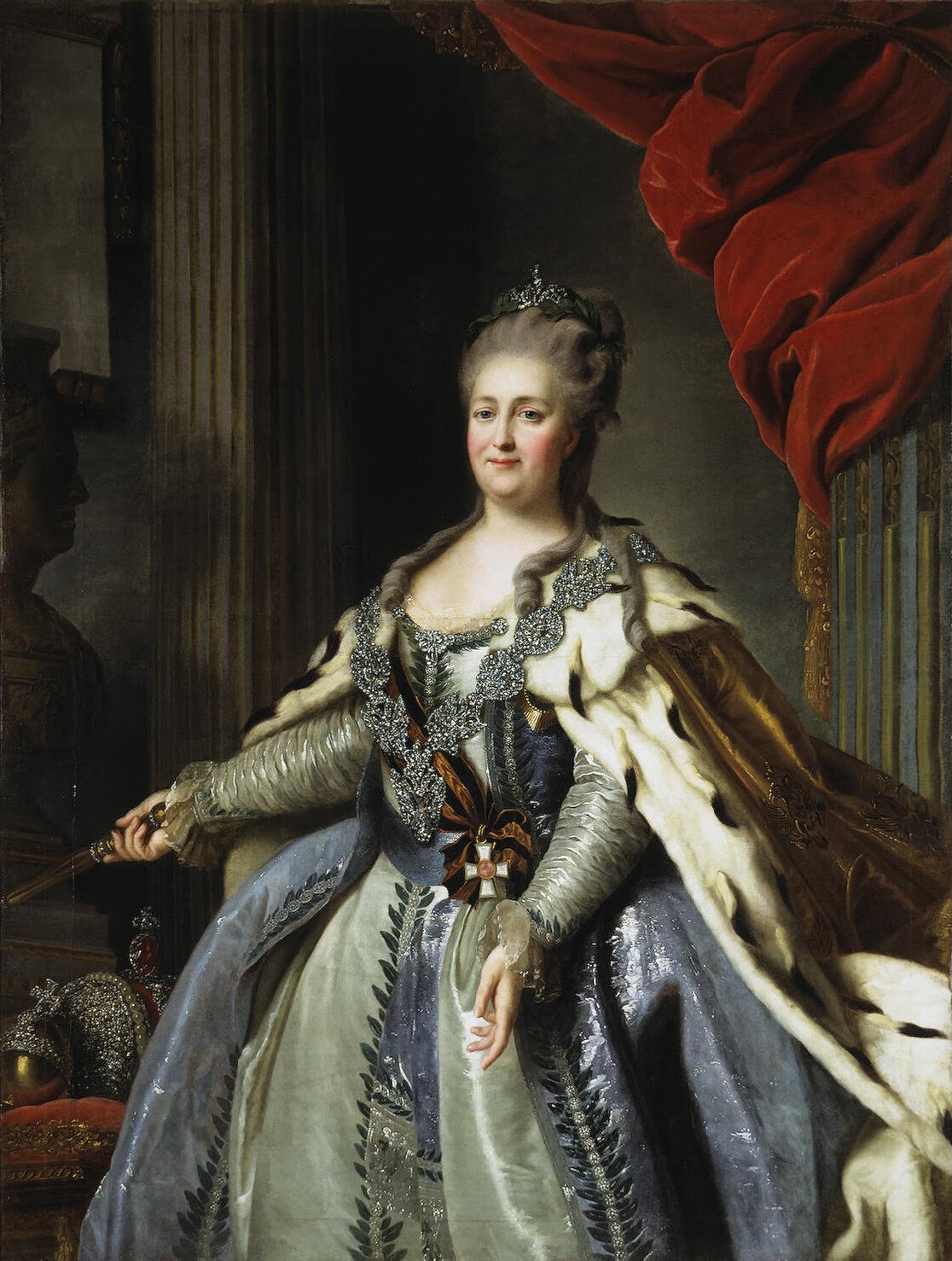
Catherine the Great relied on charm and intelligence
to gain popularity; she exemplified sprezzatura.
|
Catherine the Great was inarguably an ambitious woman. As a teenager she was set on becoming the next ruler of Russia, even though she was German. She begged her tutor to give her more schoolwork, and she even caught pneumonia staying up late to study Russian vocabulary. Her dedication earned her marriage to her cousin, the empress of Russia's nephew. He was a terrible ruler and husband, so Catherine forcibly took the throne from him.
Like many women today, Catherine wanted fulfillment and love. She had lovers, anywhere between 3 and 12 over her lifetime. In addition to finally giving her the love and intellectual fulfillment she sought, her relationships helped her keep Russia on good terms with other countries. It seems like a few lovers would be worth Russia's stability.
Catherine promoted education, health, and the arts, as well as equal treatment of people from all classes. She wrote the Rule of Law, a 22 chapter document for which she consulted people from every class (but serfs). She tried to free the serfs, the indentured servants of the upper classes. She gave up this feat in fear of losing the nobles' support on which she depended, but I don't think she should be blamed too much because she did more good in power than she could have out of it.
Ambition carried Catherine the Great to uplift Russia to heights that it never would have achieved if not for her. Although she ruled in a less "respectable" way than a woman would have been expected to, she achieved her goals of power and love while ruling Russia responsibly. I argue that her greatness stemmed from her controversial deeds, rather than being hindered by them.
Image obtained from wikicommons.
Image obtained from wikicommons.