
 |
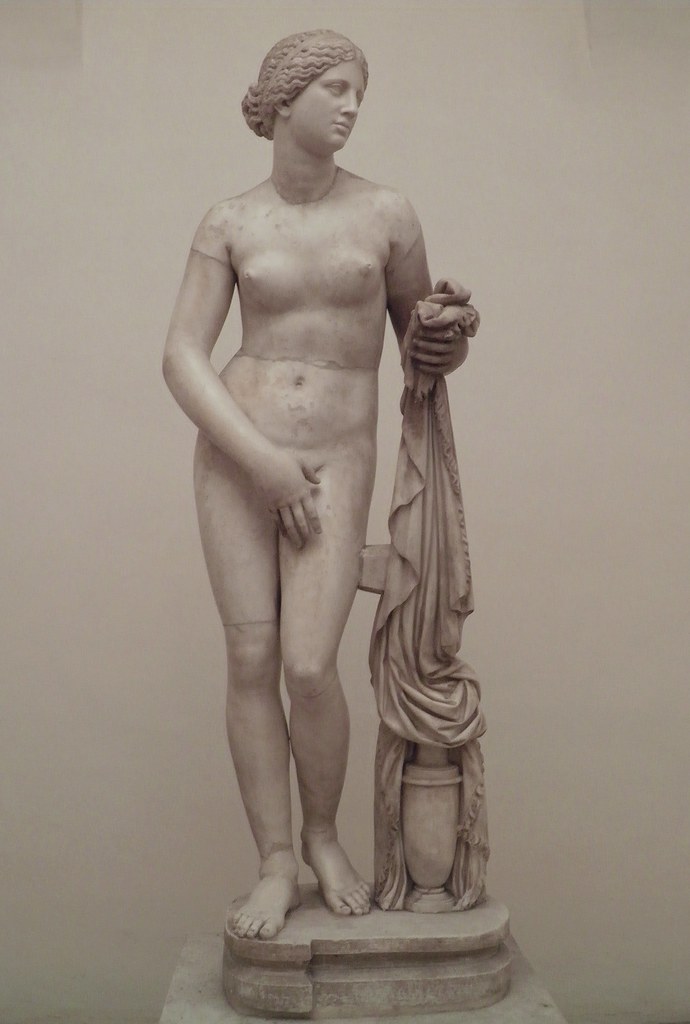
| Praxiteles's Aphrodite of Knidos, a Classical celebration of human form. |
This heavily contradicts the beliefs of pre-Renaissance Christianity. The general belief during that period was that people were fallen souls and had to live by the Church’s rules to have a chance at having any worth and getting to heaven. People in anything lower than the upper class were thought of and treated like tools, made to work constantly in a feudalistic society. In any class, though, the Catholic church was law, and any education or art centered around it.
Plato, on the other hand, believed that eudamonia, happiness, was the highest goal of thinking. A fellow philosopher, Cicero also considered the individual variations within his audiences and shaped his persuasive techniques accordingly. He recognized that some people were not educated or willing enough to be persuaded by logic alone and decided it was okay to use emotion as a persuader with those audiences. As Somer discusses in her post, speakers and artists must always take the audience into consideration.
