Showing posts with label Plato. Show all posts

Friday, December 14, 2018

Public Relations, needed or not?

By Ana Rees


Public relations specialists are sometimes labeled deceptive and unethical, but are they doing more good than they are harm? 

According to an article in Forbes magazine, there has been a decline in the necessity of public relations professionals in recent years, because many companies are beginning to manage their own public affairs through utilizing the skills of already existing employees. For example, the job responsibilities of a public relations specialist align closely with that of a marketer and/or advertiser.

Not only do we see this reduction due to the thought of unencessity, but there have also been others who have questioned the ethics of public relations specialists, and therefore, question why we would we would need people in the workplace in whom we can’t fully trust. We will address the arguments of why some people do feel this way, because if looking in from the outside, it does raise questions when you see someone working for a campaign or business they don’t actually support. Although these arguments do exist and public relations specialists have been seen as deceptive or unethical for this reason and others, they are doing much more good than they are harm, and therefore are necessary in the workplace.


Wednesday, December 5, 2018

The ancient beginnings of public relations


West facade of the Parthenon, Athens, 5th century BCE
When you hear the words public relations, what comes to your mind?  For many people, they know what it is in a general sense, but can’t quite find the words to define it.  I saw this firsthand when I told others that I was accepted into the public relations program.  At first, they were very excited for me, but then I would watch as a puzzled look came over their faces where they would then ask me, “now what exactly is public relations?”  

Friday, September 28, 2018

Audiences Shift

Happiness vs. Utilitarianism
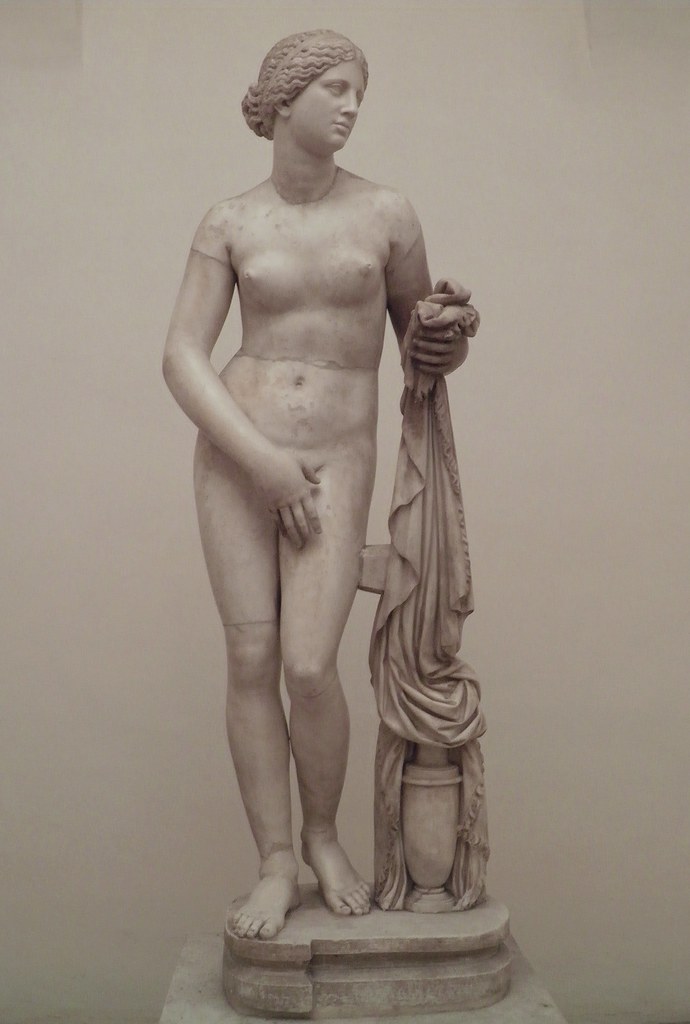
Praxiteles's Aphrodite of Knidos, a
Classical celebration of human form.
“Of all things the measure is Man, of the things that are, that they are, and of the things that are not, that they are not." Here, Protagoras is is basically saying "Man is the measure of all things." A Classical philosopher, he taught that every individual had their own version of the truth—that truth was relative to the person perceiving it. Protagoras taught people to appreciate the individual and the wide array of perspectives people have. To him, humans are not only greater than the beasts of the earth and the angels in the heavens, but higher than truth itself.

This heavily contradicts the beliefs of pre-Renaissance Christianity. The general belief during that period was that people were fallen souls and had to live by the Church’s rules to have a chance at having any worth and getting to heaven. People in anything lower than the upper class were thought of and treated like tools, made to work constantly in a feudalistic society. In any class, though, the Catholic church was law, and any education or art centered around it.

Plato, on the other hand, believed that eudamonia, happiness, was the highest goal of thinking. A fellow philosopher, Cicero also considered the individual variations within his audiences and shaped his persuasive techniques accordingly. He recognized that some people were not educated or willing enough to be persuaded by logic alone and decided it was okay to use emotion as a persuader with those audiences. As Somer discusses in her post, speakers and artists must always take the audience into consideration.