Saturday, November 3, 2018

Nights in White Satin, Never Reaching an End...


  • Something Big This Way Swims

The idea of swimming in the water with whales makes me sick to my stomach. Not sharks. Not crocodiles. A barracuda could chew on my toes but I’d welcome it if I had to choose between that or a whale. Jaws is a staple in my family; if you don’t like Jaws, you are disowned. But whales…my toes are curling right now just thinking of them. I don’t know why. I can’t explain it.


  • Something Broken: Motherhood Addiction

I hate my older sister because she started using dangerous street drugs when she was about 13. However, I didn’t start hating her when she was 13. I started to hate when she had children. In our youth, I watched my parents groggily wake to the normal phone call in the middle of the night that J— was in jail again. I remember my father pulling on his jeans and untied shoes to go and pay the bail with the money he didn’t have. I also remember the last phone call, when my father sighed and said, “I’m not coming,” hung up the phone, and went back to sleep. In that time, it was easy to forget about her, to ignore her and feel bad from a distance. For some reason, J— decided to be a mother and that’s when I started hating her. Because watching her destroy her own life was easy, but watching her destroy the lives of my two nephews is different. They didn’t choose the drugs or the abuse, but they face all the same consequences. They are broken because of a selfish, broken mother and their lives are barely beginning.


  • Something Artistic: Nights in White Satin

My parents’ marriage fell apart shortly after my sister had her children. Attempting full-time jobs, court visits, social worker intervention, and trying to keep their grandsons out of foster care, they fell apart. I’m not sure their union will improve soon. As reformed hippies, the music of the late 20th century were integral part of their lives and an important aspect of my childhood. Their “song” is Nights in White Satin by the Moody Blues. Whenever that song was played, they danced, no matter the situation. They haven’t danced in a really long time. But when I miss the feelings of normalcy and the ignorant façade of a happy, stable family disperses, I listen to Nights in White Satin and it cures my world for about 6 minutes.


  • Something Mysterious: Why Does He Love Me

I get it, God loves me. But I don’t understand why God loves me.
“God loves you because He is your father.”
“He loves you because you are His daughter.”
“He loves because you are trying your best.”
“He misses you and wants you to come home, so He will always help you.”
I know, I know. But my question isn’t answered; why does God love me? Tell me all those things again. I get it. But they are unsatisfying answers. And sometimes I am so frustrated with trying to find the why, that I wish the concept didn’t exist at all. I wish God wouldn’t love me because it would make more sense.


Image Credit "Moby Dick"  (Public Domain Image vs Wikimedia Commons)

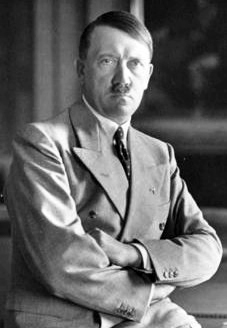
I Do It Because of Hitler


People often ask me why I decided to become an English major, and they are usually shocked by the answer. I tell them I decided to study English because of Adolf Hitler. 
The Fuhrer
Hitler, as everyone knows, is the infamous dictator who, during World War II, waged war on several countries, who sought to ensure communist governments throughout the world, and who was responsible for the inhumane deaths of six million Jews. Whether or not Hitler was a moral man is never in question by those who seek peace, but those who examine his life will come to see that he was indeed a successful leader.

Hitler came from humble circumstances, and with both parents dead by the age of 19 (accompanied with his rejection to Vienna’s Academy of Fine Arts), it may have seemed as though Hitler would struggle to ever amount to anything. Nonetheless, he soon became interested in politics, served on the German side in World War I, and was later arrested after announcing in a beer hall that a national revolution was beginning. During his time in prison, he wrote Mein Kampf. This book sold modestly at first, but soon became the second best selling book of Germany (after the Bible). Hitler’s power continued to grow, and he was triumphant in launching one of the most horrific wars the world had ever seen.

Hitler didn’t begin with an army. He didn’t start with concentration camps. He began humbly, armed with only words. This is where true power lies: with dialogue and the ability to use it.

As I learned more of Hitler in middle school and onward, I couldn’t help but wonder at the damage he was able to due with words. Then, it made me think about what might happen if good people could be able to use their words as effectively as he did. So much light would come into the world— and it has! Inspirational speakers give hope to those struggling with various issues. Comforting words build up those brought down by sadness, and words can be used to express love and appreciation. If all words were used for good, the world would be infinitely easier to live in.

And that’s why I study English. I want to learn to use my words as effectively as I can so that I might bring a little more peace to those around me.

Image Credit: Wikipedia's page "Adolf Hitler" image in the public domain

Friday, November 2, 2018

That's What I Was Gonna Say

Something Big: The Black Hills
Alyssa & I at Mount Rushmore
I stared up at the faces looming before me, their detail lessened the distance between them and me, but their size defined two separate worlds.  Driving through the Black Hills reveled greater depth and greater height.  It was a sea of rocky mountains and trees.  It was expansive and unending, and I felt small.

Something Broken: Partners in Crime
We ran up Old Main hill, taking pictures and laughing as we usually did.  But something had changed in the past year.  My best friend, M, and I were partners in crime, running buddies, doorbell-ditching pals, and homework helpers.  But something shifted the last year of high school.  We still had our share of time together, but the camaraderie we'd had changed.  And soon we spent less and less time together.  Our first semester of college together was the same, and even though we said we were best friends we never reached the point of closeness we'd had before.  She left on her mission the week after I came home, so who knows what will happen when she gets back.

Something Artistic or Man-Made: Servant or Master?
My favorite part had arrived.  All else evaporated into the silence and I closed my eyes.  The music led my hands from one key to the next--ever pulling, demanding, hungry and desperate to expose itself.  I thought I was the musician here.  Yet I felt something that my fingers couldn't express: it transcended physical ability and captured what couldn't be spoken.  The striking melody was both haunting and beautiful; calming yet intensifying; satisfying but at the same time disappointing--for nothing else could articulate what a wordless conversation had inspired. (see Khachaturian Concerto Part I below; see 3:22 or 11:14)


Something Mysterious: That's What I Was Gonna Say
I opened the email from my mom with anticipation.  The previous week I'd asked her to send me my biological dad's address.  At the end of the email she said, "Oh that's funny--Alyssa asked me the same thing last week too."  We, my twin sister and I, were both serving missions and this wasn't the first time (nor the last) something similar happened.  My older brother frequently yells, "Jinx!" as he hears us say the same thing at the same time.  Often when Alyssa and I are talking, I say what she's thinking (or vice-versa) or we finish each other's sentences.  And although we only have a few of the same clothes, we nearly always wear them on the same day.  

I'm broken and the doctors don't know how to fix it

Something Big - White Male Privilege 
As a white American I honestly thought for a while that racism ended a while back and Obama was proof of the fact. As a male, I thought sexism ended sometime before I was born and that suffrage was the end of feminism. Now I have seen that I was mistaken. I don't know how big these issues are, as I am neither of color nor a woman, but from the little insights people give me into their lives, I feel another bubble pop and I am surprised. These problems haven't been fixed, they have evolved. We think we improve, but really we find new ways to interpret old fears. The Irish, the Italians, and now its the Southern Americans. Somebody is always coming to hurt America. Even in writing all this down here I can't even begin to address the problems that we face, and it simply feels like a futile exercise. Will we ever truly believe that "all men are created equal?" But even in the questioning half of the population is forgotten. "Its just an expression for humanity," some may say, "does it matter?" is my response, it still leaves women out.
Something Broken: My shoulder
A year and 3 months ago my shoulder started to bother me while I was a missionary for the church of Jesus Christ of Latter Day Saints. At first it wasn't to bad, but over time, life became excruciatingly painful. Doctors had no clue what it was. Physical therapy did nothing but waste time. Drugs had no effect. Even after coming home doctors cannot help me fix this problem. To this day I wake up with shoulder pain and go to bed feeling this same pain. How is it that we have "come so far" with medicine and yet my shoulder can't be fixed?
North Reflection Pool
Something artistic or man-made - Finding peace while surrounded in a noisy New York street
One of my earliest memories is of 9/11. Imprinted forever in my mind is the look of shock and terror on my parents face. After returning from my mission I took some time and visited the reflection pools at the 9/11 memorial site. Despite there being hundreds of tourists and fellow New Yorkers around me, when I got to the pools life seemed peaceful, time seemed to slow and for a moment I felt at peace. Life goes inexorably on, but in that moment man's offering helped me connect with the divine as I remember how fragile life is and how simple it can be to change the lives of millions forever.
Something Mysterious - The effects of too much Estrogen
Recently while listening to a podcast I came across a fascinating subject - estrogen. To hear the way it was described, we are inundated with the chemical, receiving far more of it than is healthy for us. But I still don't really understand how it is that we get it, or what exactly it does to us that is so bad, aside from cancer. However I got a different chapstick and stopped using plastic water bottles, opting for metal instead. I remember the fear when I found out this chemical can be found in hundreds of common items and absorbed into our bodies (wait, How?). I don't know why but plastics 2,4, and 5 are ok to use while the others are not. I don't know why, but soy and flax contain estrogen so I avoid them like the plague. I don't know what glyphosates, astrophenes, benzafinones, lenolium, or polyester are but I avoid all those too. And stay away from carpets.

Image credits: 9/11 memorial pools by Amy Dreher

Thursday, November 1, 2018

Aestheticism in the Age of the Selfie

     After delving deeper into The Picture of Dorian Gray by Oscar Wilde one of the themes that becomes every more present in the book is the idea that society during this time of aestheticism was indeed extremely superficial in its focus and values. The main character, Dorian Gray, personifies in almost every way that superficial nature as he buys into every pointless party and becomes a slave of fashion and looks as much as he is to Basil's painting that prolongs his youth. We can see this clearly from a passage from the second chapter in which Dorian says "I know, now, that when one loses one's good looks, whatever they may be, one loses everything. Your picture has taught me that. Lord Henry Wotton is perfectly right. Youth is the only thing worth having. When I find that I am growing old, I shall kill myself." This statement draws a bold line limiting value to only that which is beautiful.
     In this time period, Oscar seems to be prodding at while simultaneously praising the idea that all art has to offer anyone is beauty. Mr. Wilde would be perplexed, I think, to see how droves of young people capture not merely capture one grand painting, but in some cases thousands of photographs of themselves to preserve their beauty and looks on a medium that is even more permanent than canvas or paper. The idea of beauty and looks being all important is the reason we have entire industries to this day. Social media, the fashion industry, and in tandem with the fashion industry the cosmetics and beauty industry would not exist were it not for such a hyper-focus on aesthetic that pervades society today. It is amazing to see that the way that one looks can drive their decision making more than almost any factor in their life. 
Image result for selfie of dorian gray     Aestheticism seems to me at times to be a step away from the humanist ideas of enlightenment. Instead of focusing on tolerance, equality, and inclusiveness, society decided to try to widen the gulf between some social classes in order to foster exclusivity, secrecy, and the elite. Society today, from politics to media and Hollywood still exercises these vain ambitions. The industries of art and literature of all kinds seem to focus on the surface and the social status of the creator now more than ever. The idea that all art has to offer is beauty may have been what Oscar was going for and a big part of how life was lived then and even now, but should that be the case? Is beauty the only enrichment there is? I would say no, completely not. Art is meaningful, and society can be, too, the focus just has to dig deeper than the placid surface to reach that meaning. Enlightenment and the ideas founded therein could help readers and viewers get there by showing them through rational method the different ways to find value in art and society. Oscar Wilde came after the enlightenment with a story that simultaneously criticized and praised aestheticism. This self awareness definitely rings with familiarity of the enlightenment era, however, the main idea about art expressed is lacking the rationality and depth that would've come from the enlightenment era.

Picture source:
https://www.google.com/url?sa=i&source=images&cd=&cad=rja&uact=8&ved=2ahUKEwj9zqGuvLTeAhUDmoMKHRHPBoYQjRx6BAgBEAU&url=https%3A%2F%2Fwww.pinterest.com%2Fpin%2F415949715562639767%2F&psig=AOvVaw1X-YH8EFQOl_b8lnGDeE8c&ust=1541205560843267

Artificial Social Division


The novel Evelina by Frances “Franny” Burney was first published anonymously because during the time period that this novel was written, women such as Franny held opinions that weren’t important…er, wait, I meant women in Franny’s social class weren’t supposed to interject in literary circles –no I don’t think that’s right either…


Burney's Class Motivations

Satirically laced commentary like above is found in Evelina, or the History of a Young Lady’s Entrance into the World. Evelina soon finds that the “higher” class of people that she meets throughout the novel aren’t much superior than others. The men attempt to seduce her, there are feuds in her family between her mother’s relatives and her father and who deserves what and is entitled to which inheritance. Essentially, people fight for money, power, and sex.


Verga's Reality of Poverty

Serendipitously, I was reading an Italian anthology of short stories by Giovanni Verga published in the 19th century while reading Evelina. Verga follows the impoverished Sicilian people in southern Italy and thematic elements of these stories were the same; the fight for money, power, and sex.
From the high society living of Evelina to Verga’s representation of poverty, I think the question that I wonder is: Why is there tension between social classes if they are founded on the same basic human 
nature?

Our Modern Financial Division 

Modern research shows that this tension still exists! I remember when the finicial crisis of 2007/2008 destroyed my parent’s personal business and left them depressed, anxious and scared. They were looked down on because they no longer had the small fortune that was providing for their large family. In an attempt to identify the psychology and stigma of social division, researchers Miguel Moya and Susan Fiske outlined the negative social impact the Great Recession had on American social class in an article titled “The Social Psychology of the Great Recession and Social Class Divides.”


I’ll let you read the article on your own time but it proves that social class tension still interferes with individual progression today, even with the same innate nature.


As written in Evelina, “the right line of conduct is the same for both sexes [and classes], though the manner in which it is pursued may somewhat vary, and be accommodated to the strength or weakness of the different travellers.”

Image Credit: Homeless New York  and High Class Lady (Public Domain Images via Wikimedia Commons)

But Now, I Thought

I'm not sure how to say this without sounding pretentious, but I'm pretty well read. I've been around the proverbial literary block and because of this, I thought I knew what to expect from Jane Eyre. Not only were my expectations completely wrong, I had absolutely no concept of what I was getting myself into. It was an exhilarating experience. Every now and again, there is a novel that is really, truly new. It's a departure from everything that has been done before. It strikes out into new terrain. Jane Eyre is a novel like that.

The most remarkable thing about the novel to me, and to most of the people I've talked to about this book, is how strong the character of Jane is. She's a force of nature. She marches to the beat of her own drum. She thinks, and she decides things.  At a crucial point in the narrative, Jane makes this statement that sums up her attitude toward life brilliantly.

"till now I had only heard, seen, moved-followed up and down where I was lead or dragged- watched event rush upon event, disclosure open upon disclosure: but now, I thought." (pg. 267)
Rather than being pushed about from plot point to plot point, Jane's character makes things happen, and takes charge of her own life. 

Portrait by J.H. Thompson at the Bronte Parsonage Museum
Reading about the history of this novel more, I found that Jane comes by her fortitude and depth of character honestly. Charlotte Bronte, the author of Jane Eyre, lived a very individualistic life. She lost her mother and several siblings when she was young. She, like Eyre, lived and eventually worked at schools far away from home. She wrote, despite social pressures, and published under a pseudonym in order to protect her privacy and to conceal her gender.

She didn't do what people thought was proper. She did was she decided to do, including, at one point, falling deeply in love with a married man. Bronte endowed her heroine with the same strong character that she had in abundance, and people felt the effects of it.

The book was a hit immediately. People saw it as fresh, raw and challenging the status quo- which it was. A book detailing the life of a woman who chose who she was going to be, who defied the circumstances of her birth and made something, not only respectable, but remarkable of herself, was in direct contrast to the almost fatalistic view of socioeconomic standing and rank-by-birth that prevailed at the time.

 It was revolutionary to purport that a man could become something of his own choosing- even more so to assert that a woman could do the same. It struck the hearts and deepest desires of everyone who read it, and it's still doing that today.

We are a lot more free to decide our own futures than those who read this book on it's first printing, but the message of unwavering identity, of choosing your own path, still resonates soundly. All of us, especially women, are still trying to find our voices. We're still trying to find the ground we're most comfortable standing on, and Jane Eyre speaks to that search eloquently.

The obstacles may change, the end goals may shift, but the yearning of the human soul to be expressed and individual will always be the same. And for as long as people are looking to the future with a hope of a better tomorrow, Jane Eyre will be there to urge them on.
Photo Credit