Wednesday, November 7, 2018

Frederic Chopin: Accessing the Heart

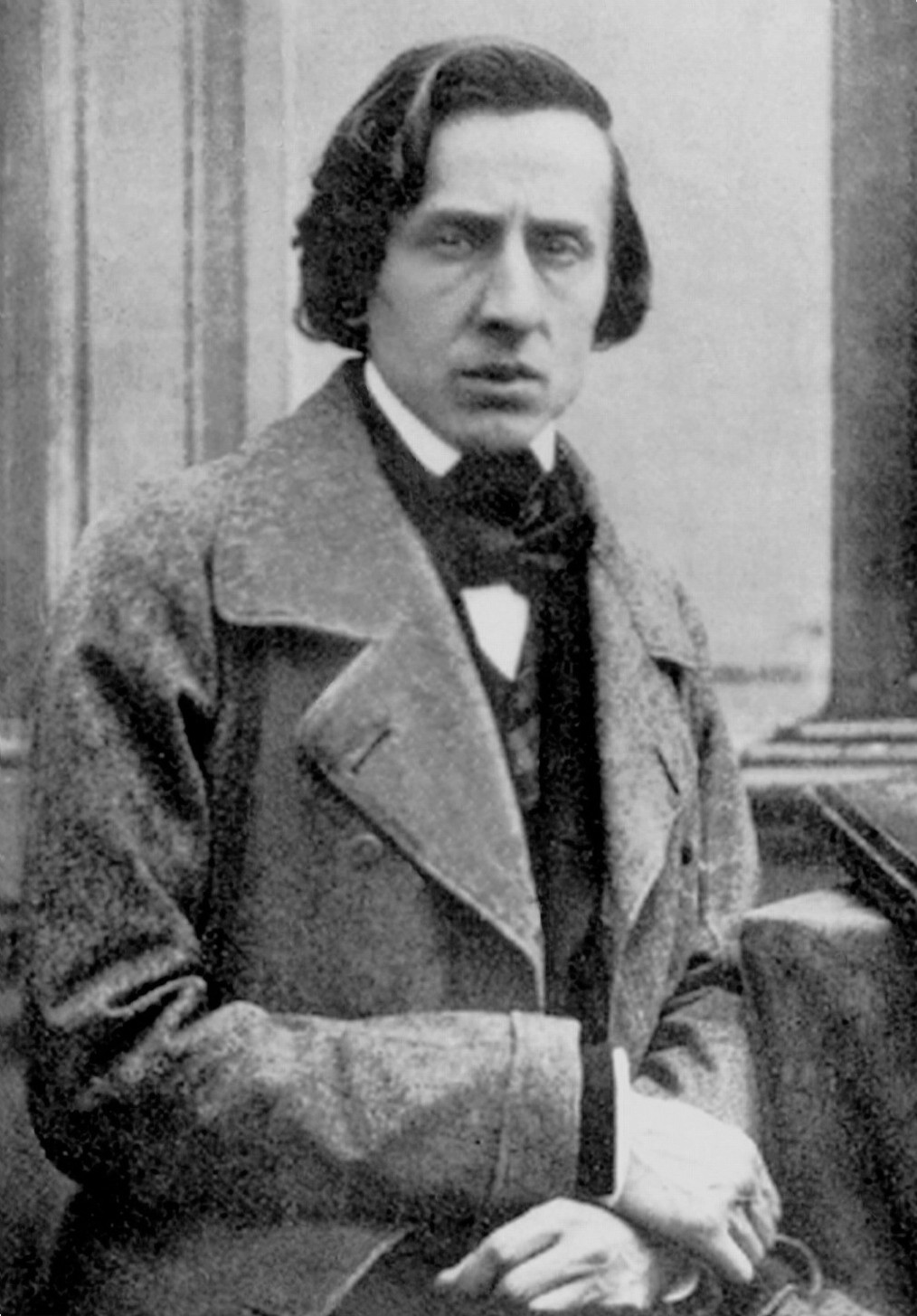
Image result for chopin
Frederic Chopin, looking ever so cheerful

Emotional expression through music has always seemed rather mathematical to me. When you want to feel anger, you listen to loud, harsh music. When you want to feel love, you listen to sweeping, sweet tones. When you want to feel patriotic, you find majestic, triumphant marches. To be happy, you listen to music in a major key, to be sad, you listen to the minor. It all seems very simple. 

About a year ago, I had an experience that changed all of this. I had been exploring classical music as a companion to literature; I wanted to read with accompaniment but without distraction, and Impressionist and Romantic piano music seemed to do the trick. In the course of my searching, I stumbled across an artist named Frederic Chopin, whose name I had heard dozens of times, but whose work I had never sought out. Chopin was a child prodigy on the piano. In fact, his virtuosity was such that he hardly ever explored any other instrumentation in his compositions. Solo piano works comprise almost his entire corpus.

At the time I discovered Chopin, I was reading a book called Anna Karenina, by Leo Tolstoy. Anna Karenina is a novel centered around love and heartbreak and follows the story of the eponymous character as she navigates the consequences of adultery. When I began to listen to Chopin's work while reading this book, I suddenly felt my emotions at the events in the story begin to swell up. My mild annoyance with certain characters or actions was fanned into a passionate bonfire when I immersed myself in pieces such as Op. 28, No. 15, or Nocturne in C-Sharp Minor
 
Through this experience, I began to realize that music can act similarly to a window in a wall. The more empty space there is, the greater amount of wind that can rush through. Sometimes, the quietest and simplest of pieces may not necessarily reflect my emotions the best, but I discovered that those pieces can have great power in accessing them. 

Curious what could have inspired such perceptive melancholy, I researched a little into Chopin's personal life. I discovered that he was often ill and died at a relatively young age, thirty-nine. In addition, he was known for having a turbulent love life. I guess circumstances like those almost seem stock for a Romantic-era composer, but the raw emotion in his pieces tell me that Chopin was a true Romantic, filled with passion and blessed with a talent to express that passion through music.


Image Credits: in the public domain, licensed through CC

The Count of Monte Cristo: Romance, Not Just Revenge

Image result for the count of monte cristo in prison
Alex Dumas' demonstrates Romanticism through character intellect,
revenge, and adventure in the Count of Monte Cristo
My first exposure to the story of The Count of Monte Cristo, by Alex Dumas, was when I watched the movie that came out in 2002. From the second it started I loved it. It had it all; adventure, fighting, romance, injustice, revenge, and cool underwater caves. It wasn't until years later that I found out that the movie was based off of a book! (ignorant millennial much?) Realizing that the book most likely had more to offer (I learned that from Harry Potter), I read it and loved it. It truly is a work of art that is a grand representation of the period in which it was written, the Romantic period.

One thing that fascinates me about the Romantic Period is to see how much it is shaped by the time periods preceding it, and how much it melds together with the Enlightenment Period. It is as if there was a melding together of the two time periods that resulted in a transition that resulted in minor but at the same time noteworthy changes. One example of this is that intellect is a focus in both time periods. However, within the Enlightenment period there seems to be an emphasis on philosophy and human interactions as a group, while the intellect focus within the Romantic period seems to be a more individualistic intellect and ability to experience the sublime and divine.

Within The Count of Monte Cristo, Dumas crafts a story that truly takes the reader into 19th century France where they experience the emotion and and individual insight that Edmond Dantes experiences. Having been injustly imprisoned, Dantes meets a learned priest who educates him and helps him unravel the mystery of why he had been imprisoned. With the fortune to discover hidden treasure and his newly acquired education, Dantes plans and carries out a plan to get revenge on those who were to blame for his unlawful imprisonment.

This story demonstrates ideals of the Romantic period because of the seeming glamour placed on knowledge and deductive reasoning. Dantes does not simply get immediate revenge through violence, but rather crafts a complex plan to reveal the truth about his enemies. This novel by Alex Dumas which carries themes such as revenge, learning and intellect, adventure, and romance is a complete representation of romantic.

Image: https://www.google.com/search?rlz=1C1CHBF_enUS767US767&biw=1242&bih=569&tbm=isch&sa=1&ei=mMLjW6eCLuXXjwSFuL2YCQ&q=the+count+of+monte+cristo+in+prison&oq=the+count+of+monte+cristo+in+prison&gs_l=img.3...33142.35731..35934...0.0..0.245.1190.0j6j2......1....1..gws-wiz-img.......0j0i67j0i30j0i24.XRSXFDWBLck#imgrc=cmFEN6IJNzWiaM:


Hugo's Tribute to Empathy and Gothic Architecture

Disney's The Hunchback of Notre-Dame was released the year I was born (1996). Like most everyone from my generation I grew up watching old classic Disney movies, but The Hunchback of Notre-Dame was one that I watched more frequently than all of them. I even had a toy Quasimodo which was one of my prized possessions. I was a strange kid.

I haven't seen the movie for probably ten years now but the parts that intrigued me the most were the creepy demons, the gargoyles, and the dark but incredibly beautiful Notre-Dame Cathedral. I didn't know it, but the mystery of beautiful, gothic, art caught my interest before I knew what I was interested in.

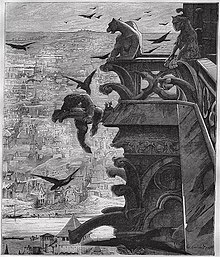
Illustration from Victor Hugo et son temps (1881)
Published in 1831, Notre-Dame de Paris (The Hunchback of Notre-Dame) by Victor Hugo carried with it humanistic themes of the Romantic period such as sympathy for the suffering of the dispossessed, which is common throughout Hugo's writing. Hugo wrote this story, however, to prove the humanistic utility of Gothic architecture.

When Hugo wrote Notre-Dame de Paris, Notre-Dame had its circular colorful stained glass window replaced with clear glass to let in more light. Gargoyles were being removed from their structures. The rapid replacement of the medieval architecture in place of contemporary themes was to Hugo a loss of appreciation for the Gothic side.


Hugo exemplifies Romanticism's reaction to the French Revolution. His father; a general in Napoleon's army, loyal to the new regime. Whereas his mother was loyal to the original monarchy. The conflicting politics eventually led to their separation, leaving Hugo left to decide on his own where he would find meaning as he moved back and forth between parents. He chose to move on and married a childhood friend with whom he had five children.

Throughout his life, Hugo saw both the light and the darkness of humanity. Absolute joy and unforgiving dispair.  Leading him to eloquently articulate both the Gothic mysteries of the unknown and the empathetic compassion for the less fortunate, properly encapsulating Romanticism in its essence.   


Photo Credit: http://paperplanereviews.blogspot.com/2013/06/the-hunchback-of-notre-dame-by-victor.html         

Section C


It was one of those surreal moments when the world seems to stand still and nothing exists but you and the music you're playing.  I always feel that way when I play the C section of Edvard Grieg's Wedding Day at Troldhaugen.  The volume gradually builds over several measures and finally releases into a majestic melody that's both thrilling and liberating.  And then it ends. 

But you know there's more the composer wants to say.  He takes a breath and begins again, and the dynamic contrast is unmistakable.  The melody is tender and clear, captivating but soft.  This is section C.  (Start clip around 0:55 or the beginning then see if you can identify section C.)


My mom is a pianist and taught me for several years before I studied with other teachers.  Wedding Day at Troldhaugen is one of a plethora of pieces I grew up listening to her play and decided to learn.  It’s beautiful listening to it, but it’s the music transforms when you’re the one playing it (I actually get really frustrated trying to find recordings that accurately reflect that emotion.)  While I love nearly all classical music, Romantic and 21st-century pieces specifically seem to have that extra element of the sublime that so accurately expresses what words fail to yet how is the part that remains mysterious in its indefinability.

Grieg was also raised in a musical family in Norway and was taught piano lessons by his mother for several years before going to a conservatory to learn more.  His pieces reflect the emotion and imagination of the Romantic era, telling exciting and moving stories.  The above-mentioned piece was written in commemoration of his 25th wedding anniversary; this expression of his personal feelings is consistent with the emphasis on the individual during that time period.

A few of his other pieces revolve around stories and events as well.  For example, his piece, In the Hall of the Mountain King, was written for a play about a troll king and elicits a mysterious feeling that's exhilarating and almost scary because the audience doesn't know where it's going to lead.  This song is also played in the movie The Pied Piper.  He wrote a funeral march for his fellow composer and it was later played at Grieg’s own funeral.  Grieg was able to meet with several composers throughout his life, including Franz Liszt and Tchaikovsky, both of whom inspired Grieg through their music.

Tuesday, November 6, 2018

Personal Experiences with Romantic Art: Example Posts

I've asked my students to explore art of the Romantic period (see instructions). Here, I'd like to model how they might do this. It's a bit tricky, as I want them to write both about Romantic art / artists but also in a romantic way (that is to say, by focusing on personal feeling and experience).

So, in what follows, I give examples of personalizing my experience with some romantic visual art (Francisco Goya's Saturn Devouring His Children); with romantic music (Mussorgsky's Pictures at an Exhibition); and romantic literature (Melville's Moby Dick). Enjoy.

Monday, November 5, 2018

Marriage Just Isn't Easy to Comprehend


File:Butterfly butterflies wings.jpg
Butterfly
Something Big: Marriage Just Isn’t Easy to Comprehend
I am getting married to a great guy— the best of guys—- in a few short days. For weeks, we have planned it all: the venue is booked, the dress is paid for, the cake has been ordered… Almost all the minute details have been checked off our list. However, as I was thinking about it today I suddenly had one of those I-feel-like-an-insect moments. Seemingly everyone wants to know every detail and I feel like my life has been opened up for scrutiny. People constantly ask me questions and beg for details about the wedding. I’m a bug under a microscope that people are examining with interest, feigned or real. I feel small. Incredibly small. Marriage is more than frills, flowers and frosting. It is an eternal commitment to another human being who has opinions, feelings, and habits. I hope this works…


Something Broken: I’ve got nerve… Or rather the lack of it.
For three years, I limped around because I had neuroma in my foot, which means I had damaged nerves. My left foot swelled daily and it always hurt to walk. Whenever I did, the nerves were re-pinched which prevented the healing process to take place. The doctor tried to kill the nerves by injecting dehydrated alcohol at the base of my toes, but the nerves wouldn’t die. I finally went in for surgery so I could get them removed. After a few weeks of crutches I was able to walk without limping and after several months I went on my first 4 a.m. run in years. Everything is great except the fact that my foot is numb… unless I hit it against something. When that happens, the pain shoots through my leg for an agonizingly long time. The nerves are gone, so I shouldn’t feel anything, right? And my foot still swells. I thought I got this fixed two years ago…


Something Artistic or Man-Made: Two Bodies in One
Today one of my Facebook friends posted a picture of a large sculpture. This sculpture featured two figures sitting on the ground with their backs to each other. Both had their heads bent down into their arms, and it was clear that they were extremely sorrowful. The two people were made out of wires, which crossed over and over again until they created the huge four dimensional images. Inside the wire frames were two stone children (one inside of each). Instead of being turned away, they were looking towards each other and reaching out their tiny hands. But the children are still inside their wire cages. I don’t understand how they are supposed to come out.


Something Mysterious: Whatever Happens to Those Lost Socks?
I just don’t get it. The laundry basket went from my bedroom to the laundry room and back again, and there is a sock missing. I know it didn’t leave the apartment. I know it wasn’t spirited away. I know none of my roommates stole it. So where is it?????


Image Credit: "Butterfly butterflies wings" (public domain image via Wikimedia Common's page)

Sunday, November 4, 2018

Will You Pass or Fail the Test?

Something Big: The Potential of Man.
There have been times in my life when I feel quite small and felt that I was just an insignificant and average person. I have come to learn two things since then. One is that each one of us truly is a child of God, and that has infinite implications. This means that we can come to be like him! That is about as big as big can get. A second thing I have come to understand is that every single person has the potential to do great things in this life as well. I never fail to be amazed by the goodness in the people. I also never fail to be amazed at how bad some people are/were in the past. Men and women are very much in control of their destiny. You can be what and who you want to be, you can do what you want to do. The only thing that is holding you back is yourself.

Something Broken: Sprezzatura in Religion.
As has been discussed in previous blog posts, sprezzatura is all about being your best self and being well learned in all topics of life. While I firmly believe that this can be constructive and help push us to be better, I feel that if we go about it in the wrong way it can be discouraging, especially within religion. I am sure all of us have felt the pressure to do what is expected of us and act a certain way so that we can please those around us. Sometimes we compare ourselves to others and when we see what we perceive as their spirituality and perfection, we feel inadequate. Religion shouldn't be about trying to make others think you are righteous. Christ himself said that we should offer our alms in secret and pray in private places. Sprezzatura may have a place in religion, but I think it is currently broken and needs to be fixed.

Something Artistic: The Lord of the Rings Trilogy.
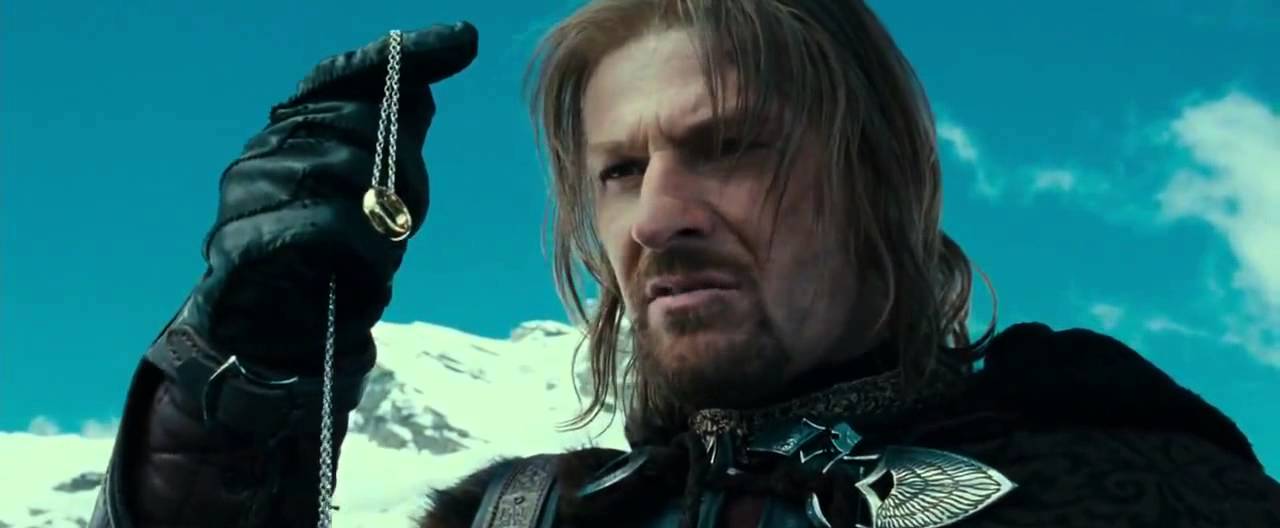
Image result for frodo offers aragorn the ring
1) Boromir fails the test
The most beautiful art is that which makes someone feel a special emotion or connect with something on a deep level. For me, The Lord of the Rings is true art because it is so applicable to life as we know it, but helps us view it from a new perspective. One example of this is the internal struggle and "test" that many of the characters must pass when they have the opportunity to take the ring. When Frodo as Gandalf to take the ring, Gandalf exclaims "Don't tempt me further!" Later on, Galadriel sees the powerful sorceress she could become with the power of the ring, but then stops herself, and says "I pass the test." Boromir fails the test of the ring when he tries to steal it from Frodo and use it to regain the favor of his father, the steward of Gondor. As I see each of these characters, I see myself. I see a struggle with sin or selfishness, and the goodness that also can be stronger than the lusts of the natural man.


Something Mysterious: The Depth of the Universe.
As time progresses and science moves forward, we will only make more discoveries about not only how big the universe is, but how small the elements are that make up the universe. If we start at the human body, we know that these are made up of organs, bones, flesh, etc. Going smaller, our organs are made up of cells. These cells are made up of atoms, which are made of protons, neutrons, and electrons. Recently humans have discovered an even smaller element called the quark! I have no doubt that the quark is not the end of the road in therms of discoveries. Thinking about the size of the universe is incomprehensible as well! Truly this is one of the greatest mysteries because there is no end to creation, and no end to learning.

Images:
1) https://www.google.com/search?rlz=1C1CHBF_enUS767US767&biw=1242&bih=569&tbm=isch&sa=1&ei=vbHfW97AGcjojwT-6I6YBg&q=frodo+offers+aragorn+the+ring&oq=frodo+offers+&gs_l=img.3.2.35i39l2j0i24.19695.21419..23585...0.0..0.199.1866.3j10......1....1..gws-wiz-img.FtFYAd3liqc#imgrc=MoZQn1bFw3j2pM: