Saturday, October 5, 2019

Humanism and the Path to More Exclusive Religious Memberships

When thinking about the renaissance or the reformation in connection to religion, a lot of times the thoughts that come are those of distance and abandonment of faith. But, like we discussed in my salon midterm groups the Renaissance term, humanism, brought a never-there appreciation for individual human value. This new term brought with it the idea that humans also have worth. The stream of thinking didn’t necessarily step away from religion, but it questioned the self-deprecating nature that came with not giving humans the basic tools necessary to read and decipher religious doctrines and texts. 

With the coming of new technology like the printing press, came the easier access to those typically regarded as low on the social economic "totem pole." The ability to get text to many who otherwise wouldn't have access to religious texts came with the above mentioned foundation of prioritizing human knowledge and existence. Without having first explored that simple idea: humanism, there wouldn't be a desire for creating technology to share truths throughout the masses. 


Now, like I mentioned earlier, a lot of misconceptions about the effects of coming-of-age time periods have been passed on--like that of less religiosity. But, the images above are a good example of how that is not always so, especially within the Christian community. I think this has to do with how, with the coming and ability to share ideas within a religious spectrum, came the chance for Ad fontes-- a chance to go back to the sources. 
The exploration of beliefs logically stems from taking that original thing that taught something. In this case, religion. In our church, we are encouraged to do just that: go to the original sources and explore the ideas we are taught. We do not believe in passive learning. In the bible verse Joshua 1:8, we read, “Keep this Book of the Law always on your lips; meditate on it day and night, so that you may be careful to do everything written in it. Then you will be prosperous and successful”. This concept of meditating on God’s word is one that is taught a lot in the church. We are taught to now be slothful and be active in our learning, mediating on teachings and applying it to our real lives. 

The times periods of both the Renaissance and the Reformation gave way for positive spiritual reforms, that made calls for changes in corrupted practices of churches (particularly the catholic church). These calls for action made for the chance for people to have personal access to God’s word. Thus, allowing for further conversion and appreciation for the human life.

Friday, October 4, 2019

Paganism and the Reformation

In the middle ages, people lived in the Colosseum while its walls crumbled around them. When I first learned that, I wondered how anyone, of any age and place, could see the magnificence that is the Colosseum and decide that it was a great place to stable animals. 

Personal Exploration and the Unknown Frontier

Portrait of Marie Curie, by R. chido Hanečková
As expeditionary voyages became more common during the early Renaissance period this sense of exploration spread across the land.  It permeated the cultural atmosphere of Europe and led to a fascination with discovery. People were excited - and rightly so - as these explorers would bring back new ideas, new stories, and new possibilities.

But physical exploration isn't the only way to discover new worlds of possibility.  During the Reformation many people found their world expanded with a similar set of new possibilities: religious and ideological freedoms.  This brave new world of ideas and opportunity would be just as inspiring to the reformers as those voyages had been to the watching public.

The More Things Seem To Change


What determines a successful social movement? What affects real social change?

A political scientist will say that it’s when someone with power takes up your cause, that’s when you can really get things to change. A cynic might say money is what causes change. Someone who’s more religious might say change happens when God softens people’s hearts. All of these are probably at least a little bit true, but maybe there’s something else.

Art and Religion: where the falling angel meets the rising ape

The 14th and 15th centuries may have been the birthplace of philosophical, scientific, and religious innovation and discovery, but when we think of the Renaissance, the first thing that comes to mind for most people will always be the art. And for good reason—of all the brave new worlds opened in the Renaissance, the world of art was at the forefront; was part and parcel of a heady new worldview. The art of the Renaissance encapsulates everything that the period was.

We can see this in the way art changed from the medieval era: the expression of humanism in a renewed appreciation for the beauty of the human form; the Renaissance emphasis on verisimilitude reflecting a broader shift in a society newly enamoured of observation, of critical thinking. Where medieval art was symbol, Renaissance art was a representation of reality as it was seen. A manifestation of a pattern, found throughout the Renaissance, of intellectual openness and honesty. A desire to look at the world, to think for oneself. The same curiosity, observation, criticism, would give birth not just to painting and sculpture, but to the Protestant Reformation.

Form vs. Content: A Tale of Translation

Lutherbibel.jpg
Original copy of Luther's translated Bible - 1534

Language and communication in the sixteenth and seventeenth century were paramount in shaping the beliefs of the people and the overall social climate. For the first time, religious and secular texts were made available to the masses as a result of the printing press. Translation efforts made these texts available to even more people, changing communication and learning completely. Being a dual-language speaker myself, I was particularly interested in the role that translation played during this era, and how the people responded to that role. What kind of texts were being translated? How common was translation? What problems arose from such translation? 

Back to the Future: "ad fontes" Today


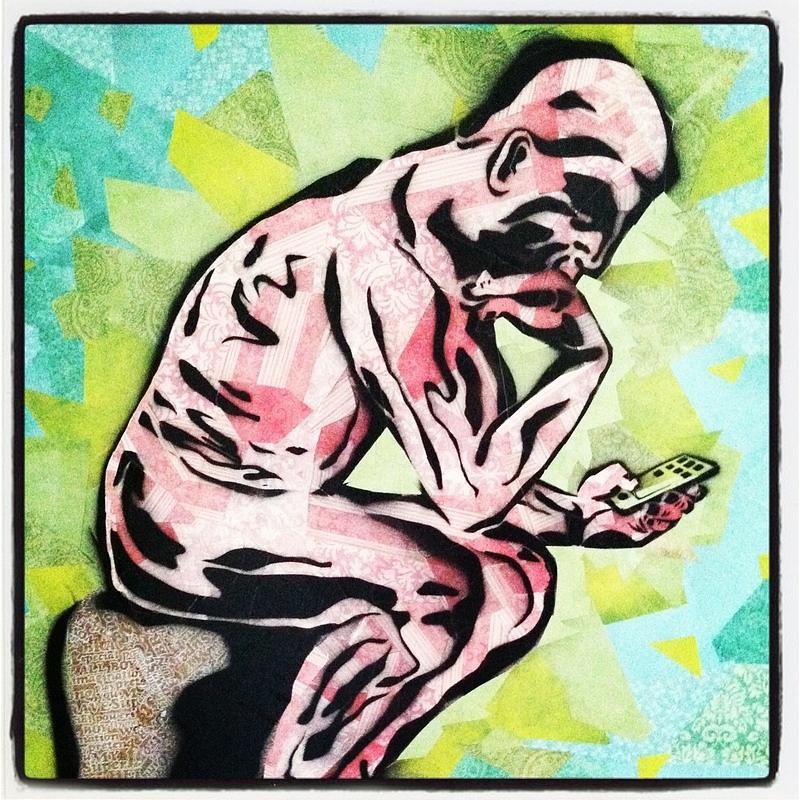
Image result for the modern thinker
During the Renaissance period in which creativity and humanism resurged to the forefront of the artistic and scholarly endeavors of the Western world, many attempts were made to rediscover the greatness of former civilizations. The ancient Greeks were a notable source of inspiration for those hearkening to an earlier era. And yet, while these events may seem to be merely a blast from the past, we have a lot to learn from the ad fontes attitude of the Renaissance. 

Before we talk about today’s ad fontes movements, it’s important to think about some examples from history. The most obvious is the eponymous movement of the Renaissance era. But this movement led to changes in society often overlooked as being part of the ad fontes approach to change. In our discussion on communication, Aubrey made a few comments on theatre during the Renaissance and into the Reformation period, but one thing especially caught my attention. During this period, theatre moved from a traditional “narrative” format about the lives of the apostles, to a more “doctrinal” format, which focused on Christlike principles and often personified qualities including faith and virtue. In true ad fontes style, theatre went back to the basics and emphasized core values over narrative tales.

Successive periods in history were based upon the same “back to basics” attitude. The whole Reformation was founded upon an ad fontes approach to religion itself, trying to restore the purity of Christ’s ministry. The Scientific Revolution was often marked by attempts to understand nature according to new discovery, and not by previous learning. As communication expanded via printing press, the Bible was the first work to be widely circulated.

With this in mind, it is interesting – even enlightening – to see how current movements are influenced by the same ad fontes attitude that was popularized during the 15th, 16th, and 17th centuries. Movements such as Black Lives Matter and All Lives Matter are characterized not by specific rights such as suffrage, but rather by a more basic principle: the establishment of basic human value among all people. 

Other aspects of life have been affected by the same principle. Canadian psychologist Bruce Hood has discussed a resurgence of homeopathy in recent years. Here in Utah, Young Living Essential Oils was founded in 1993 and the use of essential oils has become increasingly popular since then. The organic food movement has taken root – no pun intended – in America, with natural food stores becoming increasingly popular as well. After some research, I was surprised to see how my own life is affected here and there by ad fontes – a recent effort to prioritize family and a renewed effort into my personal spirituality show a desire to simplify and return to the basics. 

As societal issues become ever more complex, the desire to establish equality seems to become ever greater. If basic values are what we seek, we might learn a thing or two from our 16th century Renaissance ancestors in returning ad fontes for a better future.