
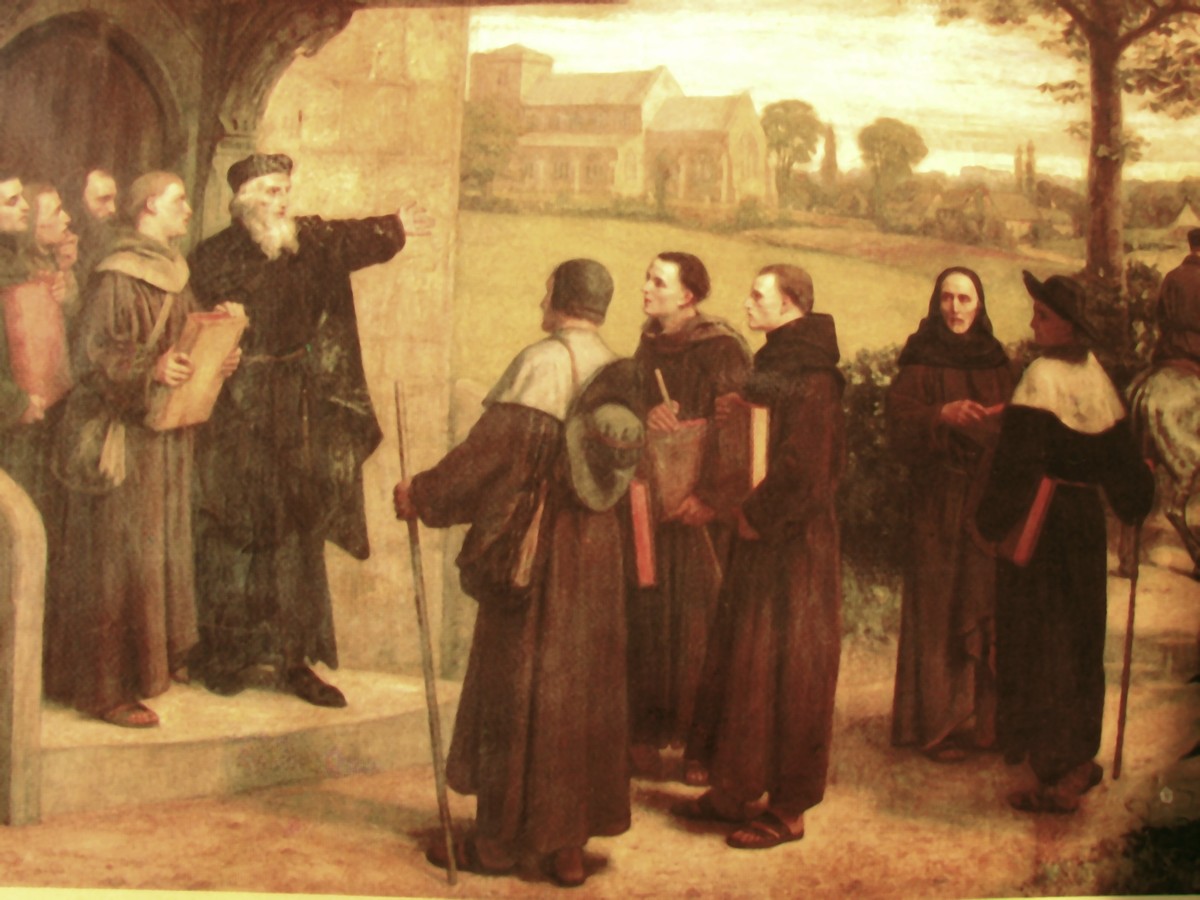
John Wycliffe and his "Lollards"
This can be considered a follow-up to my previous post, scrutinizing the theme of Ad Fontes.
Twenty-Eight Years had passed since the ending of the Black Plague that killed off most of Europe. And in those twenty-eight years John Wycliffe had begun to develop the opinions about the church that would later get him declared a heretic posthumously. The year 1377 would be the first time he would be officially condemned by the Catholic Church, in part due to his book "De civili dominio" ("On Civil Dominion"), which included a set of admonishments stating that the Clergy should hold no property and only use what they needed to survive, essentially becoming more ascetics rather than luxurists. Two years later he would be striking even harder with his work "De ecclesia" ("On the Church") wherein he states that the very concept of Purgatory never existed, and that the issues of clerical celibacy, indulgences and worshiping saints acted as resistance to truly becoming righteous people. The act that he would become most famous for after his death was his English translation of the New Testament, which would serve as the spark required to create outright revolt among the peasant populace.
Perhaps it's a bit farfetched to say, but oddly enough John Wycliffe reminds me of an elderly Joseph Smith. With his efforts in translation, his more ascetic and puritan views on Christianity and the Priesthood and his condemnation by religious and secular entities far greater than him, he seems to share many of the qualities and difficulties Brother Smith encountered in his own life. I cannot help but wonder if the Lord helped John become so popular with the lower classes as to serve as a memetic inspiration for the Prophet's own work. That is to say, that part of the reason people were drawn to the church was because of how similar Joseph's views and teachings were to the rebellious Christians of old. There's a reason, I guess, that John Wycliffe's work is brought up in the Bible Dictionary.
Image Credit - "Wyclif Giving 'The Poor Priests' His Translation of the Bible" obtained via Wikimedia Commons

