Wednesday, September 19, 2018

Through A Spiritual Lens

Attending Brigham Young University (or any religious school) is something so unique because it allows the students enrolled there to look at history through a spiritual lens. Just yesterday I had the opportunity to visit the Crandall Printing Museum (which has a replica of the Gutenberg Press) on Center Street in Provo. The curator walked us through the steps it took to create the printing press, and at the end he told us that Gutenberg built six presses, which seemed at the time illogical. Because of the expense it took to build six presses, buy supplies for them, and staff them, he was wasn't able to pay his debts; it would have made more sense to build fewer until he was more established. The curator (being religious) said that he felt that Gutenberg was inspired to buil
d that many because by building six presses that required six teams, there were six teams worth of people that knew the business of printing. They then went out and started their own presses and trained more people who then went out and started more printed presses, etc. This widespread of printing catapulted the printing age forward much more quickly than it might have done with only two presses.

I think that looking at history through a spiritual lens gives us the chance to see God's hand is so many things that happened, without which, we may not have had the religious freedom that we do today. I think that Martin Luther is another great example of this. What if someone had stopped him from hanging up the 95 Theses on the door of the church? Or what if someone had taken it down immediately, and he had been killed? The one act of putting up that piece of paper started a religious reform that opened the door for people everywhere to start questioning what they were being taught. Before this, that wasn't a luxury they had.

I'm sure that when this started, it would have been scary: rejecting something that you had been taught your whole life and believing in something new. But without this reform—his simple paper on the door—we wouldn't have the opportunity to believe the way we want. Being able to look at history through a spiritual lens can change an revolutionary act to an inspired revolutionary act.

The Courtier & the Prince

Niccolo Machiavelli


At the crossroads of the Renaissance and Reformation, two great works emerged--The Courtier, by Baldassare Castiglione, and The Prince by Niccolo Machiavelli--in which are displayed contrasting ideas regarding morals and what makes a good prince.

Machiavelli: For Reputation’s Sake
In attempt to become a governmental advisor, Niccolo Machiavelli wrote a treatise, "The Prince," to the governor, including what he labeled the “rules of conduct” for a prince. He proceeds to outline the characteristics a prince should adopt if he is to be successful in his station, and he begins with the claim, “a prince who wishes to survive must know how to do wrong, and how to do or not do wrong according to necessity.” The prince should strive to be kind, religious, faithful, and sincere but should likewise employ the counter-characteristics lest one becomes used to and expects generosity and mercy. For if generosity was all the ruler was known for, then one misdeed would label the prince as mean.

However, a reputation of meanness isn’t what concerns Machiavelli; he considers this approach a form of protection—a guard against being despised and hated. He illustrates his point with an example of a generous prince: one act of generosity will lead to more and more acts of generosity, until the prince has expended all his assets; at this point, he’ll have to raise taxes so he can gain the money back which will disrupt the peace of many and the prince “runs at once into the criticism of being mean.” Therefore, do whatever is necessary to have the advantage in the end—for reputation’s sake.

Castiglione: Virtue & Vice
The ideas in Castiglione’s The Courtier present a striking contrast to those of Machiavelli. Through an after-dinner conversation, characters express their ideal vision of a prince is one who is virtuous and abandons all things evil; they believe the courtier should “win over the mind of his prince” so he can teach him virtue. Thus ensues a debate as to why people succumb to or resist evil:

Pietro Bembo, a neoplatanist, suggests that man recognizes when he desires evil, but his appetite defeats reason after a vicious battle. But the fact that there’s a battle at all suggests he knows what he’s doing is evil. Ottaviano, another guest who participates in this after-dinner conversation, claims that ignorance is what causes desire to overcome emotion, but if one possesses “true knowledge,” emotion will never defeat reason. A third viewpoint is presented by the Magnifico Giuliano who stands by the idea that self-mastery should be the goal; when there’s conflict between reason and desire, self-mastery is the virtue that can cause one to conquer.

After studying The Courtier, one pauses to consider where Machiavelli and his philosophy fall: did his desire for evil outweigh his reason? Was he ignorant as to where choosing evil would lead him? Or was it all deliberate and intentional?


Image source: "Niccolo Machiavelli" (public domain images via Wikimedia Commons)

The John Donnes of the Modern Era

John Donne was a fantastically witty poet and author. What is interesting about the life he lived is that his life took a dramatic turn and this can be seen the content of his writings. While he was young, he was wildly successful at writing love poems that attracted a younger, wilder crowd. It bought him popularity, validation, and wealth. However, John Donne chose to marry a young girl without the approval of his parents. This is where his life took a turn for the worst.

At this point, he lost nearly everything. He loses his diplomatic influence, his wealthy parents ostracize him and he is left to fend for his growing family. His tone begins to change in his writings as life is no longer as perfect as it once was. This is something that I feel most people can relate to. there are times in life where it seems like nothing could go wrong. Some enjoy this hiatus from problems longer than others. I find that many of the upper-class people in modern society experience this life growing up. This rarely lasts forever, as depicted by John's life. He was humbled and changes his writings from witty love poems to zealous pleas to God. Despite not always understanding why God sent him these trials, we do notice that he writes with deeper, more sincere intent than his earlier texts.

 A modern example I have noticed is Lamar Odom. He was a former professional basketball player who won a championship with the Los Angeles Lakers. Unfortunately, he got into drugs and like John, fell from fame. This story lives on today as he fought his addictions and is currently working to join the Chinese basketball league. The Lamar we knew is not the Lamar we see today. He is grateful for every day, realizing how close his life came to being lost. No matter who we are or what we have accomplished, nobody is invincible. In dropping to the lowest point, either our best or worst self is able to emerge.

Image credit: Love, Creative Commons Love, John Hain, licensed under CC by Pixabay

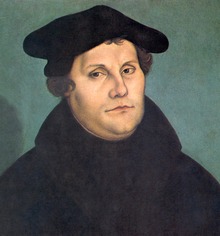
Martin Luther and Anti-Materialism


Image result for martin luther
      Martin Luther was not only a religious revolutionary, but also an anti-establishment, anti-materialist. In article 32 from his 95 Theses he plainly sets forth the idea that those who seek for and offer indulgences will be damned. This is much more of a serious accusation than simply pointing out that the Catholic church has erred in a small way. Furthermore, his argument goes into the idea that an individual's worth is not based on their wealth, nor should any part of their morality be tied to temporal possessions. This idea of worth outside of wealth is an important one to humanity as a whole and is still pertinent today. 

    This sort of anti-materialism pervades in humanists today, but not within some popular institutions. There are other methods with which we "damn" those who do not have wealth, such as access to knowledge and or education. Martin Luther questioning the Catholic Church paved the way for questioning other religious institutions, but also paved the way, at least in part through article 32, for questioning society's hyper focus on money and using it to buy some version of salvation. This idea also allows room for great individuals to come out of low stations and reinforces some of the main ideas of humanism as a whole. Great scholars and politicians do not have to come from a place of great wealth in the same way that great Christians do not have to achieve salvation by pecuniary means. Martin Luther's theses were of such great impact that they still echo into the culture, politics, and religion of today. 


Sources: 

Elmer, Peter, et al. The Renaissance in Europe: an Anthology. Yale Univ. Press, 2000.

Image from https://en.wikipedia.org/wiki/Martin_Luther (Public Domain)

Tuesday, September 18, 2018

LOVE: Reasoning vs. Senses


Having been married for 35 years, I was intrigued by the wisdom of Castiglione in The Courtier. He concludes that “it is not reasonable to argue that the old can love blamelessly and more happily than the young….” 

Anyone who is young and in love would most likely be quick to argue this statement. He explains the fight within each of us between our senses and our reasoning. I think most of us would agree that when we are young, “the senses…are in full strength in youth” as Castiglione says. He explains that in our youth “the soul cannot of itself clearly perceive the truth when it is carrying out the duties of governing the body.” Therefore, the soul “must appeal to the senses for its first notions.” And as a result, young men are “rebellious against reason.” 

Image credit: https://www.flickr.com/search/?l=commderiv&q=love

He argues that “lovers who are more mature in age experience the contrary; for in their case the soul is no longer weighed down by the body.” He says that “they are not deceived and they possess completely the beauty they love.” He finishes by saying that “the true love of beauty is good and holy and always benefits those in whose souls the bridle of reason restrains the iniquity of the senses; and that is something the old can do far more easily than the young.” 

I have now lived long enough to realize that although young love is normal for all, and will never change its ways, relying mostly on senses, it is the reasoning of enduring love that is more precious. Love that endures overcomes all that we never believed would happen to us. The old achieve this reasoning love through much heartache and endurance. Ironically, that achievement is the beauty of love. 

As is normal in this earth life of ours, it is usually through our tribulations that we achieve true joy and happiness; the joy and happiness that cannot be found in our youth because time has not yet been given to us.


Sprezzatura as Demonstrated by Castiglione


The effect that even the most rudimentary of orators can have on a passionate crowd is notorious. Indeed, as Shakespeare wrote "Was ever feather so lightly blown to and fro as [a] multitude?" (William Shakespeare, "Henry VI"). Mobs provide fertile ground for pathos, the Greek term for emotional rhetoric. Such rapidly raised emotions, however, often fade just as quickly as they were inflamed.

Books, on the other hand, are patient. They can convince you of an idea without ever directly referring to it or even perhaps without allowing you to realize you are being swayed. The authority of bold black words, stained permanently into an impermanent medium, always causes me to take the author at least a little more seriously--with more respect, you could say-- than if I were speaking with him or her face to face. 

Reading Baldassarre Castiglione's The Book of the Courtier has reminded me of just how subtle written rhetoric can be. In The Courtier, Castiglione uses conversations between various noblemen and ladies to illustrate the ideal attributes of a courtier. Castiglione's characters seem to navigate convoluted debates over courtly virtues to arrive at eventual conclusions, but the dialogue reminds me of Plato's Republic, in which every argument somehow seems to lead exactly to where the protagonist and primary conversationalist, Socrates, wants it to. 

Is it surprising that this singular work made such a lasting impact on the culture of civilized behaviour? Perhaps, I'm not sure, but the rhetorical genius of Castiglione is not in his appraisal of the perfect courtier; perfection is easy to peddle. Instead, we are convinced by the subtle flawlessness of the court in which the dialogues take place, the seamless and flowing arguments made by its members, and the air of sprezzatura which permeates every word of the text.

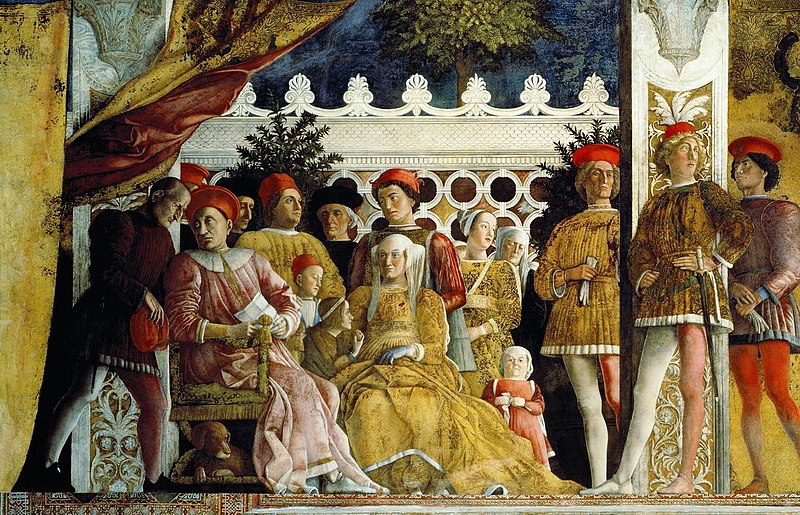
File:Andrea Mantegna - The Court of Mantua - detail.JPG

Image credits: "The Court of Mantua" by Andrea Mantegna (public domain image via Wikimedia Commons).

Carl Jung's Response to Gaspare and Ottaciano

A portion of The Courtier deals with the ideas of virtue and good vs evil. These differences can be summed up in Gaspare response in The Courtier to Ottaviano's claim that people cannot choose evil.
"Yet there are many who fully understand that they are doing evil, and still do it; and this is because, like thieves and murderers, they are more conscious of the pleasures of the moment than the punishment the fear in the future." Castiglione-- The Courtier
Ottaviano claimed that people unconsciously sinned and shouldn't be held accountable. Gaspare argued that humans that humans are self-conscious beings, and sin for the pleasure of the moment. While reading this dialogue I was reminded of Carl Jung's concept of The Shadow.

                                                                            cc

The idea behind The Shadow is that every individual has a dark side. Jung described this dark side as the unconscious malevolent part of our personality that has the potential to corrupt what we do, say, and think. According to Jung's description of the shadow, we won't truly know the difference between good and evil until we are aware of The Shadow and make it conscious.

My explanation of The Shadow does not do it justice so I would recommend researching it for yourself. However, I do think its logic contains elements of both Gaspare's and Ottaviano's claims. It supports Ottaviano's argument that we do evil things unconsciously. The way to overcome this would is to internalize the shadow and make it conscious. Or as Gaspare might say it, we must understand the temptations to do evil acts that bring pleasure at the moment and withstand these temptations.

The realization of the terrible things we are capable of gives us a greater capacity for virtue as we choose not to do evil. We can thank Castiglione for introducing these concepts of the nature of good, evil, and the divine individual. Revolutionary thinkers like Carl Jung looked to these renaissance pioneers to better understand who we are as human beings.