Showing posts with label Freedom. Show all posts

Monday, November 26, 2018

Unification Through Pathos

My great-grandfather's Pound
When I was a baby my great-grandfather left me with a silver Pound that had the face of Winston Churchill on the back. He gave it to me because he thought that, as a baby, I looked like Churchill. It may have been a nice way of saying I should aspire for Churchill's wit because my looks wouldn't get me very far. Churchill was always just the funny looking guy on the back of that coin until I the Sinews of Peace Speech. Or, more commonly referenced as the Iron Curtain Speech. 

Considering the Kairotic nature of the situation, Churchill wanted to express the need to spread democratic western values through the unification of western countries. The speech was carefully pieced together such that it would convince those who hold close to western values join in the grand unification of the world's force for good against evil. The United Nations. Churchill uses many rhetorical devices to prove his argument. I will discuss his appeal to Pathos through his oratory delivery and his literary devices.

Oratory

Churchill delivers his address as slowly and as carefully as he wrote it. The times where he mixed up his words he would redo until it was said exactly right. His careful delivery could be heard in the way that he emphasized the first word in each of his major phrases. "OUR supreme task and duty is to GUARD the homes of the common people..." (7) This was a common strategy in dramatic speech delivery of the time. The dramatic tone carried over to develop a serious mood for the listener, so as to give incentive for the listener to pay close attention. 

Literary

"Let us preach what we practice--Let us practice what we preach" (13) This is one of many figures of speech that were employed in an effort for Churchill to appeal to the pathos. In this case, the antithesis is used to offer inspiration to the listener. He also uses amplification to create a climax.

"The dark ages may return, the Stone Age may return on the gleaming wings of science, and what might now shower immeasurable material blessings upon mankind, may even bring about its total destruction." (18)   

In conclusion, while pathos was only one of the three persuasive appeals used by Churchill, it may have proven to be the most useful. His words were meant to resonate with people of different backgrounds who shared an emotional value that was thoroughly challenged throughout the previous three decades. A value common to westerners of all nationalities. Freedom.
        

Monday, November 12, 2018

The Seductive Nature of Nationalism

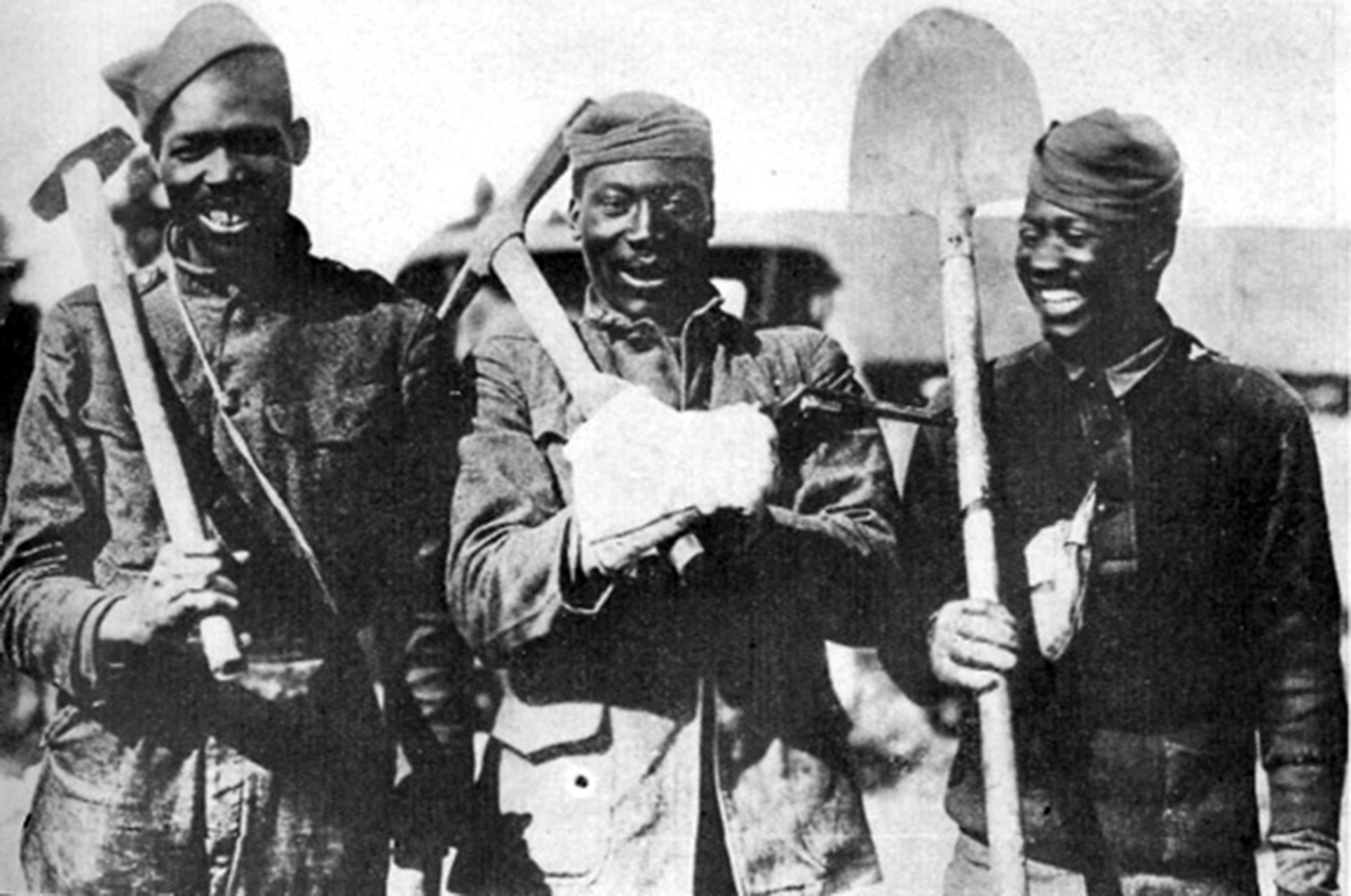
Today, I attended a Dead Soldier's Debate, in which four people represented soldiers who served on different sides of World War I. Although I've always struggled to wrap my mind around WWI, around the horrors and the pointless sacrifice of an entire generation, this particular event struck me from a new direction: the dangers of Nationalism. 

Image result for world war 1 march american
One of the soldiers, a decorated African-American, talked about his passion for freedom. Predictably, talking about freedom soon led to comments about the glory of the American cause in WWI--spreading democracy and freedom to other countries in the world. Listening to him ignited this sense of patriotic pride in me; I felt proud of my country's values, and for a brief brief moment I felt a burning in my soul for the cause of spreading freedom and democracy. 

The burning soon subsided when I became aware of the emotions I was feeling. The feelings of national pride were so seductive. With just a few words of rhetoric, they slipped past my carefully constructed filters of pacifism and reconciliation and ignited a desire to spread the American way of life. 

Is this not the same emotion that the French felt, having been outsmarted by Bismarck in the 1870's and consequently filled with a righteous passion to regain their lost territories of Alsace and Lorraine from Germany? Is this not similar to the passion for independence felt by the Serbs who assassinated Archduke Ferdinand to fight back against the occupation of their country by an empire?  Is this not just a smaller version of the same feeling of national pride felt by virtually every volunteer soldier in every country in the early days of the war? 
Image result for world war 1 march
Soon after the American soldier's representative finished speaking, another American spoke about the horrors he had experienced in the war. He shared a story about a friend of his who was killed during the last day of the war simply because the American generals ordered attacks even when they knew an armistice was already assured.

This is the danger of Nationalism. When you want your own country to come out ahead at all costs, you forget that this can only happen at the expense of other countries and other people. And what ended up happening in World War I? Millions of equally passionate and patriotic men entered a conflict which few of them left alive, let alone filled with purpose and pride. 


Image Credits: in the public domain and licensed through CC

Wednesday, October 10, 2018

It's Time to Vote

We live in a politically charged time where many feel they are not represented by our leaders. They feel that there is a disconnect between our values and the values of those in charge. John Locke said, "Men being... by nature all free, equal, and independent, no one can be put out of this condition and subjected to the political power of another without his own consent." We, as humans, have natural rights such as freedom, equality, and independence. In a society we often give up some of these rights so that we can live with safety, stability, and order. We give up part of our rights in a hope that our society will benefit us and reflect our beliefs. By living in a society we choose to be governed by it. While we live here we choose to be governed by our leaders. Now this becomes a problem when our leaders do not represent us and our beliefs. We may feel that too many of our rights are being taken.

John Locke goes on to say, "When any number of men have so consented to make one community or government, they are thereby incorporated and make on body politic wherein the majority have a right to act and govern the rest." If we as a people are disenfranchised with our leadership we have a right and obligation to act. In our case this means to vote. The majority governs the society, and if a majority want a change, they can achieve it. John Locke believed that there was power in people, and I believe that too. We may be terrified by the state of our country, but unless we do something, we just allow it to govern us. By taking a stand and voting one can make a difference and begins to take more of his rights back into his own hands and make a change in the way society is governed. People choose to be governed, and can also choose how they are governed. Let's all choose how we are governed and vote for something better.