Friday, October 4, 2019

Boldly Going Where You Have Never Gone Before


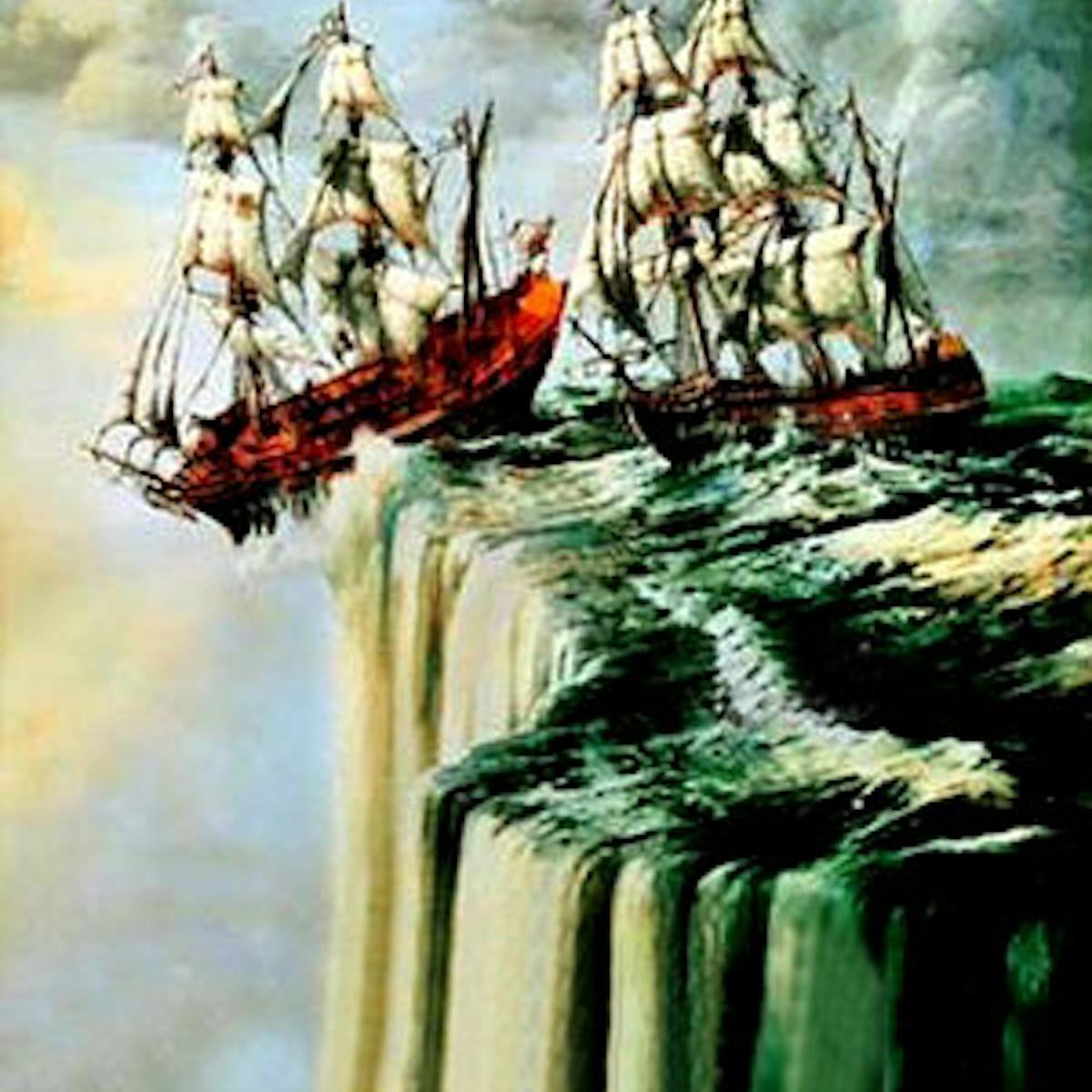
Image result for did columbus sail the ocean blue

The Renaissance was a time of discovery and pushing boundaries. With Columbus’ famous discovery of America, both Europe and the Americas engaged in an exchange that has since hardly seen its match. Both continents were opened up to entirely new worlds, previously unknown to one another. 


Magellan also took seafaring expeditions to the next level. Though he did not survive the whole journey, one of the ships in his command completed the first circumnavigation of the globe, squashing claims of a flat earth. Not only were literal worlds opened up, but also the boundaries of the world of exploration and what is possible were stretched.


Roatán, Hondúras
Recently, while discussing this events with my peers, we were struck that this Renaissance attitude of discovery has died out to some extent. While expeditions such as the "space race" have been a call-back to this age of exploration, the attitude of bravely going where no man has gone seems to have fallen out of favor. The prevailing attitude today appears to be that exploration is not worthwhile, since everything that is worth discovering has been discovered. We erroneously place exploratory barriers on ourselves because something someone else has already done what we'd hope to discover.

In reality the wonders of exploration are not limited to the select few Armstrong’s and Magellan’s of the world. You don’t need to go where no man has gone. You only need to go where you have never gone.
I recently had the opportunity to discover new worlds for myself. I went where (lots of other people) plenty of people, except for me, had gone: Roatán, Hondúras. Not once did I think to myself, “if only I could have been the one to discover an eel, a sea turtle, of this cave filled with thousands of silver-side fish.” For me, I was propelled by the drive to boldly go where I had never gone. In that way, exploration is less about introducing                                                                           previously unknown information to the world, and                                                                                   more about integrating unknown experiences into                                                                                   oneself.


Honor Each Pioneer Who Expands Our Understanding


            Pioneers are afterwards long remembered for the impact they have on future generations in expanding the horizons for us, sometimes paying great costs to further our understanding. As Dane pointed out to me, when the space shuttle Challenger exploded that fateful January day in 1986 while in flight, President Ronald Reagan honored the seven who were killed in the explosion and the sacrifices they and their families made to expand our horizons into the vast unknown that is space. I was deeply moved as I viewed his speech, as the virtues of sacrifice for expanding our understanding and learning for ourselves echoed generations ago with the Renaissance thinkers and the explorers of their day.


Ad Scriptum

Ad fontes. This Latin expression, meaning "back to the sources," was a major theme during the Renaissance. Scholars, artists, and influential thinkers looked back to the Greeks and the Romans for inspiration in their perspective fields. In a recent discussion with a few classmates of mine, we determined the theme of ad fontes was the driving force that led to other Renaissance themes, such as humanism.

As important as the theme of ad fontes was to the Renaissance, we felt it had an even greater impact on the Reformation. Indeed, the concept of going back to the sources sparked the whole movement. Without the foundation of ad fontes, there would have been no Protestant Reformation. In this way, the Renaissance ultimately brought about the Reformation.


Still Pioneers

Known as a pirate to the Spanish, and knighted as an English hero, Sir Francis Drake was one of the premier explorers of the 16th century. His exploration and efforts, along with those of many others, marked the beginning of global trade and the foundation of the world as we know it. (See here and here for more details and thoughts on exploration). This major historical figure died of dysentery in Portobelo, Panama, over 5000 miles from the city where he was born. I wonder, in that moment, if he believed it was worth it.
Sir Francis Drake, 16th Century Explorer


Pressing Uncomfortably Forward

"The arc of the moral universe is long, but it bends toward justice."
Martin Luther King Jr.

Take a moment and imagine yourself in a comfortable position. Perhaps it is a winter day and you have decided to engulf yourself with warm blankets and enjoy a mug full of hot cocoa to hide from the snow. It is not difficult to find comfort in this position, but you realize that it could be better. You see reports on the television of a distant tropical island that remains unconquered by the chilling cold and blankets of snow. You realize that you would be much more comfortable if you were there rather than remaining here, but for you to reach this comfort it would require unbundling from your current comfortable position. Is facing a temporary discomfort worth the higher level of comfort you may receive in this new location?

Many brave souls in the Renaissance and Reformation had to answer similar, yet more impactful questions. These stages of world history ushered in the discovery of many brave new worlds, be they physical, intellectual, artistic, or spiritual. My fellow classmates and I concluded that these worlds were discovered by those who were willing to leave their comfortable positions in pursuit of new ones.

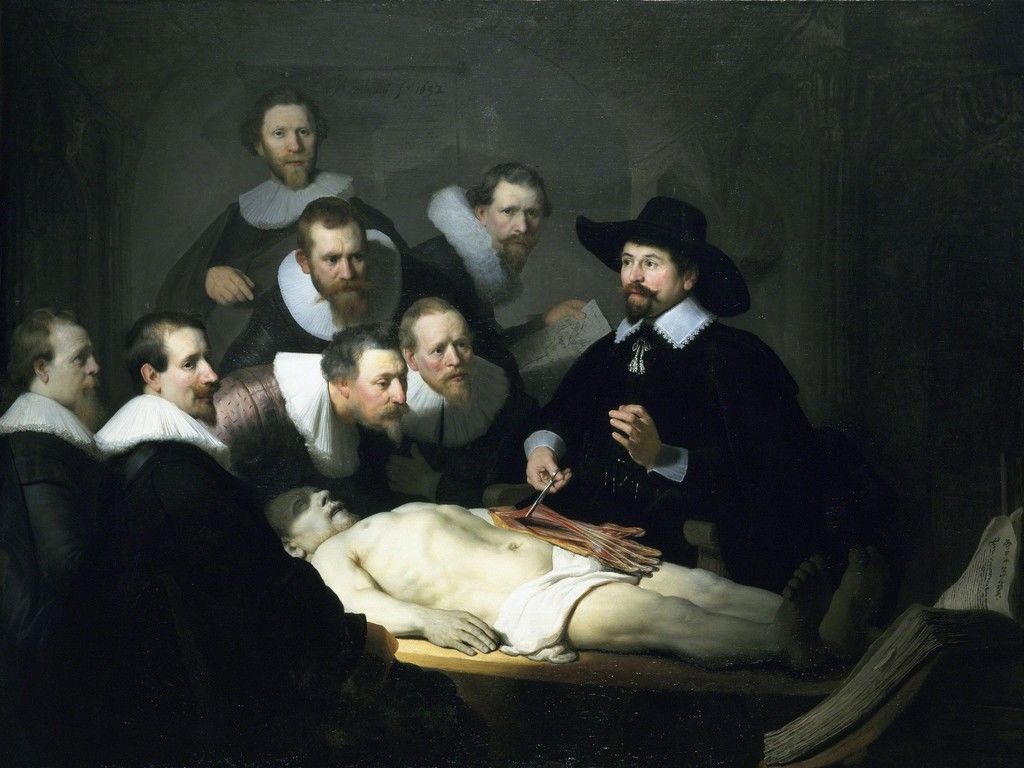
Renaissance artists broke tradition to study cadavers to better understand the human body.
Renaissance humanists pictured God saying to man, "I have placed you at the very center of the world, so that from that vantage point you may with greater ease glance round about you on all that the world contains" (Pico de Mirandoa). European explorers, Renaissance thinkers, and Reformation leaders used this vantage point to realize that the world could be better. Explorers and colonists discovered that there was more to the world than originally thought, and uncomfortably sailed stormy seas and faced severe conditions to build new civilizations based off of hopes of economic mobility or religious freedom. Many great thinkers realized humanity in itself is beautiful and acted against common tradition to prove their points. Reformation leaders recognized that God is closer to man than they had previously supposed and were persecuted for practicing what they believed in.


Reformation leaders being burnt for their new & different ideas

All of these extraordinary people needed to take a step into discomfort before they could reach the brave new worlds they were hoping to find. Many others around them criticized and persecuted those who were in pursuit of these new worlds because they themselves were unwilling to give up their positions of comfort in pursuit of a newer, and possibly better, world.

Today, in order for us to discover our brave new worlds, we must be able to walk forward into discomfort as well. History adores those who remove themselves from comfort and have the courage to stand for, experiment, or discover what they know is right, regardless of the commonly held beliefs or traditions. Our brave new world remains to be discovered, we only need to be bold enough to take the first step into discomfort.

Braving the Wilderness: The Quest to Expand Man's Horizons

“For God, Glory, and Gold!“

Upon hearing the excitement of the great natural resources, outlandish rumors, and vast uncharted territory in North America, many European countries sought out their own expedition to discover and claim the ‘New World’ for themselves. It was the Age of Discovery; it was the Renaissance; it was the chance to change the world.


During our salon, my classmates and I were able to identify ‘New Worlds’—worlds that weren’t focused on discovering the unfamiliar terrain, but the sphere of the 'unknown' during the Renaissance, Reformation, and other eras throughout history.

New Discoveries in an Old World


Almost every time I go hiking or immerse myself in nature, I find myself having the thought: every place I have ever set foot, someone has already been there before. I find it a bit disheartening that no matter how far I journey and how removed from society I travel, I will never discover an undiscovered place. (This is knowing that my fear of heights and tight spaces will prevent me from becoming an astronaut or traveling to the depths of the ocean.) It’s virtually impossible that any of us will see the discovery of a whole new world, but at the same time, it’s quite likely we will.


Past Journeys
In the Renaissance era there were countless explorers who traveled to faraway lands. Explorers such as Christopher Columbus, Ferdinand Magellan, and Jacques Cartier stumbled upon lands the European world had no idea even existed. The explorers of this era left Europe in search of trade routes, missionary opportunities, and personal fame and glory. I think it is fair to say that such goals were accomplished and even exceeded.

Past Discoveries
While explorers were discovering new lands, other discoveries that changed the course of history were also being made. In the 15th century, Johannes Gutenberg invented the printing press. This invention made access to printed books, most notably the bible, widespread and common. Widespread access to printed literature gave a greater number of people the opportunity for personal learning. Additionally, knowledge could now be spread further and more reliably. This invention opened up a whole new world of communication. So even though no new land was discovered with the invention of the printing press, a new world was still unearthed.

New Religious Worlds
Another example of a new world that is not necessarily a physical discovery was that of Protestantism. Martin Luther posted his 95 theses in references to the practices of the Catholic church, and everything changed. Because of this act, new streams of thought took placed and whole new religions were formed. A new world of religion was discovered with the act of questioning, changing the course of religious history.

New Worlds Today
When it comes to discovering new worlds today, it is difficult to see any new lands that will be discovered. But aside from discovery of new physical areas, there is still room for new inventions to open up new worlds at any time. One example mentioned by my friend Amelia is that of social media. The way social media has changed communication is very comparable to the way the printing press changed communication of the 15th century. Social media opened up a new world in our modern day society. So whether or not we discover any brand new land masses anytime soon, there is still great opportunity for new worlds to be opened to us at any time.

Sources:
http://www.cresskillboe.k12.nj.us/cresskill/Schools/Cresskill%20High%20School/Teacher%20Websites/Kline,%20Stephen/World%20History/Age%20of%20Exploration/CH%2016.1%20Voyages%20of%20Discovery.pdf 
Class Discussion with Peers