Tuesday, December 17, 2019

High School Arts Programs: A Vital Step in Becoming Better


Dear Members of the School Board,

Today’s high school’s are continually giving less funding and support to arts programs across the country. However, better supporting and encouraging these programs will help the individuals in our society with the unique situations that they are facing today.   


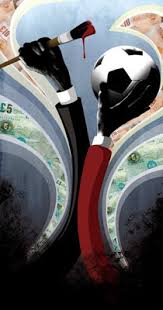
In an education week article by John R. Gerdy, he argues that while football and music programs are similar in the way that they promote and teach positive characteristics and bring the community together, music has a far greater educational capacity for the rest of an individual’s life. As someone who has been a recipient of musical education in my high school years, I agree with Gerdy that the advantages of arts programs should not be overlooked.

Historically we can see trends in the romantic period that focus heavily on the feelings and imaginations of the individual. Today’s society continues to be very focused on feeling. However, a major difference is the fact that feelings are sometimes the source of our problems. We witness this is a host of mental illnesses that are prevalent in society. The arts should not be disregarded because it is an important connection to feelings. Music, for example, has a soothing and therapeutic quality that helps us connect to our feelings. I have felt this myself as I have learned piano pieces and then shared them on slack. Throughout the romantic period, talented artists like Beethoven were revered for their work because romanticists saw emotional connection music created and recognized it as an important element of life. Today’s society needs this healing emotional connection more than ever.

 Supporting music and art programs allow us to support something that is universal. We can combat harmful elements of nationalism and imperialism that continue to exist today and use art and music to unify and help us connect with people who are different from us. In our history class alone, we were able to connect with each other through music. Jillian Peterson posted a spotify playlist about the Enlightenment which really gave me a connection her. I knew and loved some of the songs that she had put on the playlist which helped me understand her better as a person. I think that the arts have a unique power to overcome barriers and help people connect with each other through one mutual human characteristic: a love of something beautiful to look at, touch, taste or listen to. 

In the renaissance time period, sprezzatura, the idea of being a well rounded individual, was an ideal that was expected. Today, we see the expectation of that ideal continued. Today medical schools and other higher education programs often claim that they are looking for more artful approaches to science. Many of the world’s unparalleled genius’s were both scientists and artists.  Sir Jonathan Ive, a modern example, placed emphasis on both art and science in his early years, resulting in world-wide fame as the product designer for Apple. Exercising the artistic parts of ourselves will ultimately help us with our other accomplishments. It allows for wider life views, greater creative capacity, and more empathy. We need to be well-rounded and recognizing the importance of arts programs  will help us to accomplish that. 


Health Provider Communication and Transparency


To Timpanogos Regional Hospital:

No one likes to visit the hospital, especially on their own behalf. In the case where a visit is unavoidable, it is great to have a short stay, attended to by courteous professionals. I am happy to report that, when my lung collapsed in June of 2019, this was the case. Unfortunately, my experience post-ICU was less than ideal, particularly when it came time to pay bills.

Separating oneself from a hospital should not feel like being ghosted by a love interest. I got hospital bills for the next two weeks, and I paid them. I got bills from the surgeon, the hospital itself, the emergency room, and the various physical, financial, and emotional councilors. Then I started to get bills with descriptions that I didn’t understand, like “hospitalist, 70 minutes.” So I decided to go Ad Fontes to get some answers from the source.

Artificial Intelligence: Enriching or Interfering?


Dear Andrew Yang and the Yang Gang:

The power of AI can be scary. We largely live in a knowledge economy where knowledge/information/data is power. AI can do things that we never dreamed of and things the average bear doesn’t understand. Have you ever played chess on an airplane against a computer? I’m willing to bet you weren’t able to win. Even Garry Kasparov, a grandmaster and world chess champion, who challenged the entire world to a chess game and won, has lost to computers in games of chess. Pictured below is chess grandmaster Kramnik, who took Kasparov’s world champ title in 2000, losing the game he makes millions playing… to a robot.


Related image
Automation is not to be feared, only harnessed and controlled. My friend Adam Taylor has put it this way, “...the "ocean of data" that we see coming out of our devices has always been there. Everything in the universe has been producing data and "talking to us," we just recently developed the technology to listen.” With new tech, we can now “listen” to things we couldn't hear before, like billions upon billions of chess board permutations. We can choose to ignore this ocean, let it drown us, or harness its power for the good of humanity. Embracing the power of AI will increase GDP and be a net gain for society (“Job Loss Due to AI - How Bad Is It Going to Be?”).

The downside of AI comes from job displacement, especially of labor workers. This is a very legitimate concern that we need to address before it’s too late, especially with the advent of things like Tesla’s new self-driving semi’s set to hit the roads in 2020. However as shown above, artificial intelligence is at the point where it can perform strategic, analytical processes with astounding skill. It's only a matter of time before chess becomes surgery, financial planning, engineering etc. The threat of job displacement is high for occupations across the board, even white collar jobs like accountants (for example, just type in any job title in this website). We need to do more than wait to reform this issue once the damage is done. We need to have proactive legislation that prevents catostrophic job loss.

As part of a proactive solution, you have proposed a “Freedom Dividend” of $1000 for all U.S. citizens regardless of their socioeconomic standing. This is a step in the right direction, but can be even more effective. As AI grows stronger and more capable, the wealth gap will only grow, leaving those without jobs in the dust. For this reason, I urge you to modify your Freedom dividend to a negative income tax. The downside of the Freedom Dividend is that it will inflate every consumer’s income equally. Businesses facing such increased consumer demand will simply increase their prices, with the rich angrily still being able to pay, while the middle and lower class struggle to get by. A negative income tax would prevent this from happening by only subsidizing the select group of people who are below a certain level of income. It would be a more efficient way to use scarce funds on those who need it the most.

Some staunch capitalists have compared the Fourth Industrial Revolution to the first three claiming there is nothing to worry about and the free market will work itself out. I consider myself pretty staunch capitalist, but I think there are things we can do to quicken work of the invisible hand. Industrialization during the First Industrial Revolution moved workers to NEW jobs, while the AI revolution will not provide new jobs fast enough for those whose jobs become automated.
Image result for the four industrial revolutions


Bibliography

“Job Loss Due to AI - How Bad Is It Going to Be?” Skynet Today, Skynet Today, 4 Feb. 2019, www.skynettoday.com/editorials/ai-automation-job-loss.


Monday, December 16, 2019

Time for a Nuclear Reconciliation

Dear Ms. Warren, Mr. Sanders, Ms. Gabbard, and Ms. Williamson,

In a recent Washington Post poll, each of you indicated that if elected president you would work to eliminate nuclear power in the United States. I encourage you to reconsider that position.

Nuclear Paranoia
Mushroom cloud over Hiroshima
Nuclear energy exploded into awareness in 1945 when the US dropped an atomic bomb on Hiroshima, Japan. In that moment, as it did many times in the 19th century, science disrupted the world’s peace of mind, and nuclear energy became synonymous with catastrophic destruction. Later incidents at Chernobyl, Three Mile Island, and Fukushima deepened fears of nuclear energy. However, the largely groundless fear of nuclear energy could prevent us from adopting the only currently viable clean alternative to fossil fuel energy.

In a recent discussion, my classmate Mary Bowers asked why so many books, movies, and TV shows focus on the theme of technology gone wrong (think Jurassic Park, Avengers: Age of Ultron, and Frankenstein). We concluded that since the mechanisms behind most of the technology we use are a mystery, we often fill the unknown with terrifying conjectures. Many citizens do this with nuclear technology, speculating at scenarios of meltdowns and nuclear fallout. Nevertheless, in the US’s seventy years of nuclear power only thirteen deaths have occurred at nuclear plants, none of which was caused by radiation. In contrast, fifteen American coal miners died in 2017 alone.

Roses are Red, Giraffes are Tall; SOMEONE PAID $120,000 FOR A BANANA DUCT-TAPED TO A WALL

A copy of The Comedian
Photo by Brando Makes Branding
To private art collectors,

Does this title sound ridiculous to you?

This past month an artist, Maurizio Cattleman, placed a piece of duct tape over a banana, stuck it to a gallery wall and called it “art.” He appropriately called his work, The Comedian, to question the definition of art. Even as an artist myself, I cannot pin down the official definition of art. However, the fact that a Miami couple paid $120,000 for the duct-taped banana is (quite literally) bananas! Cattleman was aware he made a shoddy piece of work and took advantage of the fact that art is up to interpretation. For this reason, I will address how this overrated art piece is a scam.

Is nothing worth something?
Let’s refer to an era of history when something ludicrous was bought and sold for unreasonable amounts of money. During the 16th century, the Catholic church claimed sins could be forgiven and land could be bought in heaven if you paid them money. People spent their income believing they were buying something useful, when in reality they were buying nothing. Overall, it was a hoax to get more money. A priest, Martin Luther, finally stepped up and called for reform. He pointed out the corruption of the church and people realized how absurd the indulgences were. Like the people of this time, are you positive that you are buying something claimed to be valuable? Is a duct-taped banana going to benefit you or our society in any way? The value of The Comedian has been inflated by sellers, when in reality, it is worth nothing at all. 

Remember the urinal?
 The buyers claimed The Comedian’s worth came from the public debate about art. However, this isn’t a groundbreaking issue. Remember the “Fountain” by Duchamp in 1917? It was nothing more than a urinal signed, “R. Mutt.” Nevertheless, I agree the artsy urinal is actually valuable because it had not been done before. It sparked a lot of change and experimentation in the art world during the 20th century. No one else had taken a readymade object, imbued it with symbolism and called it art. Thus, the idea of slapping a banana on a wall does not seem very creative or revolutionary.

I’m not hating on modern art
Of course, people will say The Comedian is worth over one-hundred grand, if not more. I’ve read comments that argue, “Why does it matter that anyone can do it?” This debate really illustrates the fact that we do not see the value of art the same way. In a discussion with one of my peers, Gabe Bradford, he said, “The world seems to have moved from concrete knowledge to more relative knowledge and that seems to be reflected in modern art where it leaves everything up to interpretation.” I agree that modern art, is about feelings and imagination. In fact, like the masters of the Romantic era, modern artists show their interesting insight of humankind’s emotions. I’m not trying to argue that The Comedian isn’t art. I just believe that Cattleman’s intentions were overrated, and they lack originality. Regardless, his ploy was rewarded with thousands of dollars. 

Conclusion
Ultimately, I conclude The Comedian, was exaggerated and overpriced. Sure, it is modern art, but that banana and duct tape did not earn its worth. The idea to question “what is art” and display a readymade object as a sculpture is not revolutionary. What will you buy next? A framed toothbrush?


Sources:
Pes, Javier. “Maurizio Cattelan's $120,000 Banana Was Ejected From Art Basel Miami Beach After Drawing Unsafe Crowds (and Getting Eaten).” Artnet News, 9 Dec. 2019, https://news.artnet.com/market/cattelan-banana-art-art-basel-1725678

Placido, Dani Di. “The $120,000 Banana Highlights The Elitism Of The Art World.” Forbes, Forbes Magazine, 9 Dec. 2019, https://www.forbes.com/sites/danidiplacido/2019/12/09/the-120000-banana-highlights-the-elitism-of-the-art-world/#31a769ea74c3


Bridging the Great Divide through Good Communication and Rhetoric


Dear Mrs. Betsy DeVos, 

As you work to do your best to better our public school systems, there is an important aspect to secondary education that has become a seemingly ignored or overlooked aspect of our English subject: the importance of rhetoric and more specifically rhetoric in public discourse. 

The Issue

Public discourse is defined as being engagement in conversation intended to enhance understanding. Though as the media, Facebook, Twitter and numerous other platforms have made it very apparent, those public sphere’s have become places of conflict rather than of understanding. In an interview with CNN, former Colorado Governor, John Hickenlooper, touches on this when he states, “‘We are in a crisis. It is a national crisis of division, and we probably have never been this divided since the Civil War," he said, adding that people "fight over everything" and always "blame somebody or fight against somebody else’” (CNN). 

The Solution

Thus bringing the question of what is the underlying cause for this polarizing divide within our country today? The answer: our lack of understanding first: how to have a crucial conversation and second: of rhetoric. It is very hard to change a person set in their ways, but it is not hard to help future generations avoid making the same mistakes as those before us. Allowing them to hopefully become the cure to this divide through teaching them the tools necessary to understand how to communicate. 

Importance of Teaching Good Communication

During the Renaissance, Cicero, Castiglione, and Isocrates all taught the importance of virtue and understanding the art of communication. As one of the aspects of communication that all these philosophers agreed on was the importance of sprezzatura and having an understanding or multiple different things, but also being humble enough to recognize when ones knowledge is lacking and willing to listen to others who might be able to fill those holes. 

In Crucial Conversations, a book that has helped me to better understand the importance of rhetoric and communication, there is an emphasis on the attitude of being willing to explore others paths and genuinely wanting to understand another’s point of view. This is vital to having public spheres that once again resemble those of the Enlightenment period as being, “An ideal of good and accountable governance. Its requisites are free flows of information, free expression, and free debate. The ideal public sphere is truly participatory and the best protection against abuse of power” (The Public Sphere).

Teaching high schoolers the importance of communication and the different tools and avenues to having crucial conversations will better prepare them to listen to other peoples opinions and points of view. It will not only improve their listening skills, but their relationships with their peers, friends and family.

The Importance of Rhetoric 

If good communication were taught within secondary education, with an emphasis on rhetoric, within their english or literature classes, these generations will be more capable of recognizing the fallacies that one confronts everyday. Having a deeper knowledge of the variety of fallacies, such as ad hominem or bandwagoning or red herring, the future parents, voters, and leaders will be adept at avoiding the Hitlers and Stalins of tomorrow. 

They will be able to recognize when others are attempting to manipulate them or deceive them with false personas. They will be able to fight against the fallacy of opposition or dogmatic arguments because they will be better equipped to recognize and escape their own echo chambers and rabbit holes of this digital age. Allowing for students to recognize these fallacies they create within their own thinking allows them to do as Joseph Pratt and “understand both sides or the issue, get outside my comfort zone, and grow as an individual” (slack).  

Conclusion

In conclusion, teaching the importance of teaching how to communicate with an emphasis on rhetoric will allow for future generations to right the wrongs of the polarization that is an epidemic sweeping over the American nation. For as I have come to apply these tools and techniques that I have learned regarding rhetoric and communication, I have seen a difference in my relationships and a wish to have learned them sooner. 


Citations

Krupas, Viktoria."People Yelling at Each Other". Shutterstock, Shutterstock, Inc. 2003-2019. 


Merica, Dan. “Hickenlooper Knocks DC Politicians: They Just Spend Their Time 'Pointing          Fingers'.” CNN Politics, 8 Mar. 2019.

    Patterson, Kerry, et al. Crucial Conversations. McGraw-Hill, 2012.

The Public Sphere. The World Bank Group, 2005.

Schultz, Charles. "Peanuts".1955.

Schultz, Charles. "Peanuts".1957.


Transparency and Strength in Construction and Community

Dear BYU President's Committee,

Can we talk about the construction?


This image is from the construction outside the Clyde Building on campus. (More construction pictures here.) Lasting an entire semester, the construction has closed down first one sidewalk then another and finally an entire entrance to the building. I walk past this every day. There was a moment when they filled in their hole and my husband and I thought they were almost done - how exciting! - only to see them digging up the same dirt the next week.

Don't get me wrong - I am super grateful that BYU is invested in the safety and upkeep of our campus - but I can't help wondering what is being done and why and why now.

Part of the challenge of this digital age that we live in is finding the balance between control and openness, especially where information is concerned. For those of us who grew up with technology at our fingertips, it can be frustrating when Google doesn't have an answer. We want to know what is going on and we want to know now. Of course, not everything should be out there available on the internet - some things can be downright dangerous as public knowledge (example). But not all things, and maybe even fewer things than we think.
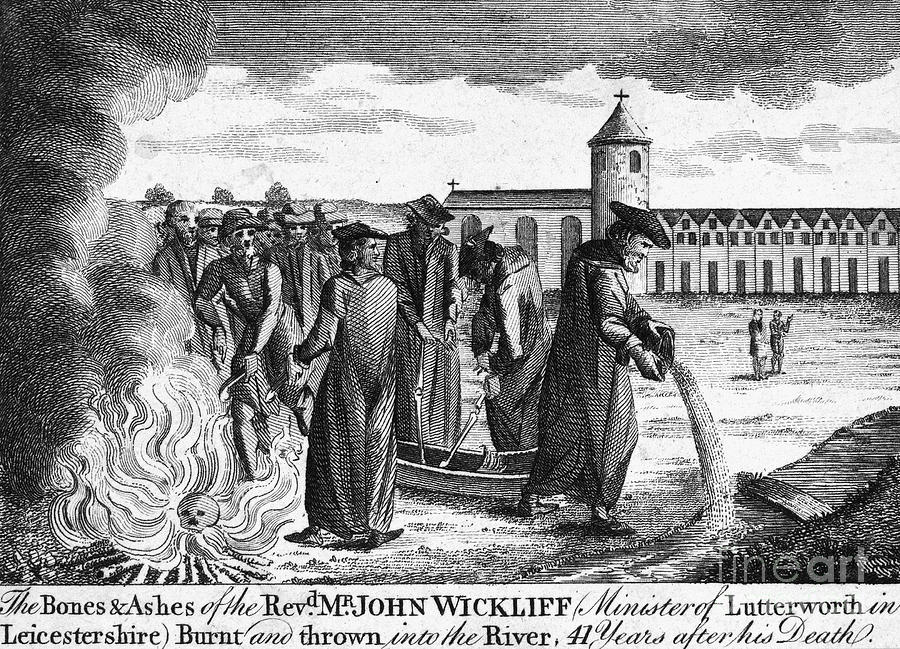
The Catholic Church was upset enough
to punish Wycliffe posthmously.

I want to connect this to a well-known historical event - the Reformation. When John Wycliffe translated the Bible into English (and especially as the printing press made copies widely available), the Catholic Church was furious. Religious knowledge and religious teaching were their things, and now the market had been stolen out from underneath them. I don't think anyone now would take the Catholic Church's side of this argument - the Bible sits securely in the public domain. It affects all people and they should have the chance to learn about it for themselves.

Construction projects on campus are definitely not the Bible - they pose no hazard to personal salvation. But I also don't believe that sharing details about them would be a security risk. Especially because so many students are affected on a daily basis.

I want to also tie this into the idea of the public sphere. I came to better understand the idea of the public sphere as I recognized its connection to family councils as proposed by the Church of Jesus Christ of Latter-day Saints. My classmate Isabella put it beautifully when she said, “The ideal family council values all opinions, so does a public sphere.” (See more on family councils here and here.)

I would like to make a recommendation: share a little more with us students. We love BYU. We want to be involved and we want to make a difference. We may still complain about this or that, but I think we'll complain less if we know why. Increased transparency can lead to increased feelings of worth and importance.

It can start small: with construction!

My suggestion is to zip tie poster boards to the construction fences with a QR code and a link: comingsoon.byu.edu or something. All you have to put on the link is a picture of the project and a short description of what is being done, why, and the anticipated end date. Other details that would be great (but optional) could be detour warnings, explanations for the timing, progress updates, and more.
The Harold B. Lee Library on campus does a great job of this.
I have been extremely grateful for my time here at BYU and I look forward to the rest of my time as part of this campus community. I would love to see the growth that could come from our transparency and collaboration on things like this.

Thanks for your time and hard work,
Kensie Tayler
Junior, Civil Engineering

P.S. Please let me know what questions or concerns you have about this project.
(I'm free this summer if you want help.)